
Wearing orthodontic braces requires daily commitment to oral hygiene, and one of the most important elements of this care is choosing the right orthodontic toothbrush. The presence of brackets and wires makes traditional cleaning insufficient and may even lead to food debris accumulation, tartar formation, and an increased risk of gingivitis or tooth decay.
In this article, we take you on a detailed journey to understand the importance of selecting the right toothbrush, its different types, how to use it properly, and the top orthodontist recommendations to maintain oral health throughout the treatment period.
Why Do You Need a Special Toothbrush for Braces?
Problems with regular toothbrushes:
A standard toothbrush is not designed to clean orthodontic braces efficiently. It cannot reach the spaces around brackets or under wires. Using it with braces leads to plaque buildup and inadequate cleaning of teeth and gums, increasing the risk of inflammation and complications.
How does an orthodontic toothbrush protect teeth and gums?
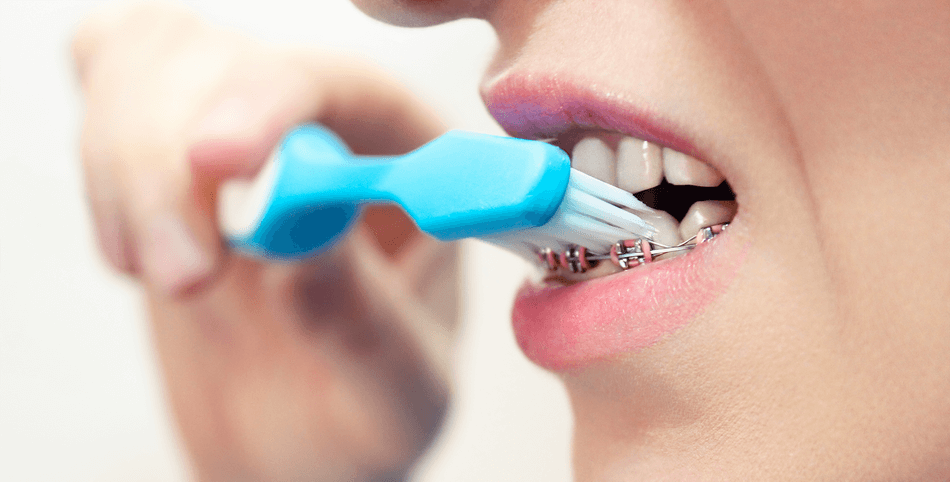
Orthodontic toothbrushes are specially designed with small heads or tapered bristles that can easily reach the complex angles around brackets without irritating the gums or scratching the wires. They help effectively remove food debris and reduce the risk of inflammation or tooth decay.
Important statistic:
Recent studies show that 60% of orthodontic patients do not use the proper toothbrush, increasing their risk of dental and gum problems during treatment. Therefore, choosing the right orthodontic toothbrush is the first step toward a healthy mouth during orthodontic care.
Types of Orthodontic Toothbrushes
There are several types of orthodontic toothbrushes, each serving a specific purpose depending on the appliance type, patient age, and case complexity.
1- V-shaped toothbrush (small head):
Designed specifically for fixed braces, featuring a small head with V-shaped bristles. This design allows simultaneous cleaning of tooth surfaces and brackets. It also reaches tight areas behind molars without harming gums or wires.
2- Multi-level toothbrush:
Contains bristles of different lengths, allowing cleaning from multiple angles at the same time. It is effective in removing food debris around brackets and is ideal for braces with prominent wires.
3- Tapered bristle toothbrush:
Its graduated bristle design allows effective cleaning of upper and lower tooth surfaces, especially around wire-contact areas. It removes plaque efficiently without damaging enamel or causing gum bleeding.
4- Electric orthodontic toothbrush:
Provides high cleaning efficiency through rotating or oscillating heads. It removes plaque more effectively than manual brushes. Some models include orthodontic-specific heads with soft bristles that do not affect brackets or wires. Recommended for patients who struggle with manual brushing or for children under supervision.
5- Water flosser:
Also known as an oral irrigator, it uses pressurized water streams to clean between teeth and below the gum line. While not a replacement for brushing, it is ideal for braces patients as it reaches hard-to-clean areas and significantly improves oral hygiene.
6- Smart toothbrush:
Equipped with technologies such as Bluetooth and mobile apps that monitor brushing duration and technique. It alerts users if pressure is too strong or brushing time is insufficient. Some models provide weekly oral hygiene reports, encouraging better compliance.
7- Interdental brush:
Not a primary toothbrush but an essential part of orthodontic care. It is a small brush similar to an ear-cleaning stick used to remove food debris and plaque between wires and tooth surfaces. Available in different sizes to fit various spaces.
Proper Way to Use an Orthodontic Toothbrush
To achieve the best results, follow these steps:
- Cleaning around brackets (45-degree angle): Place the toothbrush at a 45-degree angle to the gum line and gently move it back and forth around brackets.
- Brushing above and below wires: Clean directly above and below wires to prevent food accumulation.
- Using interdental brush: Essential for cleaning areas inaccessible to regular brushes.
- Brushing duration (2 minutes): Dentists recommend at least 2 minutes covering all surfaces: front, back, chewing surfaces, and areas around braces.
Criteria for Choosing an Orthodontic Toothbrush
To maintain oral health, the selection should be based on three main factors: Soft bristles, Appropriate brush size, and Comfortable handle design.
Soft brushes provide better access between teeth and do not irritate the gums. A longer neck helps reach difficult areas, while a comfortable grip improves control. V-shaped bristles are especially effective for plaque removal around braces.
How to Brush Your Teeth with Braces?
For fixed braces (both aligners and wires), brush your teeth normally with toothpaste twice a day. Rinse with mouthwash if desired. It is recommended to use an interdental brush to remove food particles between your teeth, then rinse thoroughly.
For clear aligners and removable braces, simply remove the appliance and brush your teeth normally with toothpaste twice a day. Brush at a 45-degree angle from the gum line downwards in a circular motion. Use dental floss to remove any remaining food particles afterward.
Orthodontist Care Tips
Brushing frequency (3 times daily)
Brush after every meal (at least 3 times daily) to reduce food retention around braces.
Suitable toothpaste
Use fluoride toothpaste to prevent tooth decay and avoid abrasive products that may damage orthodontic appliances.
Sterilizing the toothbrush
Disinfect weekly using warm water or antiseptic rinse, avoiding strong chemicals.
When to replace the toothbrush?
Replace every 1–2 months or when bristles become worn or deformed.
Conclusion
Oral care during orthodontic treatment is incomplete without choosing and properly using the right orthodontic toothbrush. It is the first line of defense against decay, gum disease, and cleaning difficulties caused by braces.
Follow the recommended steps and choose the toothbrush that suits your needs. Always consult your orthodontist at Wonders Dentistry for the best guidance.
Restore your smile with confidence… take your first step with us at Wonders Dentistry. Book your consultation now.
FAQs
Is an electric toothbrush safe for metal braces?
Yes, and it is often more effective than manual brushing. Sonic toothbrushes with orthodontic heads are recommended. Their vibrations help remove food debris without affecting bracket stability, as long as excessive pressure is avoided.
What is a V-shaped orthodontic toothbrush and why do I need it?
It is designed so that shorter bristles in the center create a groove that fits around brackets, allowing simultaneous cleaning of teeth and braces while preventing plaque buildup.
How do I use an interdental brush correctly?
It should be gently inserted under the wire and between teeth using vertical cleaning motions to remove plaque from areas unreachable by regular brushes.
How often should I replace my toothbrush during orthodontic treatment?
Every 2 months or as soon as bristles appear worn. Worn bristles reduce plaque removal efficiency and may increase the risk of white spots after treatment.