

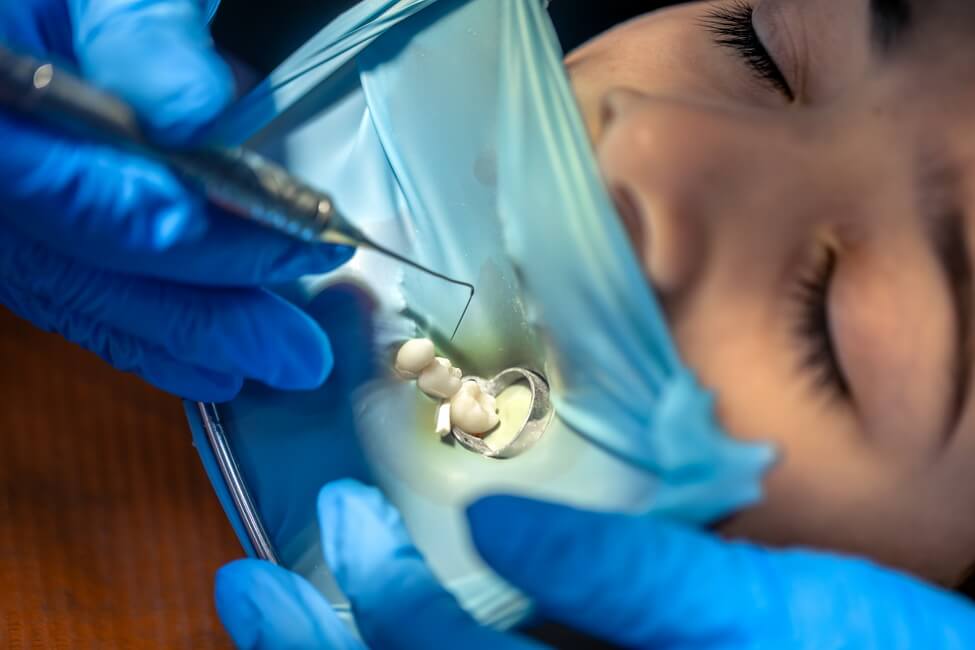
Most patients expect dental restorations to last for many years without problems. However, some restorations may end up with unstable results or a shorter lifespan than expected.
Dental restoration failure is usually due to factors related to the preparation method, the quality of materials, the condition of the gums and bone, or even the patient’s daily habits after placement.
Therefore, it is important to understand the real reasons behind restoration failure, as knowing these details helps both the patient and the dentist avoid mistakes and improve long-term treatment outcomes.
Do dental restorations fail often?
Dental restoration failure is not common, but it occurs when several factors interact to affect the stability or lifespan of the restoration. Failure may be related to poor oral hygiene, gum problems, or the accuracy of the pre-placement preparation. The choice of material can also affect the final result. Therefore, the success of dental restorations depends on proper assessment and regular follow-up after the procedure.
The Difference Between Successful and Failed Dental Restorations
The difference between successful and failed dental restorations lies in their stability and quality over time. A successful restoration is comfortable, pain-free, and does not move while eating or speaking.
It also fits the size of the tooth and the shape of the jaw. A failed restoration, on the other hand, may show early problems such as pain, poor adhesion, discoloration, or gum inflammation around the area.
The success of dental restorations depends on a thorough pre-operative examination, the selection of appropriate materials, and the fitting technique itself. A successful restoration integrates seamlessly into the mouth without discomfort and allows the patient to use it normally.
Failure of dental restorations results from neglecting important steps, inadequate post-operative care, or incorrect measurements. Regular follow-up with your dentist helps detect failure early and avoid complications.
Reasons for Dental Restoration Failure
Although dental restorations are designed to last a long time, they can still fail due to several factors that may go unnoticed. These factors can affect their durability, and some of the most prominent include:
Causes Related to Treatment Planning and Tooth Preparation:
Dental restoration failure occurs when the condition is not accurately assessed before treatment begins. This happens if the gums or bone are not thoroughly examined, or if measurements are not taken correctly.
Ignoring problems such as cavities or gum infections before placement can also affect the stability of the restoration. Successful treatment always begins with organized planning and proper tooth preparation.
Causes Related to Material Quality and Manufacturing:
The strength of dental restorations depends on the quality of the materials used and the precision of the manufacturing process in the laboratory. Failure can occur if the material is weak, the layers are uneven, or the manufacturing steps are not performed to high standards.
Even a minor flaw in shape or size can lead to weak adhesion or breakage of the restoration. Therefore, choosing reliable materials and a professional laboratory is essential.
Patient-Related Factors and Follow-up:
The patient plays a crucial role in the success of dental prostheses. Problems may arise if instructions are ignored, oral hygiene is neglected, or the dentist is not consulted when pain or movement occurs.
Daily habits such as teeth grinding or eating hard foods can also affect the stability of the prosthesis. Regular follow-up and simple care help maintain the prosthesis for a longer lifespan.
Symptoms of Dental Prosthesis Failure
Dental prostheses may exhibit early or advanced signs indicating a problem with their stability or function. Recognizing these signs helps the patient intervene promptly before the problem worsens and affects the gums or adjacent teeth. Therefore, it is important to pay attention to any abnormal changes after placement and follow up with the dentist.
1- Early Signs the Patient Can Observe
Symptoms of dental prosthesis failure begin with subtle, seemingly insignificant signs such as discomfort when chewing or slight movement of the prosthesis. Intermittent pain or sensitivity to hot or cold drinks may also occur.
The patient may also notice a change in the bite or a slight clicking sound when pressure is applied to the prosthesis. These signs warrant early consultation to prevent the problem from progressing.
2- Advanced Signs that Require Immediate Attention
When dental prosthesis failure progresses, the symptoms become more obvious and serious. Inflammation of the gums around the prosthesis may occur, or frequent bleeding may appear, or persistent pain may be difficult to ignore.
In some cases, the dental prosthesis may completely detach or a clear fracture may occur in a part of it. A strong odor of breath may also appear as a result of bacterial accumulation under the prosthesis. These signs require immediate intervention to prevent the damage from worsening.
Treatments for Dental Restoration Failure
Treatment methods for dental restoration failure vary depending on the cause and severity of the problem. Therefore, the dentist always begins with a comprehensive evaluation before taking any action. These treatments include:
Accurate Diagnosis: The First Step Towards Correct Treatment
Treatment for dental restoration failure begins with an accurate diagnosis that identifies the underlying cause of the problem, rather than simply addressing its symptoms.
The dentist relies on a clinical examination, a review of treatment history, and an assessment of the gums and bone. The goal is to determine whether the problem lies in the restoration itself, the tooth preparation, or the occlusion.
- 3D CBT Imaging: 3D imaging helps to accurately assess the condition of the bone and abutment. It reveals narrow spaces, deep inflammation, and any bone loss around the restoration area. It also shows whether the supporting tooth is strong enough for retreatment.
- Intraoral Camera: This camera is used to capture clear images of the affected areas, allowing visualization of small cracks or bonding gaps. Close-up images help the patient understand their problem and reveal subtle details not visible during a traditional examination. It is an important tool for identifying leaks or defects in the edges of the dental prosthesis.
- Bite Analysis: Bite analysis helps determine if the forces applied to the dental prosthesis are distributed correctly. Excessive pressure or an unbalanced bite can cause the prosthesis to break or shift. This analysis identifies high points that require minor adjustments to reduce friction and protect the prosthesis.
Option 1: Simple Repair and Restoration
- Re-bonding of the healthy prosthesis: In some cases, the dental prosthesis is sound but has detached due to poor bonding. The tooth is cleaned and dried, and then the prosthesis is re-bonded using strong materials. This solution is suitable for cases that have not experienced any breakage or damage.
- Repairing minor fractures and cracks: If the fracture is small, it can be repaired with strong cosmetic materials or by rebuilding the missing part without replacing the entire dental prosthesis. This is a suitable option when the abutment is in good condition.
Option 2: Partial or Complete Replacement
- Remaking the Crown Cover While Preserving the Abutment: When the crown is damaged but the root or abutment remains stable, only the crown cover can be replaced. This reduces costs and preserves the original structure.
- Complete Replacement (Crown and Bridge): This option is used when the damage is extensive or when the dental prosthesis has failed in more than one area. The design is completely redesigned to ensure accurate measurements and proper occlusion.
Option 3: Advanced and Alternative Solutions
- Dental Implants as a Final Solution: If the supporting tooth cannot be repaired, or if bone loss is significant, dental implants offer a final solution that provides greater stability and a longer lifespan. Implants also provide independent support and do not rely on adjacent teeth.
- Corrective Surgical Treatment: This is used when there is deep inflammation or bone loss. Surgical treatment aims to clean the area, regenerate bone, or modify the gums before repositioning the teeth. This option ensures a healthy foundation that prevents recurrence of failure.
Tips to Reduce the Likelihood of Dental Restoration Failure
There are several tips that any patient should follow when getting dental restorations:
- Choose a prosthodontist to ensure a thorough evaluation before starting treatment.
- Ensure that any gum or bone problems are treated before placing the crown or bridge.
- Maintain good oral hygiene daily and avoid bacterial buildup around the restoration.
- Avoid cracking or chewing hard foods that could cause the restoration to break.
- Consult your dentist if you experience any pain or slight movement.
- Account for regular checkups every six months to ensure the restoration is stable.
How to Avoid Dental Restoration Failure? (Before, During, and After Placement)
By following these steps, you can completely avoid dental restoration failure:
Before Placement:
- Conduct a comprehensive examination of the gums, bone, and adjacent teeth.
- Treat any decay or infections before starting the dental restoration process.
- Choose high-quality materials that suit the patient’s condition.
During Placement:
- Ensure accurate measurements to guarantee the stability of the restoration.
- Check the bite and correct any pressure points that could cause future fracture.
- Ensure a tight bond and no gaps.
After Placement:
- Adhere to daily care and cleaning instructions.
- Avoid harmful habits such as teeth grinding or nighttime clenching.
- Visit your dentist immediately if you experience pain, an unusual odor, or movement of the restoration.
Why Choose Wonders Dentistry Center for Your Restorations?
Wonders Dentistry Center offers a comprehensive evaluation using the latest diagnostic equipment. In addition:
- Uses high-quality materials to ensure a longer lifespan for the restoration.
- Has a specialized team for cosmetic and restorative dental restorations.
- Provides high-precision measurements to ensure stability and a natural appearance.
- Employs modern techniques to minimize pain and simplify the treatment process.
- Offers continuous follow-up after placement to guarantee the best possible outcome.
FAQs
How long does a natural dental prosthesis last?
Dental prostheses typically last between five and ten years, and this lifespan can be extended with proper care and regular follow-up appointments.
How can I tell if my dentist is using good materials?
The quality of the materials can be confirmed through clear explanations from the dentist, a warranty included with the prosthesis, a reputable laboratory, and a proven track record of successful results.
Can a broken prosthesis be repaired without replacement?
A prosthesis can be repaired if the break is minor. However, larger breaks often require complete replacement to ensure stability.
Are metal or zirconia crowns better?
Zirconia crowns are superior in terms of appearance, while metal crowns offer greater strength under heavy pressure.
What should I do if my prosthesis suddenly falls out?
The prosthesis should be kept as is. Avoid reattaching it at home and consult your dentist immediately to have it reattached after an assessment of the cause.