
Orthodontics for children is a preventive and therapeutic procedure aimed at correcting dental and jaw problems at an early stage, contributing to improved oral health and overall appearance. It is preferable to begin evaluating the need for orthodontic treatment at an early age to ensure better and faster results.
Orthodontic treatment for children is an important step in maintaining oral health and developing a healthy, beautiful smile. Through early intervention, many problems affecting tooth and jaw development can be corrected, reducing the need for more complex treatments in the future.
Importance of Orthodontics for Children
Early correction of problems:
Early intervention in dental and jaw issues can prevent them from developing into more complex conditions. For example, orthodontic treatment at a young age can correct malocclusion or crowding before it worsens.
Improving speech and chewing:
Some dental problems may affect a child’s ability to speak properly or chew efficiently. Orthodontic treatment can help improve these vital functions.
Boosting self-confidence:
A healthy and attractive smile enhances a child’s self-confidence, positively affecting social interactions and academic performance.
Preventing future problems:
Early orthodontics can reduce the need for complex orthodontic or surgical procedures later, saving time, effort, and cost.
Does Your Child Need Orthodontic Treatment?
Orthodontics for children is primarily recommended to prevent and correct the relationship between the jaws and teeth. Several factors may contribute to these issues, such as genetics, early loss of primary teeth, and harmful oral habits (like thumb sucking, tongue thrusting, and mouth breathing).
Irregular teeth may cause psychological issues in children, such as low self-confidence, bullying, and difficulty maintaining proper oral hygiene. In contrast, well-aligned teeth reduce the risk of tooth decay and gum disease during childhood.
During your visit to an orthodontist or pediatric dentist, various diagnostic tools are used to monitor your child’s dental alignment and determine if orthodontic treatment is necessary.
The importance and strategies of early intervention will be discussed with you, and parents have the choice to start treatment immediately or wait.
When Should Orthodontic Treatment Begin?
Orthodontic treatment is more effective during jaw and craniofacial growth at a young age, as teeth respond more easily to treatment. This results in faster treatment time and better outcomes since the child’s body is still developing.
Orthodontic intervention begins early to prevent problems related to tooth alignment, jaw growth, and bite relationships—from the eruption of primary teeth to the development of permanent teeth. It is typically divided into three stages:
The Right Age for Orthodontics
Phase 1 (Ages 2–6):
Early orthodontic treatment aims to guide and regulate jaw width in children to provide sufficient space for proper eruption of permanent teeth.
Children who may benefit at this stage include those who have difficulty biting properly, lose primary teeth early or in an incorrect sequence, breathe through the mouth instead of the nose, and have habits like thumb sucking or tongue thrusting.
During this stage, the orthodontist works with parents and children to eliminate harmful habits and may use various dental appliances to promote jaw growth or maintain space for permanent teeth (space maintainers).
Phase 2 (Ages 7–9):
At this stage, the dentist begins evaluating jaw growth and permanent teeth eruption. Simple orthodontic appliances may be recommended to guide jaw development and create space for permanent teeth.
The goal here is to correct clear issues such as crossbite, protrusion of the upper jaw, crowding, other alignment problems.
This is considered the ideal time to begin correction due to the positive response to treatment compared to older ages.
Orthodontists typically use both fixed and removable appliances, and parents and children must maintain excellent oral hygiene to reduce risks like tooth decay and gingivitis.
Phase 3 (Ages 10–14):
After most permanent teeth have erupted, traditional orthodontic treatment can begin to correct remaining issues. This stage is ideal for achieving effective results.
The primary goal during adolescence is aligning permanent teeth and improving smile aesthetics. This phase begins once all primary teeth are replaced.
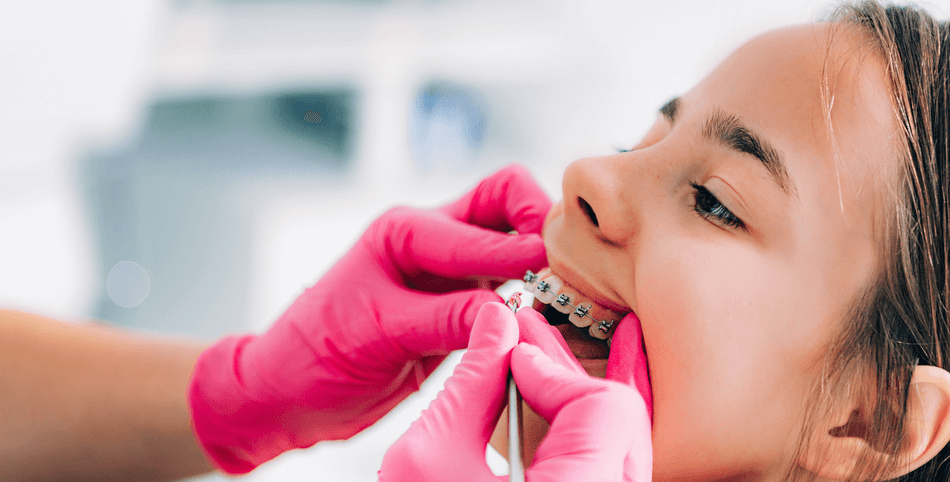
The most common method at this stage is fixed metal braces with wires. After completing treatment, patients may be required to wear a retainer to prevent relapse.
Special Cases Requiring Early Intervention:
Some conditions, such as open bite or habits like thumb sucking, may require orthodontic intervention at a very early age—even before age seven.
Latest Types of Orthodontics for Children
Preventive Orthodontics:
Palatal expanders: used to widen the upper or lower jaw
Space maintainers: preserve space after early loss of primary teeth
Habit-breaking appliances: prevent habits like thumb sucking or tongue thrusting
Fixed Orthodontics:
Metal braces: brackets and wires fixed to teeth; highly effective
Ceramic braces: tooth-colored brackets, less visible
Lingual braces: placed on the inner side of teeth, nearly invisible
Removable Orthodontics:
Clear aligners: removable transparent trays for mild to moderate cases
Functional appliances: guide jaw growth and correct bite
Retainers: maintain results after treatment
Benefits of Orthodontics for Children
- Improves overall appearance of teeth and face
- Corrects malocclusion and crowding
- Enhances speech and chewing ability
- Boosts self-confidence and psychological comfort
- Reduces need for complex treatments later
- Increases chances of proper jaw development
- Improves alignment and spacing of teeth
- Lowers risk of tooth decay and gum disease
- Reduces likelihood of prolonged orthodontic treatment in the future
- Minimizes risk of injury to teeth, gums, and jawbones
Steps of Orthodontic Treatment for Children
Initial diagnosis:
The dentist performs a comprehensive examination and may request X-rays.
Imaging and analysis:
Includes panoramic and cephalometric radiographs to determine the treatment plan.
Treatment planning:
The orthodontist determines the appropriate type of braces and expected duration.
Appliance placement:
Braces are fitted according to the treatment plan, with care instructions provided.
Follow-up visits:
Regular appointments are scheduled to monitor progress and adjust appliances.
Retention phase:
After treatment, retainers are used to maintain results.
Care Tips After Getting Braces
- Brush teeth regularly using suitable toothbrush and toothpaste
- Avoid hard and sticky foods
- Use dental floss and mouthwash
- Attend regular orthodontic check-ups
- Use orthodontic wax to reduce irritation
Additional Information About Orthodontics
After getting fixed braces, patients may experience mild discomfort or pain, which can be managed with pain relievers prescribed by the orthodontist.
Treatment duration depends on patient compliance and bone density, typically ranging from 18 to 36 months.
Final Thoughts
Orthodontics for children is an investment in oral health and overall appearance. With early intervention and proper care, excellent long-lasting results can be achieved. It is recommended to consult a dentist to assess the need for orthodontic treatment and develop an appropriate plan.
FAQs
What is the ideal age for my child’s first orthodontic visit?
The global recommendation is around age 7. At this age, the first permanent molars erupt, helping determine jaw relationships. Even if treatment isn’t needed yet, early evaluation helps detect potential issues.
Can children use clear aligners instead of metal braces?
Yes, systems like Invisalign First are designed for children with mixed dentition. They help expand the jaw and adjust spacing while being removable, making oral hygiene easier.
What is interceptive orthodontics and why is it important?
It is early (Phase 1) treatment performed while primary teeth are still present. It focuses on guiding jaw growth and creating space for permanent teeth, often preventing extractions or future jaw surgery.
How do I know if my child needs orthodontics early?
Watch for warning signs such as mouth breathing, very early or delayed loss of primary teeth, or persistent thumb sucking after age five. Large gaps or uneven bite are also indicators that early consultation is needed.