

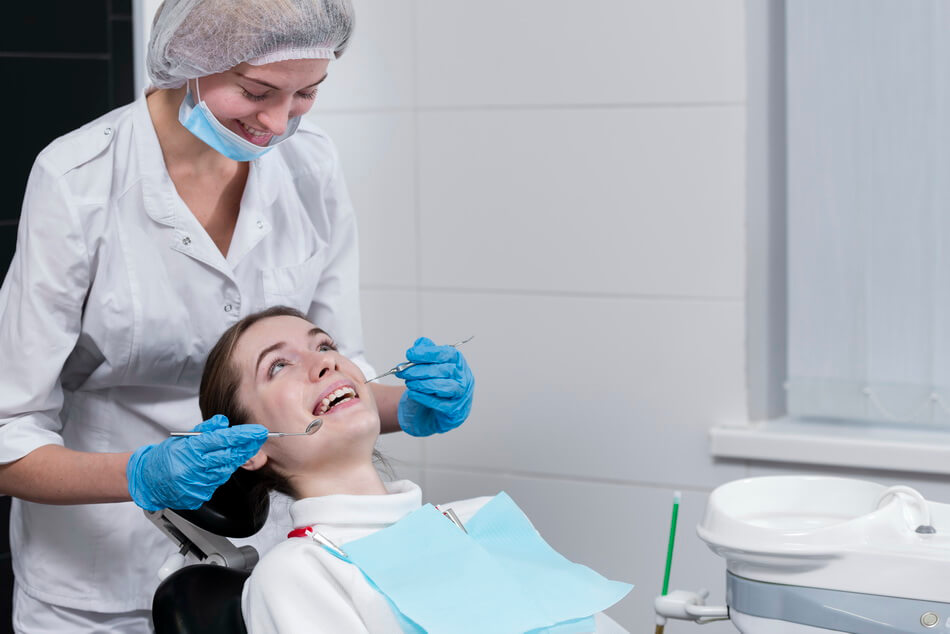
Taking care of your oral and dental health is one of the most important habits we should follow daily. Teeth cleaning not only helps improve the appearance of your teeth and smile, but it also maintains the health of your mouth and gums and protects against many problems such as tooth decay and gum inflammation.
In this article, we will go over everything related to teeth cleaning, from the appropriate cleaning methods to the best tips for maintaining your results after visiting the dentist.
What Is Teeth Cleaning?
Teeth cleaning is the process of removing plaque and tartar that accumulate on the teeth to preserve their health and beauty. It is one of the most important steps in personal oral care, as it removes food debris that may lead to tooth decay or gum inflammation.
Teeth cleaning is done using a toothbrush and toothpaste, but it also requires professional cleaning by a dentist. This professional cleaning is an advanced process in which the dentist uses specialized dental instruments to remove hardened tartar that a toothbrush cannot eliminate.
Reasons for Teeth Cleaning at the Clinic
There are several reasons why people should get their teeth professionally cleaned at the clinic. Although home brushing is an essential part of daily oral hygiene, regular dental visits are necessary to maintain overall oral health.
Here are the main reasons that make professional teeth cleaning at the clinic essential:
- Removing tartar buildup: Tartar is a hard layer that forms due to plaque accumulation. While plaque can be removed by brushing, tartar requires special tools for removal. If tartar isn’t regularly removed, it can cause gum inflammation, gum recession, and bone loss, which may lead to tooth decay or even tooth loss.
- Preventing gum disease: Tartar buildup can cause gum infections, which, if untreated, may develop into more serious conditions like chronic periodontitis or tooth loss.
- Improving tooth appearance: Professional cleaning helps remove stains and discoloration caused by dark drinks such as coffee and tea, giving you a brighter, more radiant smile.
- Early detection of dental problems: During a professional cleaning session, the dentist can detect early signs of decay, gum inflammation, or other issues, allowing timely treatment before complications arise.
Steps of Teeth Cleaning at the Clinic
A professional teeth cleaning session at the clinic includes several stages to ensure the best results. Here are the main steps the dentist performs during the procedure:
- Initial examination: The dentist conducts a thorough check of your teeth and gums to identify any issues such as tooth decay, gum inflammation, or other problems. This helps determine which areas require deep cleaning.
- Removing plaque and tartar: The dentist uses special instruments such as manual scalers or ultrasonic scalers to remove accumulated tartar. This is the most important step of the process, as it eliminates hardened deposits that cannot be removed by brushing.
- Polishing the teeth: After tartar removal, the dentist polishes the teeth using a special paste with fine particles. This step helps remove surface stains, leaving the teeth smooth and shiny.
- Tongue cleaning: The tongue is often overlooked, but it’s a crucial part of oral hygiene. Bacteria can build up on the tongue’s surface, causing bad breath. The dentist uses a special tongue brush to ensure a fully clean mouth.
- Fluoride application: After cleaning and polishing, the dentist applies a fluoride paste to strengthen the enamel and protect the teeth from decay.
Benefits of Teeth Cleaning at the Clinic
Professional teeth cleaning at the clinic doesn’t only enhance your smile — it offers numerous health benefits as well:
- Prevention of tooth decay: Plaque and tartar buildup can lead to decay. Removing these layers helps protect the teeth and maintain their health.
- Prevention of gum inflammation: Tartar along the gum line can cause gingivitis, which may progress to advanced gum disease or tooth loss if untreated. Regular cleaning helps prevent these issues.
- Improved overall oral health: Oral care is about more than just brushing. Since the mouth is the gateway to the body, maintaining good oral health contributes to better overall health and even reduces the risk of chronic diseases such as heart disease.
- A brighter smile: Polishing after cleaning removes surface stains, giving your teeth a whiter, more radiant appearance.
Can Teeth Be Cleaned After Dental Restorations?
Yes — it’s essential to clean your teeth after getting dental bridges or crowns to maintain the health of both natural and restored teeth. Caring for implanted or crowned teeth is very similar to caring for natural ones.
Regular cleaning helps preserve the restorations and prevents plaque buildup around them.
How Often Should Teeth Be Cleaned at the Clinic?
It’s recommended to visit the dentist for professional teeth cleaning once every 6 months.
However, this interval may vary depending on your oral condition. People who experience rapid tartar buildup or have gum problems may need to visit the dentist more than twice a year.
Post-Cleaning Dental Care Tips
After a professional cleaning session, follow these steps to maintain healthy teeth and gums:
- Use an electric toothbrush: Electric brushes are more effective at plaque removal than manual ones. In general, brush twice daily — before bed and after waking up.
- Floss daily: Dental floss helps remove food debris between teeth, reducing the risk of decay.
- Use fluoride toothpaste: Fluoride helps strengthen enamel and protect teeth from decay.
- Avoid stain-causing foods and drinks: After cleaning, try to avoid coffee and tea for a while, as they can cause new stains.
- Drink plenty of water: Water helps rinse the mouth after eating or drinking and reduces bacterial buildup.
Teeth Cleaning Cost in Egypt
The cost of teeth cleaning in Egypt varies depending on several factors, such as the clinic’s location and the techniques used.
In general, the price ranges between 200 and 700 Egyptian pounds.
The cost may increase if additional specialized materials or treatments are included.
FAQs
What is professional teeth cleaning, and how is it different from brushing at home?
Professional dental prophylaxis is a procedure performed by a dentist or dental hygienist to remove accumulated dental plaque and calculus (tartar) from tooth surfaces and below the gumline. It differs completely from home care because it uses specialized instruments such as:
- Ultrasonic scaler: Uses high-frequency vibrations with a water stream to break down hardened calculus.
- Hand curettes: For removing deep subgingival calculus in cases of periodontal disease.
- Prophylaxis paste: Contains fine abrasive particles to remove surface stains and smooth enamel.
While a toothbrush removes soft plaque only, calcified tartar can only be eliminated with professional tools.
Does teeth cleaning hurt, and does it erode enamel?
No, the procedure is painless in normal cases. You may feel slight sensitivity or pressure during calculus removal near the gumline, but this is not considered pain. In cases of severe dentine hypersensitivity or gingival recession, the dentist can apply topical anesthesia or local infiltration anesthesia.
Regarding enamel erosion, this is a common misconception. Ultrasonic scaling and polishing instruments are designed to be safe for enamel and cementum. Professional polishing removes only the thin layer of surface stains without affecting the hard tooth structure.
How often should I get professional teeth cleaning?
The Academy of General Dentistry (AGD) and the American Academy of Periodontology (AAP) recommend professional cleaning every 6 months for individuals with good oral health. However, frequency varies by condition:
- Every 3–4 months: For patients with periodontitis or rapid calculus formers.
- Every 3 months: For smokers, diabetics, or pregnant women (hormonal fluctuations increase gingival sensitivity).
- Every 6–12 months: For individuals with excellent oral hygiene and no periodontal issues.
Does teeth cleaning whiten teeth?
Professional teeth cleaning restores the natural tooth color by removing extrinsic stains caused by coffee, tea, smoking, and wine. However, it is not a bleaching procedure.
The difference:
- Cleaning: Removes external stains and returns enamel to its natural shade.
- Whitening: Uses chemical agents such as hydrogen peroxide or carbamide peroxide to lighten the enamel itself by up to 8–10 shades.
If you desire additional whitening after cleaning, you can undergo in-office whitening or use take-home bleaching trays.
Can I get teeth cleaning after dental implants or fixed restorations?
Yes, and it is absolutely essential. Fixed restorations such as crowns, bridges, and dental implants require special care because calculus accumulates around them just as it does around natural teeth. For implants, peri-implant maintenance is performed using plastic or titanium instruments to avoid scratching the implant surface.
Regular maintenance prevents:
- Peri-implant mucositis (gingival inflammation around the implant).
- Peri-implantitis (bone inflammation around the implant), which can lead to implant failure.
- Subgingival calculus accumulation under bridges, which causes halitosis (bad breath).