

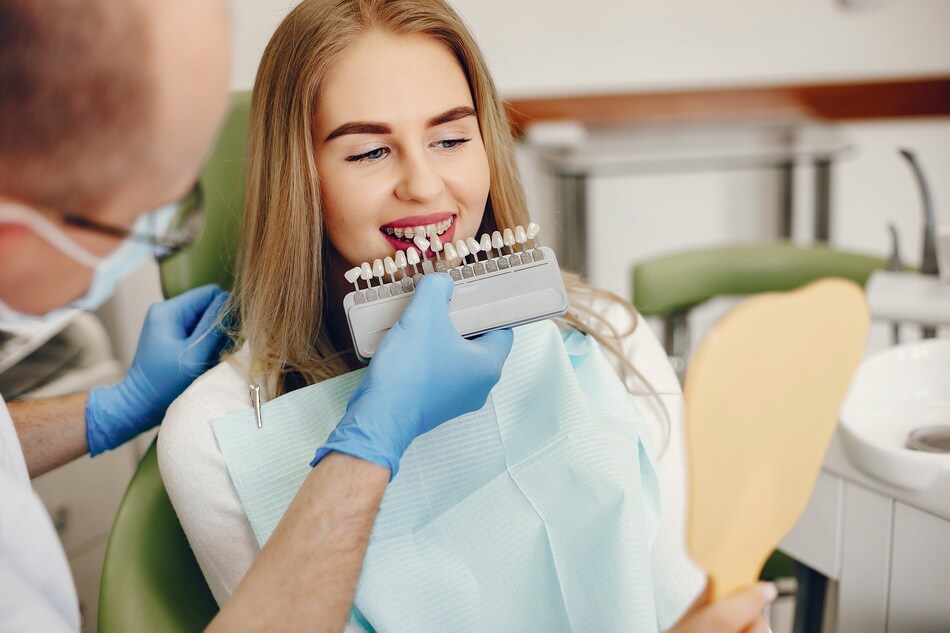
Cosmetic dentistry is no longer associated with painful solutions or major interventions as it once was. Instead, it now relies on more precise techniques that preserve the natural tooth structure. With this development, many people are wondering if we really need to have our teeth shaped to achieve a beautiful smile. This question has become increasingly relevant with the spread of modern cosmetic techniques that reduce or completely eliminate the need for sculpting, opening the door to safer and more suitable options for long-term oral health.
The Dilemma Every Patient Faces Before Veneers
Before getting veneers, most patients experience genuine hesitation. They want a beautiful and harmonious smile, but at the same time, they fear any irreversible step.
Veneers are not a simple cosmetic decision, as they involve natural teeth that the patient will wear for life. Therefore, they begin to think, compare, and question the risks before the benefits, especially when they hear about tooth sculpting and the potential for lasting anxiety.
The desire for a Hollywood smile is very strong for many people. Everyone sees the bright results and the perfectly white, harmonious teeth and imagines their appearance after the transformation. But on the other hand, the fear of the idea of permanent tooth sculpting appears, and the patient worries about losing part of his natural tooth, and wonders if this decision is safe? And will I regret it later? This conflict between the ideal appearance and preserving natural teeth is what confuses the patient the most at this stage.
Traditional (Prepared) Veneers
Traditional veneers are a type of dental veneer that relies on tooth preparation before placement. Preparation involves removing a thin layer of the outer surface of the tooth to ensure a secure and proper bonding of the veneer. This type has been used for many years.
What is the preparation process (traditional veneers)?
The preparation process is a fundamental step in traditional veneers. The dentist removes a small portion of the tooth enamel, typically between 0.3 and 0.7 mm thick. This creates enough space for the veneer so that the tooth doesn’t appear protruding or unnatural after placement. This process is permanent because the removed enamel cannot be replaced later.
Steps of Traditional Dental Veneers
The first step involves a comprehensive examination and evaluation of the teeth and gums. Following this, the appropriate shape and color of the veneer are determined. In the next step, the teeth are prepared by removing a thin layer of enamel.
An accurate impression of the teeth is then taken and sent to a laboratory. A temporary veneer is placed to protect the teeth. At the final appointment, the permanent veneer is bonded using strong adhesives.
Reasons for Choosing Traditional Dental Veneers
Traditional veneers are chosen in specific cases, such as when there is severe discoloration that cannot be concealed with simpler solutions, or when there are visible fractures or wear on the teeth. This type is also preferred when the patient needs a significant change in the shape or length of the teeth, as it offers greater stability and more precise control over the final result.
The Goal of Traditional Dental Veneers
The primary goal is to improve the appearance of the smile in a clear and stable way. Traditional veneers help to unify the color of the teeth, correct their shape, and conceal visible imperfections. They also aim to achieve a long-term result with good stability, especially in cases where unprepared options are unsuitable.
Advantages of Traditional Dental Veneers
Among its most important advantages are high stability and longevity, and it provides precise results in terms of shape and color. It is suitable for complex cases that require significant modification, is less prone to detachment compared to some other types, and gives the dentist greater control over the final smile design.
Disadvantages of Traditional Dental Veneers
The most significant disadvantage is that the preparation is permanent and cannot be reversed. It may cause temporary sensitivity after preparation, requires multiple dental visits if the veneer is damaged later, and necessitates replacement. It can also be expensive compared to some other alternatives.
No-Prep Veneers (Minimally Prep)
No-prep veneers are a type of dental veneer that aims to improve the appearance of the smile while preserving the natural teeth as much as possible. In this type of veneer, the teeth are either not prepared or only very minimally in limited cases. It relies on very thin veneers that are bonded directly to the tooth surface, making it a suitable option for people who prefer less invasive solutions.
What does “no-prep” mean?
No-prep veneers mean that the veneer is applied without removing a layer of tooth enamel, or with only very superficial removal that is barely noticeable. The teeth remain almost in their natural state. This makes the procedure not permanent and reversible in some cases. The decision also depends on the shape, size, and spacing of the teeth.
Steps for No-Prep Veneers
The process begins with a thorough examination of the teeth and gums to ensure suitability. Then, the appropriate color and shape of the veneer are determined. The patient usually does not require anesthesia. An impression or digital scan of the teeth is taken, and the veneer is fabricated in a laboratory and then bonded directly using special adhesives without pain or preparation.
Reasons for Choosing No-Preparation Dental Veneers
This type is chosen when teeth are relatively small or have minor gaps. It’s also suitable for those who are afraid of tooth preparation. It’s preferred by those who want a subtle change in shape or color, and it’s ideal for those seeking a quick and minimally invasive cosmetic solution.
The Goal of No-Preparation Dental Veneers
The goal is to improve the appearance of the smile while preserving the natural enamel. It helps to even out the color, close minor gaps, and subtly modify the shape. It aims to provide a natural result without affecting the original tooth structure.
Advantages of No-Preparation Dental Veneers
They preserve natural teeth. They are painless and generally don’t cause sensitivity and don’t require anesthesia. It’s a quick and minimally invasive procedure, and in some cases, it can be reversed. It provides a natural appearance when the appropriate case is selected.
Disadvantages of No-Preparation Dental Veneers
They are not suitable for all cases. They are not suitable for severe discoloration or large teeth. They may give a protruding appearance if not carefully chosen. They require a high degree of accuracy in assessment, and their lifespan may be shorter than traditional veneers in some cases.
Criteria for Choosing Between Traditional and No-Prep Veneers
Choosing between the two types isn’t solely based on appearance. The right decision depends on the condition of your teeth, your expectations, and the desired long-term result. Each type has its appropriate use, so it’s essential to understand the basic criteria before making a decision.
Clinical Condition Criterion: What problems do your teeth have?
If your teeth have severe discoloration, significant wear, fractures, or significant irregularities, traditional veneers are the most suitable option. Preparation allows for greater adjustment and more precise control over the result. However, if your teeth are healthy, relatively small, or have minor gaps, no-prep veneers are a suitable choice as they preserve the natural tooth structure.
Personal Priority Criterion: What do you prefer?
Some patients prefer a strong result and a noticeable change, even if it requires tooth preparation. Others prioritize preserving their natural teeth. No-prep veneers are suitable for those who reject the idea of permanent tooth reduction. The choice here depends primarily on the patient’s comfort.
Number of Sessions
Traditional veneers usually require two or more sessions. A preparation session and impression-taking session, and a final placement session, are required. In some cases, a temporary placement session is added.
Veneers without preparation generally require fewer sessions and may be placed in one or two sessions, depending on the system used.
Treatment Duration
The treatment period for traditional veneers is relatively longer due to the preparation steps and the temporary veneer. The process may take two to three weeks. Veneers without preparation take less time and may be completed in just a few days in simple cases.
Comfort
Veneers without preparation are more comfortable for most patients. There is no sculpting, no anesthesia, and generally no sensitivity. Traditional veneers may cause temporary sensitivity after preparation, especially with hot or cold drinks, but this sensation is usually temporary.
Lifespan
Traditional veneers have a longer lifespan in many cases and can last from 10 to 15 years with proper care. Veneers without preparation may have a relatively shorter lifespan, especially if the case is not suitable or if they are subjected to excessive pressure while chewing.
Cost
The cost varies depending on the case, the dentist, and the type of material used. Veneers without preparation are often the most expensive in some centers due to the precision of the manufacturing and the limited number of suitable options. Traditional veneers may be less expensive in some cases, but they may require maintenance or replacement in the long run.
How do we determine the most suitable option for you at Wonders Dentistry?
At Wonders Dentistry, the type of veneer is not chosen randomly or solely based on the patient’s preference. The decision is based on a thorough evaluation supported by modern digital technologies.
1- 3D Digital Diagnosis
The evaluation begins with 3D digital diagnosis. This technology allows the dentist to view the teeth and jaws from all angles with high accuracy and helps detect problems not visible to the naked eye, such as enamel erosion or uneven bite levels.
2- Digital Oral Scanning
A digital scanner is used instead of traditional impressions. The scan provides an accurate image of the teeth and gums within minutes. This step reduces errors and increases design accuracy.
3- Digital Smile Design Simulation
Before starting any procedure, a digital simulation of the smile after treatment is shown. The patient can clearly see the expected result on the screen, and the color, length, and width can be adjusted as desired.
FAQs
How can I determine which type of veneer is right for my teeth?
The appropriate type is determined after a thorough clinical examination and digital imaging that shows the condition, shape, and actual needs of your teeth.
How long do no-prep veneers last compared to traditional veneers?
Traditional veneers typically last longer, between 10 and 15 years or more, while no-prep veneers may last for a shorter period depending on care and the individual case.
Are no-prep veneers really free of sensitivity?
In most cases, they do not cause sensitivity because they do not require any tooth enamel reduction, or the reduction is very minimal.
Can no-prep veneers turn yellow over time?
The veneer itself does not change color, but neglecting proper care may cause discoloration of the edges over time.