

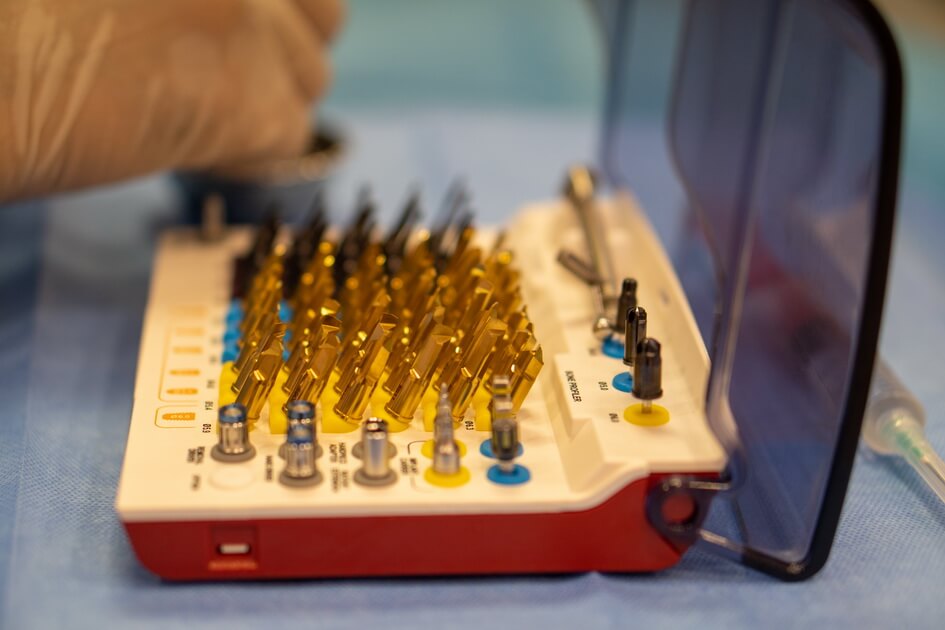
Many patients considering dental implants focus their attention on choosing the right dentist, which is certainly true and important, but there is another decision that is just as important and often goes unnoticed: choosing the implant system itself. The difference between one system and another isn’t merely a matter of brand name or price; rather, it’s a difference that can determine the implant’s long-term fate, its success in integrating with the bone, and the final aesthetic outcome.
In this article, we’ll take you on a detailed journey to understand everything related to dental implant systems, how to choose the most suitable system for each case, and the factors dentists consider before making this important decision.
What is The Dental Implant System?
A dental implant system is an integrated set of components designed to work together with high precision, starting with the implant itself (the metal or ceramic part that is implanted into the jawbone to replace the root of a missing tooth), followed by the abutment, which connects the implant to the final restoration, and finally the prosthetic restoration that appears above the gums and functions like a natural tooth.
Each manufacturer develops its own system with different specifications in terms of the material used, surface texture, thread design, and the method of connecting the parts. Among the most well-known systems worldwide are the Swiss Straumann, Nobel Biocare, and numerous other systems that differ in their characteristics and clinical applications. The selection of one of these systems is not arbitrary but is based on a careful assessment of each patient’s individual case.
The Dental Implant Selection Process
The choice of a dental implant system is not based solely on the company’s name or the product’s reputation; rather, it depends on the specifics of each case and its unique needs. Therefore, the implant dentist begins by evaluating a range of factors that help determine the system best suited to the patient and the desired outcome.
Beyond One-Size-Fits-All
A common misconception is that a single implant system works equally well for all cases. The reality is that the human mouth varies greatly in terms of bone density, jaw shape, general health, and aesthetic requirements. Therefore, a good dentist does not rely on a single system for every patient but possesses extensive knowledge of several systems to be able to select the most appropriate one for each individual case.
The Clinical Decision Framework
When a dentist encounters a new case, he or she goes through a series of analytical steps before determining the appropriate treatment plan. The process begins with a comprehensive examination of the mouth and remaining teeth, followed by an evaluation of radiographic images to assess the quantity and quality of available bone, Next, the dentist assesses the patient’s overall health and ability to recover, and finally, the patient’s aesthetic and functional expectations are taken into account. All of this information combined leads to the final decision regarding the optimal treatment plan.
Patient-Specific Factors
Dental implant needs vary from patient to patient depending on the condition of the jaw, overall health, tissue characteristics, and factors affecting recovery. Therefore, the dentist evaluates a range of factors before selecting the appropriate implant system for each case.
Bone Quality and Quantity
The jawbone serves as the foundation for the entire implant procedure; therefore, its evaluation is a top priority.
- Bone Density Classification: Dentists typically classify bone density into four categories, ranging from very dense bone to soft, spongy bone. This classification helps determine the most appropriate implant type, as some systems are specifically designed to perform well in soft bone through a deeper thread design that provides better initial stability, while other systems are optimally suited for dense bone.
- CBCT Assessment: Three-dimensional computed tomography has become an indispensable tool in modern dental implant planning, as it provides the dentist with an accurate view of bone height, width, and density from all angles, and to identify the location of nerves and sensitive anatomical structures, thereby reducing risks and helping to select the appropriate implant length and diameter with high precision before the actual surgery begins.
- Dental Implant Design Matching: Based on the imaging results, the implant shape that best suits the available bone structure is selected—whether it is a cylindrical or conical implant, and whether it has deep or shallow threads—to ensure maximum contact with the bone and the best distribution of functional forces across it.
Medical History and Healing Capacity
The patient’s overall health plays a crucial role in the success of the implant. Factors such as blood sugar levels, smoking, and certain medications that affect bone formation must all be carefully evaluated. Some systems feature surface technologies that accelerate the healing process and are preferred in cases requiring additional support to improve the chances of successful osseointegration.
Aesthetic Requirements
- Aesthetic Zone Implants: The front of the mouth requires exceptional precision because even the slightest discrepancy in position or color is clearly visible when smiling. Therefore, when planning an implant in this area, special attention is given to the shape and color of the abutment and the implant’s position relative to the surrounding gums to ensure a completely natural-looking result.
- Soft Bone Scenarios: In cases where the bone in the aesthetic zone is thin or has low density, the dentist may need to incorporate additional techniques, such as bone grafting or the use of specially designed implants that help preserve the natural shape of the gums and surrounding bone.
- Material Choice: Today, there are multiple material options available, most notably titanium—known for its strength and long-term durability—and zirconia, which is characterized by a color closer to that of natural teeth and is sometimes preferred in cases with high aesthetic sensitivity or for patients who prefer to avoid metals.
Dental Implant System Features
Dental implant systems differ in a number of technical characteristics that affect how they are used and their suitability for different cases; therefore, systems are compared based on implant design, surface treatment, and the mechanism by which their components connect to the final restorations.
Surface Technology: The implant surface is the point of direct contact with the bone, and therefore surface treatment techniques have evolved significantly over the years to improve the speed and quality of osseointegration. Modern treatments work to increase the micro-surface area of the implant, giving bone cells more space to adhere to and grow around it, which in turn improves the implant’s stability and the speed of healing.
Macrogeometry and Thread Design: The external shape of the implant and the design of its threads directly affect initial stability at the time of placement, which is a critical factor, especially in cases of immediate loading. Deeper threads provide stronger anchorage in cancellous bone, while finer threads are better suited for denser bone. and this diversity is why it is so important for dentists to have extensive knowledge of multiple systems.
Connection Type and Prosthetic Versatility: The method by which the abutment connects to the implant varies from system to system; it may be internal or external, hexagonal or conical. This technical detail affects the tightness of the connection and its resistance to twisting or vibration over time, It also determines the system’s flexibility in accommodating different types of final restorations, whether a single crown, a bridge, or a full arch restoration.
Clinical Scenario Matching
Dental implant needs vary depending on the number of missing teeth, the condition of the bone, and the treatment goal; therefore, the dentist takes the nature of the case into account when selecting the appropriate implant system and planning the treatment steps.
Full-Arch and Complex Cases: When a patient loses a large number of teeth or an entire jaw, the treatment plan differs completely from that for a single missing tooth. Here, the dentist needs a system that offers multiple options for lengths and diameters, as well as the ability to distribute a small number of implants to support a full prosthesis, while ensuring a balanced distribution of forces across the entire jaw to guarantee long-term stability.
Narrow Ridge and Aesthetic Situations: In cases where bone width is limited, it is often preferable to use smaller-diameter implants specifically designed for this type of challenge, while maintaining sufficient strength to support masticatory function without placing excessive stress on the surrounding bone.
Immediate Loading Protocols: In some cases, a temporary crown can be placed on the same day as the implant placement or very shortly thereafter, a procedure known as immediate loading. This protocol requires the selection of a system characterized by very high initial stability and a screw design capable of withstanding early functional forces before complete osseointegration is achieved. It is a suitable option for specific cases determined by the dentist after a thorough evaluation.
Dental Implant prices in Egypt for each system
The prices of dental implants in Egypt vary significantly depending on the type of system used and its country of origin. The following are approximate averages for each category based on current market data.
Asian implants (Korean and similar)
- The cost of a Korean Megagen implant is approximately 13,500 EGP per implant.
- They are among the most affordable options, making them a suitable choice for those on a limited budget.
- You may need a thorough evaluation by a dentist to determine their suitability for your bone condition.
Mid-range European implants (German and Italian)
- German implants are available at varying prices depending on the type: a Fortis implant costs 13,500 EGP, a Camlog implant costs 16,000 EGP, an Ankylos implant costs 18,000 EGP and a Prime Taper Sirona implant costs 22,000 EGP per implant.
- Italian dental implants are available for 13,500 EGP, featuring the B&B and C-Tech brands.
- This category combines reasonable quality with a mid-range price.
Full-Arch Implants (All-on-4 / All-on-6)
- The cost ranges from approximately 120,000 to 200,000 Egyptian pounds per arch.
- The price is not tied to a specific system but rather to the scope of the procedure itself.
- The cost increases due to the need for a greater number of implants and more complex surgical planning.
Immediate Implants (regardless of the system)
- Prices for immediate dental implants at Wonders Dentistry range from 13,500 EGP to 30,000 EGP per implant.
- Costs may also vary depending on the type of implant and the condition of the bone.
- It is usually more expensive than traditional implantation.
The Wonders Dentistry Selection Protocol
The selection of a dental implant system is based on a series of steps that begin with an assessment of the patient’s condition and conclude with the determination of the appropriate system and treatment plan, taking into account surgical and prosthetic considerations as well as the desired outcome.
- Comprehensive Pre-Surgical Assessment: At “Wonders Dentistry,” the process always begins with a thorough and comprehensive examination that includes a direct clinical examination, 3D imaging, and a complete review of the patient’s medical history. This preparatory phase is the cornerstone upon which every subsequent decision is based, because any error in the initial assessment could negatively impact the outcome of the entire procedure.
- Evidence-Based System Selection: Once the evaluation is complete, the implant system is selected based on published research and clinical studies that support each system’s performance in specific scenarios, rather than on personal preference or commercial considerations. This evidence-based approach ensures that every patient receives the system that is scientifically proven to be best suited to their specific condition.
- Surgical and Prosthetic Integration: One of the key features of this protocol is the seamless coordination between the surgical phase and the final prosthetic phase, with the surgeon and prosthodontist working as a single team from the outset. This ensures that the implant placement supports the desired final aesthetic and functional outcome, rather than treating each phase separately.
Why Dental Implant System Selection Matters for Patients?
The choice of a dental implant system is linked to several factors that affect the patient’s experience and the outcome of treatment, ranging from the stability and function of the implant to its appearance and long-term care.
1. Long-Term Success Rates: Selecting the appropriate system for each patient’s specific case directly affects the implant’s stability and its ability to support chewing function for many years, while reducing the likelihood of complications such as implant loosening or inflammation of the surrounding gums.
2. Aesthetic and Functional Outcomes: The right system not only provides good mechanical strength but also contributes to a result that looks completely natural—whether in terms of the shape of the surrounding gums, the color of the final restoration, or the harmonious alignment of the teeth with the rest of the mouth.
3. Maintenance and Future Care: Some systems feature designs that facilitate routine maintenance and cleaning around the implant, which reduces the risk of bacterial buildup and inflammation over the long term and significantly extends the implant’s expected lifespan.
FAQs
How does bone density affect the choice of dental implant system?
Bone density determines the most appropriate thread design and implant shape; soft bone requires deeper threads that provide better initial stability, while dense bone can effectively support other designs.
What are the key differences between Straumann and Nobel Biocare implant systems?
The two systems differ in surface treatment technology, thread design, and the method by which the abutment connects to the implant. Each system has a research track record and clinical applications that are better suited to certain scenarios than others; therefore, the dentist determines the most appropriate system based on each patient’s individual case.
Can the same implant system be used for both single-tooth and full-arch cases?
Some systems offer sufficient flexibility to handle both types of cases thanks to their variety of sizes and designs, but in full-arch cases, implants with special specifications that support the distribution of forces across a limited number of support points are often preferred.
Are zirconia implants a better choice than titanium for aesthetic areas?
Zirconia has a more natural-looking color and is sometimes preferred for aesthetic reasons, but titanium has a longer research history and proven mechanical strength. The choice between the two depends on a comprehensive evaluation of the patient’s condition, not solely on aesthetics.
How does the dentist's experience with a specific system influence the recommendation?
A dentist with extensive experience with multiple systems is better able to objectively select the most appropriate option for each case, whereas a dentist with limited experience may tend to use a single system they are familiar with, even if it is not the optimal choice for all cases. For this reason, it is always advisable to verify the dentist’s experience and the variety of systems they work with before making a final decision.