

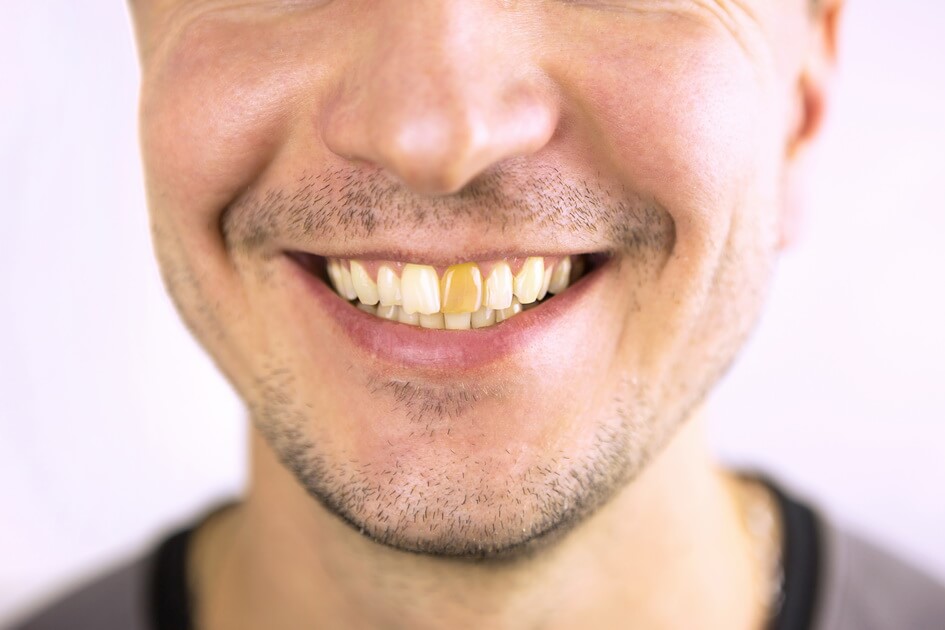
Many people ask a simple but confusing question: Why does the color of my teeth not change as I expected after a teeth whitening session? In most cases, the answer is related to the presence of a certain type of tooth discoloration that was not taken into consideration when choosing the treatment method. Not all discolorations are exactly the same, and not every whitening method is suitable for every case.
That is why a professional dentist does not begin a teeth whitening plan before fully understanding the source and nature of the discoloration, because the same treatment may give an excellent result for one patient and show little to no improvement for another patient, even though both complain of the same external appearance, which is yellowing or darkening of the teeth.
Why Is There No Single Whitening Method Suitable for Everyone?
The main reason is that discoloration does not always come from one source. Some discoloration is caused by external factors such as tea, coffee, and smoking, while other types develop inside the tooth structure itself due to certain medications or old injuries. There is also a third type related to aging and the thinning of the outer enamel layer. Each of these types has a different chemical composition.
This is what makes a substance such as hydrogen peroxide effective at a certain concentration for one case, while another case may require a higher concentration or a longer period. Even daily care through brushing the teeth and using the appropriate toothpaste is not enough on its own to remove all types of discoloration, because some of them are not superficial in the first place, but require specialized treatment.
Main Types of Tooth Discoloration
There are several main types of tooth discoloration, including:
1- Surface Discoloration
Causes: Deposits resulting from dark-colored beverages such as tea, coffee, and cola, in addition to smoking and the accumulation of plaque that gradually becomes stained over time.
Location: They appear on the outer layer of the tooth, which is the enamel only, and do not penetrate the inner layers.
Response to Treatment: They respond quickly and clearly to regular whitening sessions, whether performed in the dental clinic or at home.
2- Internal (Intrinsic) Discoloration
Causes: Taking certain antibiotics such as tetracycline during the tooth-development stage, increased fluoride levels, or exposure of the tooth to an old injury that led to nerve death and caused the tooth to change color from within.
Location: They are located within the tooth structure itself, specifically in the dentin layer, rather than on the outer surface.
Response to Treatment: They require more time and higher concentrations of whitening agents, and may require a completely different technique, such as internal tooth whitening.
3- Age-Related Discoloration
Causes: As people age, the outer enamel layer gradually becomes thinner, making the yellow color of the dentin appear more clearly through it.
Location: A combination of a change in enamel thickness and a change in the color of the dentin located directly beneath it.
Response to Treatment: It generally responds to whitening, but usually requires more follow-up sessions than simple surface cases, and additional cosmetic solutions may be recommended in advanced cases.
Steps for Diagnosing the Type of Discoloration at Wonders Dentistry
Here are the steps followed by Wonders Dentistry to diagnose the type of tooth discoloration:
- Comprehensive Clinical Examination: The first step always begins with a careful examination of the teeth under appropriate lighting to determine the appearance and distribution of the discoloration and whether it is uniform across all teeth or limited to one or more teeth.
- Medical and Dietary History: The patient is asked about medications they took during childhood, their dietary habits and smoking habits if any, and any previous injuries to the teeth, as all these details help determine the source of the discoloration accurately.
- Diagnostic Imaging: In cases where internal discoloration or a problem with the tooth nerve is suspected, X-rays are used to confirm the diagnosis before developing the appropriate treatment plan.
Teeth Whitening Methods Suitable for Each Type of Tooth Discoloration
There are different teeth whitening methods that are suitable for each type of tooth discoloration, as follows:
In-Office Bleaching
In-office teeth whitening is one of the fastest options for achieving a whiter shade within a short period. It is particularly suitable for surface and internal discoloration that can respond to whitening agents, such as discoloration caused by coffee, tea, smoking, and certain foods and beverages. It may also be used as a first step in some cases of age-related discoloration, after evaluating the condition of the teeth and gums.
Whitening Method: The dentist begins by examining the teeth and gums to make sure there are no cavities, inflammation, or problems that need to be treated before starting the whitening process. After that, the gums and tissues surrounding the teeth are protected, and then a whitening gel containing a high concentration of hydrogen peroxide or carbamide peroxide is applied, according to the system used at the clinic.
Some light or activation devices may be used as part of the whitening protocol, but their effectiveness varies depending on the type of material and the system used. Therefore, the success of whitening does not depend on light alone, but rather on the whitening agent, the method of application, and the condition of the teeth.
Advantages of In-Office Bleaching:
- A noticeable result may appear within one session in many cases.
- The ability to control the degree of whitening according to the condition and the patient’s preference.
- The whitening procedure is performed under the supervision of a dentist.
- Suitable for people who want a faster result than home whitening.
- It can be combined with home whitening to maintain the result or improve it when needed.
Take-Home Trays
Home whitening under the supervision of a dentist is a suitable option for people who prefer to achieve a gradual result. It can also be used in some cases as part of a plan to maintain the result of in-office whitening.
It is more suitable for mild to moderate discoloration that responds to whitening agents, such as some discoloration caused by colored beverages, dietary habits, and aging.
Whitening Method: The dentist evaluates the teeth and takes the necessary measurements to manufacture customized whitening trays that fit the patient’s teeth. The patient then receives a whitening gel at a concentration suitable for home use, along with clear instructions regarding the amount of gel, the duration of wearing the tray, and the number of times it should be used.
The usage schedule varies from one case to another depending on the concentration of the material and the condition of the teeth. Therefore, increasing the duration of use or the amount of gel is not recommended in an attempt to achieve a faster result.
Advantages of Home Whitening:
- The ability to perform whitening sessions at home according to a schedule that suits the patient.
- Achieving a gradual result that can be controlled.
- The possibility of using the trays later to maintain the degree of whiteness according to the dentist’s instructions.
- It is often less expensive than intensive in-office whitening.
- It can be used after in-office whitening as part of a plan to maintain the result.
Internal Bleaching
Internal bleaching differs from external whitening because it targets the tooth that has changed color from within. It is mainly used for some teeth that have become dark after nerve death or after root canal treatment. This may occur as a result of bleeding or internal changes in the tooth tissues.
Whitening Method: After confirming that the root canal treatment is sound and that there is no problem inside the tooth, the dentist opens the appropriate part of the tooth and places the whitening material inside it according to the technique suitable for the case.
The material is left for a specific period, and it may need to be replaced more than once to reach the desired shade. After the whitening is completed, the tooth is closed and restored using the appropriate method.
Advantages of Internal Bleaching:
- It targets the cause of the tooth’s discoloration from within.
- It is particularly suitable for teeth that have changed color after root canal treatment.
- It helps restore the color of the affected tooth so that it is more consistent with the neighboring teeth.
- It may be a conservative option compared with fully covering the tooth in some cases.
Cosmetic Veneers (Veneers and Lumineers)
In some cases, teeth whitening may not be the best option, especially when discoloration is severe or deep and does not respond sufficiently to whitening agents. In such cases, the dentist may use cosmetic solutions such as veneers, and in some cases, other types of thin shells such as Lumineers may be used depending on the condition of the teeth.
Veneers may be a suitable option for some cases of severe discoloration, such as certain cases of tetracycline discoloration, as well as when the patient wants to improve the color and shape of the teeth at the same time.
Whitening Method: Cosmetic veneers are not considered a type of teeth whitening in the traditional sense. Rather, they are a thin layer attached to the front surface of the tooth to change its appearance, color, and shape.
The dentist begins by examining the teeth and gums and evaluating the bite, then determines the appropriate design and color. After preparing the teeth as necessary according to the type of veneers and the condition, the veneers are bonded using specialized adhesive materials.
Advantages of Cosmetic Dental Veneers:
- Covering severe discoloration that may not respond to whitening.
- The ability to improve the color and shape of the teeth at the same time.
- Achieving a consistent cosmetic result when the case is properly planned.
- They can help improve some minor aesthetic defects, such as differences in tooth size or some gaps, depending on the case.
Factors That Affect the Dentist’s Decision
There are several factors that may affect the dentist’s decision when performing teeth whitening, including:
- Degree and Severity of Discoloration: The deeper and older the discoloration is, the more likely it is to require a higher concentration of whitening agent or a different technique than simple cases.
- Condition of the Gums and Teeth: It is necessary to make sure that the mouth is free from cavities or gum inflammation before starting any whitening procedure, to avoid any complications or increased sensitivity during or after treatment.
- Patient Expectations and Budget: The best teeth whitening dentist is one who discusses the realistically expected result with the patient honestly and suggests the option that suits their budget without exaggerating promises or results.
Pre- and Post-Whitening Tips from Wonders Dentistry
To achieve the best possible result from teeth whitening and reduce the possibility of sensitivity or gum irritation, the success of the treatment does not depend on the whitening session alone. Rather, it begins with proper preparation of the teeth and continued care after the session. Therefore, Wonders Dentistry makes sure to guide patients on a set of tips that help achieve a better result and maintain the color of the teeth for a longer period:
Before Teeth Whitening:
- Professional Teeth Cleaning Before Whitening: It is recommended to have the teeth professionally cleaned by a dentist to remove tartar, plaque, and accumulated surface discoloration, which helps prepare the teeth for whitening and achieve a more uniform and noticeable result.
- Treat Cavities and Gum Inflammation First: It is necessary to make sure there are no cavities, inflammation, or other problems affecting the teeth and gums before starting whitening. If any problem is present, it is preferable to treat it first to reduce the possibility of pain or increased tooth sensitivity during or after the session.
- Inform the Dentist If You Have Tooth Sensitivity: If you experience pain when consuming cold or hot beverages, it is important to inform the dentist before whitening so that they can evaluate your condition and choose the appropriate method to reduce the possibility of increased sensitivity.
- Avoid Smoking and Beverages That Cause Discoloration: It is preferable to reduce smoking and avoid excessive consumption of coffee, tea, and colored beverages before the whitening session, as they may lead to the accumulation of discoloration on the tooth surface and affect its appearance.
After Teeth Whitening:
- Avoid Colored Foods and Beverages for at Least 48 Hours: It is preferable to avoid coffee, tea, colored soft drinks, and strongly colored foods during the first 48 hours after whitening, as they may increase the possibility of discoloration and help maintain the new result of the teeth.
- Avoid Smoking After the Whitening Session: Avoiding smoking, especially during the first period after whitening, helps reduce the possibility of discoloration returning and maintain the color of the teeth for as long as possible.
- Use Toothpaste Designed for Sensitivity When Needed: Some people may experience temporary sensitivity after teeth whitening, especially when consuming cold or hot beverages. In this case, toothpaste designed for sensitive teeth can be used according to the dentist’s recommendation to help relieve the symptoms.
- Maintain Regular Teeth Cleaning: Brushing the teeth daily with an appropriate toothbrush and toothpaste, along with cleaning between the teeth, helps remove plaque and food particles and reduce the accumulation of discoloration that may affect the whitening result.
- Avoid Very Hot or Cold Foods and Beverages If Sensitivity Occurs: If temporary sensitivity occurs after whitening, it is preferable to avoid triggers that increase the symptoms, such as very cold or hot beverages, until the sensitivity subsides.
Teeth Whitening Prices in Egypt
Teeth whitening prices in Egypt vary depending on the type of technique used, whether in-office whitening, home whitening, internal bleaching, or cosmetic veneers. They also vary depending on the number of sessions required and the original degree of discoloration. The cost of teeth whitening starts from EGP 5,000, depending on the type used at Wonders Dentistry.
Why Choose Wonders Dentistry for Teeth Whitening?
The center does not begin any whitening session before accurately determining the type of discoloration, to ensure achieving the best possible result for each case individually.
The center also relies on the latest globally approved devices and techniques in the field of teeth whitening, in a way that suits the nature of each case and the severity of the existing discoloration.
In addition, the center’s team is keen to follow up with the patient after the session is completed to monitor the stability of the result and ensure that the teeth remain bright for as long as possible.
FAQs
How does a dentist determine whether teeth whitening is suitable for my case or not?
Through a careful clinical examination of the teeth and gums, reviewing the patient’s medical and dietary history, and sometimes using diagnostic X-rays, in order to accurately determine the type of discoloration and suggest the most appropriate treatment plan for each case.
What is the difference between in-office whitening and home whitening in terms of results and duration?
In-office whitening provides a faster result within one session using a high concentration, while home whitening takes longer, but uses a lower concentration and offers greater flexibility in scheduling.
Can teeth darkened by antibiotics be whitened?
In most cases, this type of discoloration requires a longer period and relatively intensive techniques. In severe cases, the most appropriate solution may be the use of cosmetic veneers instead of relying solely on traditional whitening.
How many sessions do I need to achieve the degree of whiteness I want?
The number of sessions varies depending on the type and severity of the discoloration. Simple surface cases may require only one or two sessions, while internal or age-related cases may require additional follow-up sessions to reach the desired result.