

Many people think that orthodontic treatment is a major undertaking that must take many years and requires wearing visible metal braces throughout the entire treatment period, but the truth is that not all orthodontic cases require such comprehensive treatment. There are a wide range of cases that require only a minor adjustment to the position of certain teeth whether it’s a small gap between the front teeth, mild crowding that only the patient notices, or even a slight relapse after previous orthodontic treatment. In these specific cases, the most important question is not “Do I need braces?” but rather “What type of treatment is right for my case?”.
And because choosing the right treatment is just as important as the accuracy of the diagnosis itself, opting directly for traditional metal braces in a case that requires only a minor adjustment may be an unnecessary overkill in terms of duration, cost, and appearance during treatment. This is where clear aligners come in as a practical and flexible option, specifically designed to address minor tooth movements without the need for complex interventions.
What Are Clear Aligners for Minor Tooth Movement?
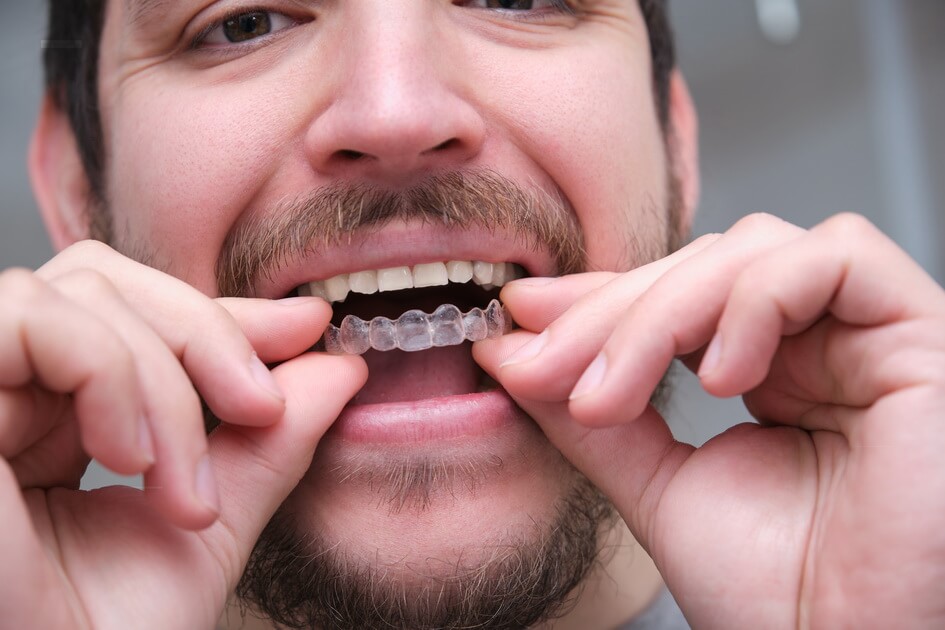
Clear aligners designed for minor tooth movements are essentially a “light” or simplified version of the well-known clear aligner systems, specifically designed to correct minor misalignments primarily in the front teeth, without radically altering the bite or changing the jaw structure. They consist of a series of clear aligners made from safe, medical-grade plastic, digitally designed with high precision so that the teeth move gradually and precisely from their current position to the target position.
The basic idea behind this type of treatment is that far fewer aligners are required compared to complex cases, and the amount of movement required for each tooth is limited and simple, resulting in a shorter treatment duration and more predictable results. The following are the most common cases typically treated with this type of appliance.
1. Small Gaps Between Front Teeth
Clear aligners can gradually bring separated front teeth into closer contact by applying carefully directed forces throughout the treatment sequence. The digital plan determines the amount and direction of movement required for each tooth, allowing the space to be reduced progressively rather than closing it through a single adjustment.
However, the dentist must first identify why the space is present, since factors such as tooth proportions, the position of the frenum, missing teeth, or other dental conditions can influence how the space should be managed and whether additional treatment is necessary.
2. Slight Crowding of Front Teeth
When the front teeth are positioned too closely together, clear aligners can be planned to move them in a controlled sequence while making use of the available space within the dental arch. In some treatment plans, interproximal reduction (IPR) may be used to create a small amount of additional room between selected teeth.
The aligners then guide the teeth through the planned sequence rather than attempting to reposition all of them simultaneously. The amount of space available, tooth anatomy, and the existing bite all influence how this movement is planned.
3. Relapse After Previous Braces
Orthodontic relapse occurs when teeth change position after a previous course of orthodontic treatment. For patients who have already completed orthodontic treatment, clear aligners can be used to reproduce a new sequence of tooth positions and gradually correct changes that have occurred over time.
Before starting, the dentist needs to evaluate the current alignment rather than relying on the original treatment plan, as the teeth and bite may have changed since the previous braces were removed. Once the desired position has been achieved, appropriate retention is necessary to help maintain the correction.
4. Single Tilted or Rotated Tooth
A tooth that has changed its angle or orientation can sometimes be repositioned using a sequence of clear aligners designed around that specific movement. Each tray provides a slightly different contact and pressure pattern, allowing the tooth to be guided progressively while the surrounding teeth provide stability.
The ability to control the movement depends on factors such as the degree and type of rotation, the tooth’s location, and the amount of space surrounding it. In some cases, additional attachments may be incorporated into the aligner design to improve control.
5. Limits of Aligner Treatment
Although clear aligners can provide precise control over many tooth movements, their capabilities are not unlimited. Movements become more challenging when they involve substantial rotations, significant vertical displacement, complex bite relationships, or changes associated with the underlying jaw structure.
Some situations may therefore require attachments, elastics, IPR, fixed appliances, or a comprehensive orthodontic approach rather than a limited aligner sequence. The appropriate option can only be determined after assessing the teeth, bite, supporting tissues, and overall orthodontic requirements.
Who Is a Candidate for the Minor Tooth Movement?
Not everyone who wants to improve their smile is an ideal candidate for this type of treatment. A suitable candidate is someone whose problem is limited in scope and is often confined to the front of the mouth, with a generally healthy bite and the rest of the teeth in good condition.
Ideal Cases for Clear Aligners
There are a number of cases that are perfectly suited for this type of treatment, and the following is a detailed explanation of each.
Mild Crowding:
When crowding is limited to the front teeth only and typically does not exceed a few millimeters of overlap between the teeth, the patient is a good candidate for this type of orthodontic treatment, The space needed to realign the teeth can be created by redistributing the natural spaces that already exist between the teeth, or through a simple, painless process of filing down the sides of some teeth (known as interproximal reduction), which is a completely safe procedure that does not affect tooth health when performed by an experienced dentist.
Small Gaps:
Gaps that do not exceed a certain distance between ”between 1 and 3 millimeters” one tooth and another, and are limited to the front teeth without extending to the entire jaw, respond very well to this type of treatment. The clear aligners work gradually and precisely to bring the teeth closer together, closing the gap seamlessly without causing any unevenness or irregularities in the spacing between the remaining teeth.
Slight rotations:
A slight deviation in the angle of one or more teeth without reaching the degree of severe twisting or significant misalignment is also a strong candidate for this treatment. Minor rotational or inclination movements can be controlled with high precision through the digital design of the aligners, ensuring that the tooth reaches its correct position without overshooting or unintended movements.
Relapse prevention:
One of the most important practical uses of this type of orthodontic treatment is also addressing the onset of relapse as soon as it is noticed, before it worsens and requires more extensive intervention, Many patients who have previously undergone orthodontic treatment notice, after some time, a slight shift in the position of one or two teeth. In such cases, early intervention with a simple clear aligner is entirely sufficient to correct the issue, rather than waiting until the problem worsens and requires a full course of orthodontic treatment all over again.
When Clear Aligners Are Not Suitable?
Just as there are ideal cases for this type of treatment, there are also cases in which it is not recommended. It is important to be aware of these so that an inappropriate treatment is not chosen, which could lead to unsatisfactory results or an unnecessarily prolonged treatment period
Severe crowding or rotated teeth:
When crowding is so severe that the teeth clearly overlap one another, or when the misalignment of a tooth is so significant that it requires extensive rotational or translational movement, mild orthodontic appliances are not sufficient to address this magnitude of change. In such cases, a full set of clear aligners comprising a much larger number of aligners is required, or perhaps traditional metal braces, which provide greater control over tooth movement.
Complex bite issues:
Any obvious misalignment in the way the jaws fit together whether it is an open bite, a significantly deep bite, or a crossbite is beyond the scope of this type of simplified orthodontic treatment, These cases require a comprehensive approach that addresses the position of the jaws as a whole, not just the alignment of the front teeth, and often necessitate a more complex treatment plan that may sometimes include additional appliances.
Cases requiring tooth extractions or jaw surgery:
In some cases, the jaw is too small to properly accommodate all the teeth, which requires the extraction of one or more teeth to create the necessary space, or even surgical intervention to correct the position of the jaw itself. These cases, by their nature, go beyond the capabilities of clear aligners designed for minor tooth movement and require a comprehensive treatment plan supervised by a specialized medical team.
Patients with poor compliance:
The success of clear aligners, regardless of the complexity of the case, depends primarily on the patient’s commitment to wearing the aligners for the recommended number of hours per day. If the patient is unable to adhere to this regimen, whether due to work commitments or a lifestyle that does not allow for it results will be delayed or may not be achieved as desired. In such cases, fixed metal braces may be a more suitable option because they do not rely on the patient’s daily compliance, which can vary.
Benefits of Clear Aligners for Minor Cases
Choosing clear aligners for simple cases isn’t just about them being “less intrusive” than full orthodontic treatment; they also offer a range of practical advantages that make them the preferred choice for many patients, most notably their discreet appearance, which allows patients to continue with their daily, social, and professional lives without embarrassment or a noticeable change in the appearance of their smile during treatment.
1- Removable and Convenient: Unlike fixed metal braces, clear aligners can be easily removed whenever needed whether for eating, brushing teeth, or on a special occasion when the patient prefers not to wear them for a short time. This flexibility makes it easier to manage daily life, while maintaining better oral hygiene compared to metal wires and brackets, which require special care during cleaning.
2- Comfortable Treatment Experience: The clear aligners are made of soft-to-the-touch materials and contain no wires or protruding brackets that could cause irritation or cuts to the soft tissues inside the mouth, as is common when first using metal braces. This makes the treatment experience as a whole more comfortable, especially since the movement required in these cases is minimal to begin with, which reduces the feeling of pressure or pain associated with the start of each new aligner.
3- Shorter Treatment Duration: Since the extent of correction required is limited from the outset, the number of aligners needed is significantly lower than in complex cases, which directly reduces the overall treatment duration. While comprehensive cases may take a year or more, cases involving minor movement can be completed in just a few months, which is ideal for people seeking quick, targeted results.
4- Predictable Results: Thanks to precise digital planning prior to the start of treatment, both the dentist and the patient can view a simulation of what the teeth will look like at the end of the treatment journey, even before the first impression is taken. Since the amount of movement required is limited and precisely calculated, the final results are as close as possible to what was planned, with fewer chances of surprises or unexpected adjustments during the course of treatment.
The Clear Aligners Process at The Best Dental Clinic
The clear aligner treatment journey at the clinic involves several sequential stages, each designed to ensure the accuracy of the final result and the patient’s comfort throughout the treatment period.
- Initial Consultation and Assessment: The journey always begins with a comprehensive examination, during which the dentist assesses the overall condition of the teeth and bite, and determines whether the case is indeed a simple one suitable for this type of orthodontic treatment, or if it requires a more comprehensive treatment plan. During this session, the patient’s expectations and treatment goals are also discussed to ensure that the proposed plan aligns with what the patient actually hopes to achieve.
- Treatment Planning and Digital Simulation: After confirming that the case is suitable, a precise digital scan of the teeth is taken using advanced 3D imaging devices, eliminating the need for traditional, uncomfortable impressions. This data is used to create a digital simulation that illustrates the step-by-step movement of each tooth, starting from the current position and progressing to the final target position. This allows the patient to see an approximate preview of their future smile before treatment actually begins.
- Aligner Manufacturing and Fitting: Based on the approved digital treatment plan, a series of clear aligners specific to the patient is manufactured, with each aligner designed for a specific stage of tooth movement. Upon receipt of the aligners, the first one is fitted at the clinic, and the patient is given clear instructions on how to wear them, how long to wear each aligner before moving on to the next, and daily care and cleaning routines.
- Monitoring and Adjustment: Throughout the treatment period, regular follow-up appointments are scheduled at the clinic to ensure that the teeth are moving according to the planned trajectory and to make any minor adjustments as needed. This regular follow-up ensures that any deviation from the original plan is detected early and addressed immediately before it affects the final outcome of the treatment.
Prices for Clear Aligners in Egypt
Clear aligners are available at the Wonders Dentistry at a price ranging from 10,000 to 20,000 EGP; the final cost is determined following a clinical examination and the necessary 3D imaging.
In general, the cost of cases involving minor tooth movement, which require a limited number of aligners is significantly lower compared to full clear aligner cases, which may require dozens of aligners over the course of a year or more. Since prices fluctuate from time to time and vary from clinic to clinic based on the actual assessment of the case, the most accurate way to determine the actual cost is to schedule a consultation and initial evaluation, during which the dentist will precisely determine the number of aligners needed and then provide the patient with a clear and detailed quote tailored specifically to their case.
Why Choose Wonders Dentistry for Clear Aligners?
When considering orthodontic treatment, even a simple one, choosing the right clinic and medical team remains a crucial factor in the quality of the final result. Wonders Dentistry stands out for several reasons that make it a trusted destination for this specific type of treatment.
Expertise in Minor Movement Cases; Managing cases involving slight tooth movement requires particular precision in diagnosis and planning, as even a minor error in estimating the required movement can significantly affect the final result despite the small scale of the adjustment. Therefore, having a medical team with extensive experience specifically in this type of case makes a real difference in the accuracy of the results and the speed with which they are achieved.
Advanced Digital Technology; Relying on 3D digital scanning systems and computer simulations for treatment planning ensures greater precision in aligner design and reduces the need for repeated adjustments during the course of treatment. These technologies also allow patients to visually track the progress of their treatment at every stage, giving them a greater sense of confidence and clarity throughout the treatment period.
Personalized Treatment Plans; No two mouths are exactly alike; therefore, each treatment plan is developed based on a thorough assessment of each patient’s individual condition, ensuring the selection of the most appropriate type of orthodontic appliance whether designed for minor movement or a full system rather than applying a single, standardized solution to all cases regardless of their differences.
Transparent Pricing; From the very first consultation, patients receive clear details about the expected cost of their treatment, with no surprises or undisclosed additional fees throughout the treatment process, allowing them to make a treatment decision with complete confidence and clarity from the very beginning.
FAQS
How long does clear aligner treatment take for minor tooth movement?
The duration varies depending on the exact extent of the correction needed, but it typically ranges from about two to six months. This is because the number of aligners required in these cases is limited compared to full orthodontic treatments, which can take a year or more.
What is the cost difference between Invisalign and local clear aligner brands in Egypt?
The cost of well-known international systems, such as Invisalign, is usually higher compared to locally manufactured brands in Egypt, due to factors such as brand reputation and the manufacturing techniques used. However, local brands remain an effective and reliable option in many simple cases, and the orthodontist can explain the differences in detail based on each patient’s specific case.
Can clear aligners fix a single crooked tooth or small gap?
Yes, these are among the most common cases for which clear aligners designed specifically for minor adjustments are intended, as they focus on the specific tooth or area that needs correction without affecting the rest of the naturally aligned teeth.
Are clear aligners painful compared to traditional braces?
In general, clear aligners are less uncomfortable than traditional metal braces because they do not have wires or protruding brackets that can irritate soft tissues. The patient may feel mild, temporary pressure when starting to wear each new aligner, but this usually subsides within a day or two.