

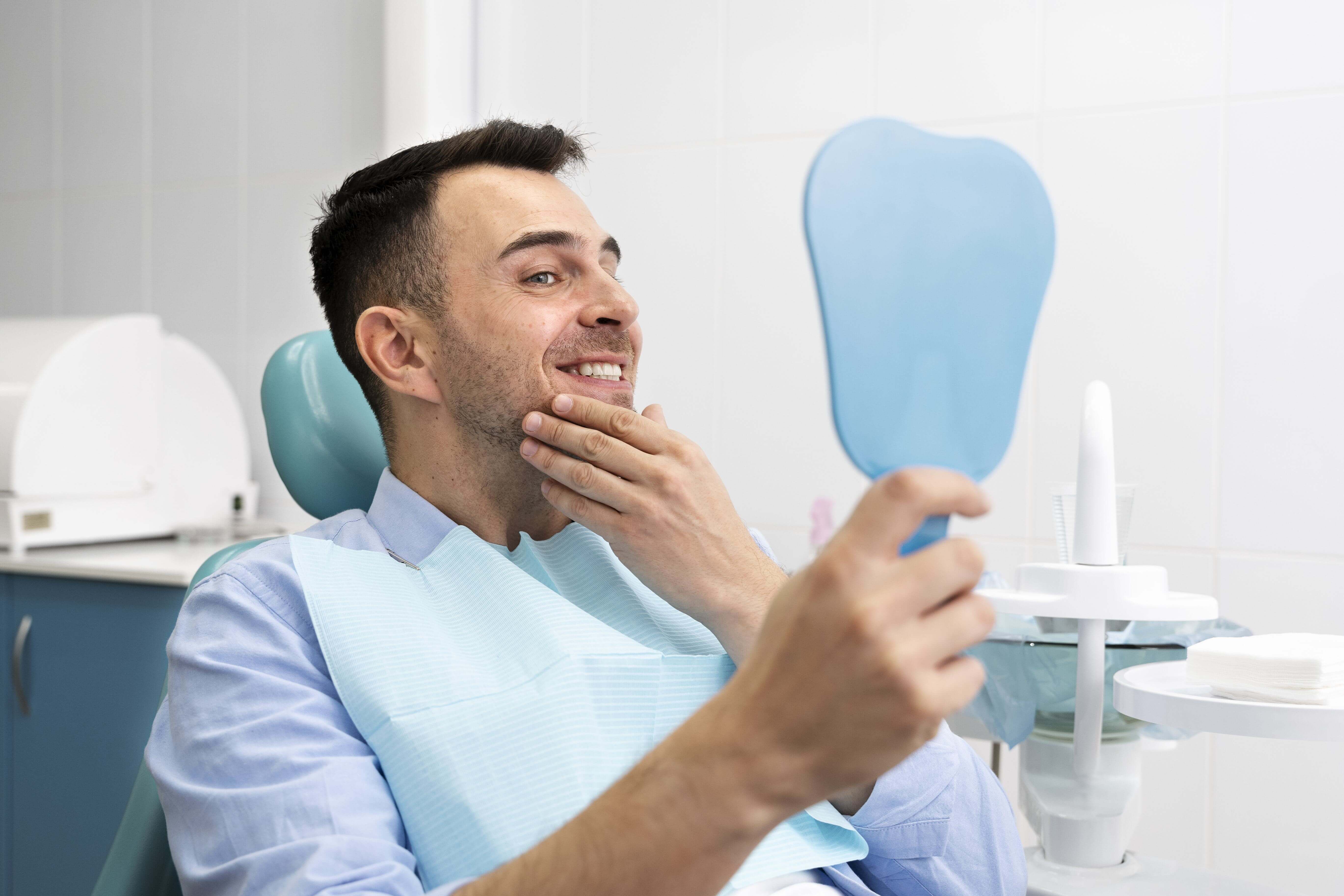
Dental restorations are used to treat damaged teeth, replace missing teeth, enhance function, and improve the appearance of the mouth. If you have one or more teeth that are severely affected by decay, then you definitely need to consult a dentist to determine whether you need dental restorations, whether fixed or removable.
Among the well-known restorations in the world of dentistry that are used in crowns and bridges is Emax, which has become very popular among treatment options in the field of dentistry. In this article, we will talk in detail about one of the most important materials used in fixed dental restorations, which is Emax.
What are Emax dental restorations?
Emax first appeared as a well-known brand name for dental materials by Ivoclar Vivadent, a leading company in the manufacturing of dental products.
Emax is a lithium disilicate glass-ceramic material commonly used to fabricate dental crowns, veneers, onlays, inlays, overlays, and other types of dental prosthetic restorations. Emax is characterized by greater strength and aesthetics, in addition to the possibility of being manufactured in thinner thicknesses.
What is the difference between Emax and zirconia dental restorations?
To create restorations such as crowns, veneers, and dental bridges, there are two common materials used in restorative dentistry: zirconia and Emax.
| Zirconia | Emax | |
| Composition | It is a type of ceramic material mainly composed of zirconium oxide, and it is known for its exceptional strength and durability, making it suitable for posterior (back) tooth restorations. | It is a glass-ceramic material mainly made of lithium disilicate crystals, used for its translucency and natural color, which closely resembles natural teeth. Emax restorations are usually used for anterior teeth. |
| Aesthetics | Zirconia restorations appear somewhat opaque, making them less suitable for areas where aesthetics are important. | It is characterized by natural translucency and color, making it ideal for enhancing the smile. |
| Strength | Zirconia is one of the strongest dental materials available. It is highly resistant to fractures and wear, making it suitable for high-pressure areas. | Strong, but not as strong as zirconia. Although it provides excellent strength for anterior teeth, it may not be the first choice for posterior teeth. |
| Application | Zirconia is often used for posterior crowns and bridges. | In anterior restorations where aesthetics are of utmost importance. |
Types of Emax dental restorations
- Dental crowns: Emax crowns are used to restore and strengthen teeth that have been damaged due to decay, trauma, or other issues.
- Dental veneers: Emax veneers are thin shells that are bonded to the front surfaces of the teeth to improve their appearance. They are commonly used to treat issues such as stains, misalignment, or small gaps between teeth.
- Onlay, inlay, and overlay: These are indirect restorations used to repair teeth that are too damaged for a simple filling but not damaged enough to require root canal treatment and a post or endocrown. They are custom-made in a dental laboratory and then bonded to the affected teeth.
- Endocrown: It is a restoration fabricated in a dental lab and placed on molars that have undergone root canal treatment and still have sufficient enamel and dentin structure to support the restoration.
- Dental bridges.
Reasons to choose Emax dental restorations
There are many reasons to choose Emax restorations for dental rehabilitation, including: exceptional aesthetics that closely resemble natural teeth, strength, durability, minimal tooth preparation compared to porcelain fused to metal (PFM) restorations, biocompatibility with surrounding tissues, longevity, and stain resistance.
Emax is a popular choice in restorative dentistry due to its ability to provide both aesthetic and functional advantages.
Advantages of Emax dental restorations
- Aesthetics: Emax restorations provide excellent aesthetic results. It closely mimics the natural translucency and color of teeth, making it an attractive choice for restorations in the front areas of the mouth.
- Strength: Despite its excellent aesthetics, Emax is known for its strength and durability. It can withstand chewing and biting forces, making it suitable for both anterior teeth (incisors and canines) and posterior teeth (molars and premolars).
- Minimal tooth preparation: Emax restorations often require minimal tooth preparation, allowing for a more conservative treatment that preserves more of the patient’s natural tooth structure.
- Versatility: Emax materials can be used for various types of dental restorations, including crowns, veneers, and even full bridges.
- Biocompatibility: Emax is biocompatible, meaning it is well tolerated by the body and unlikely to cause allergic reactions.
- Longevity: With proper care, Emax restorations can be long-lasting, providing patients with durable and comfortable results.
Disadvantages of Emax dental restorations
- Cost: Emax restorations can be more expensive than some other dental materials.
- Strength compared to zirconia: Although Emax restorations are strong, they may not be as strong as zirconia.
- Tooth sensitivity after preparation: This issue occurs with most restorations due to the removal of the enamel layer and exposure of the sensitive dentin layer. Your dentist will take the necessary measures to prevent sensitivity before placing the restoration, and after placement, you will not feel sensitivity because the new restoration will fully cover the dentin layer, protecting it from external factors.
Tips for caring for Emax dental restorations
- Clean your mouth and teeth thoroughly using a toothbrush and dental floss.
- Avoid hard materials such as biting ice, opening bottles with your teeth, and other bad habits that may damage the restoration and teeth.
- Maintain regular visits to your dentist for periodic check-ups of the entire mouth and teeth to detect any problems early and treat them promptly.
- Your dentist will provide you with instructions on how to care for your restoration—follow them and do not ignore them to ensure a longer lifespan for your new restoration.
FAQs
What makes “Emax” better than “zirconia” for anterior teeth?
While zirconia is known for its superior strength, Emax (lithium disilicate) is considered the gold standard for aesthetics. Emax features natural translucency and light reflection that closely mimics real tooth enamel with remarkable accuracy. Zirconia may sometimes appear “opaque” or chalky in anterior teeth, whereas Emax blends with your natural teeth to the point that it is difficult to distinguish between them.
Can Emax restorations be used for posterior molars?
Emax is an excellent option for onlays and crowns on premolars. As for posterior molars that are exposed to strong chewing forces, we evaluate the patient’s “bite force.” Thanks to digital design technologies (CAD/CAM), it is now possible to use Emax in posterior molars with specific thickness that ensures an ideal balance between aesthetics and fracture resistance.
Does Emax placement require significant or painful tooth reduction?
On the contrary; Emax supports the principle of “minimal intervention.” Because the material bonds chemically to the tooth with high strength, we only need to remove a very thin layer of enamel (ranging between 0.3 to 0.5 mm in some cases). This preserves the vitality of the nerve and significantly reduces tooth sensitivity after placement.
What is the lifespan of Emax veneers and crowns?
With good home care and regular follow-up at Wonders dentistry, Emax restorations can last from 10 to 15 years or more. This material is highly resistant to staining and wear, meaning that the color and shine of your smile on the first day will remain stable for many years.