

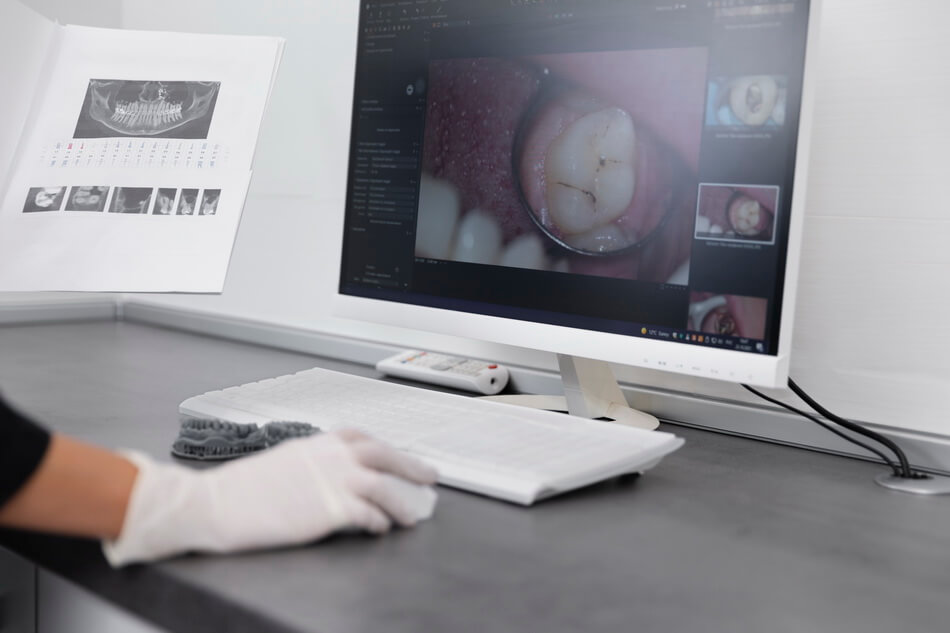
Everyone cares about the beauty of their teeth — men and women alike — regardless of age, whether it’s about color, shape, or alignment. The beauty of teeth adds significantly to the overall attractiveness of one’s appearance. When we interact with someone, we first notice their facial features — but once they begin to speak, our eyes naturally shift to their mouth and teeth. That’s why we can confidently say that teeth play a key role in a person’s self-esteem.
You should therefore give the subject its importance. Among the many advancements in modern dentistry that have enhanced cosmetic results and expanded treatment options is nano technology in cosmetic dentistry. In this article, we will discuss this innovative technique in detail.
What is nano technology?
Nano dentistry is an emerging branch of dental science that involves applying nano technology to various aspects of dental care, diagnosis, treatment, and dental materials.
The nanometer is one-billionth of a meter — a scale that allows for extremely precise manipulation. Nano technology offers numerous potential benefits and applications, including:
- Diagnosis: Nano technology can be used to develop highly sensitive diagnostic tools to detect dental diseases and conditions at an early stage. Nano sensors and nano particles can identify and monitor specific biomarkers related to oral and dental health.
- Drug delivery: Nano-scale drug delivery systems can enhance the efficiency of delivering medications or therapeutic agents directly to targeted areas within the oral cavity. This can improve treatment outcomes for conditions such as gum disease and oral infections.
- Restorative materials: Nano technology has led to the development of advanced restorative dental materials with superior properties. For example, nano-composite resins offer enhanced strength, durability, and aesthetics — ideal for fillings, crowns, and veneers.
- Antibacterial coatings: Nano technology can be used to create antibacterial coatings for dental implants, orthodontic appliances, and other dental materials. These coatings help prevent bacterial adhesion and biofilm formation, reducing the risk of infection.
- Oral cancer detection: Nano particles and nano sensors can be used to detect early signs of oral cancer and monitor disease progression, enabling more effective treatment.
- Tissue engineering: Nano technology plays a vital role in tissue engineering to regenerate oral tissues such as gums, bones, and salivary glands.
- Enhanced imaging: Nano technology can improve dental imaging techniques — for example, increasing X-ray resolution and accuracy for better treatment planning.
- Preventive dentistry: Nano technology may enable the development of preventive dental care tools, such as sensors that monitor oral pH levels to prevent tooth decay.
It’s important to note that nano dentistry is still an evolving and experimental field undergoing continuous research and development. While it holds great promise for improving oral healthcare, many applications are still in their experimental or developmental stages.
How nano technology is used in cosmetic dentistry?
Nano carbon technology has the potential to revolutionize cosmetic dentistry by providing advanced materials and techniques to enhance the appearance of teeth and smiles.
- Nano-filled restorative materials: Nano composites can closely mimic the natural transparency and color of teeth.
- Nano tooth whitening: Nano particles can be integrated into whitening gels to increase their efficiency. These tiny particles penetrate the enamel more effectively, leading to faster and more noticeable whitening results.
- Nano tools: Nano-sized instruments can be used for highly precise tooth preparation and contouring with minimal invasiveness, preserving the natural tooth structure during cosmetic procedures.
- Smile design and planning: Advanced computer programs using nano algorithms can simulate and design highly detailed, realistic smile models, helping patients visualize their expected cosmetic results before starting treatment.
- Biomimetic dentistry: Nano technology allows for the creation of biomimetic dental materials that replicate the natural properties of teeth, such as strength, wear resistance, and light transmission.
- Nano dental implants: Dental implants with nano-textured surfaces improve osseointegration (fusion with the jawbone), resulting in more aesthetic and functional implant restorations.
- Nano-ceramic veneers: Nano-engineered ceramics can be used to produce veneers that closely imitate the natural appearance of teeth — including translucency and surface texture.
- Durability and longevity: Nano technology enhances the durability and lifespan of cosmetic restorations, maintaining their beauty and functionality over time.
Devices that use nano technology in cosmetic dentistry
- Intraoral scanners: High-resolution intraoral scanners equipped with nano imaging technology allow dentists to create precise digital impressions of the teeth and gums. These digital impressions are used for smile design and the fabrication of cosmetic restorations.
- 3D printers: Nano-precision 3D printers are used to produce detailed and highly customized dental prosthetics such as veneers, crowns, and bridges.
- Digital Smile Design (DSD) software: DSD programs use advanced algorithms and nano-level calculations to simulate and design ideal smiles. Dentists and patients can visualize and plan cosmetic treatments based on these simulations.
- Laser technology: Precisely controlled laser systems are used in several cosmetic dental procedures — including gum contouring, tooth whitening, and soft-tissue sculpting — to improve aesthetics.
- Nano whitening systems: Whitening gels containing nano-sized bleaching agents enhance the speed and effectiveness of whitening procedures. These systems penetrate enamel more efficiently for better results.
- Digital shade-matching devices: These tools use nano color analysis to match restoration shades precisely with the patient’s natural tooth color.
Advantages and disadvantages of nano technology in cosmetic dentistry
First – Advantages:
Improved aesthetics: Nano materials and techniques allow for restorations that mimic the natural appearance of teeth, enhancing smile aesthetics.
Enhanced strength and durability: Nano composites and ceramics offer improved strength and longevity, creating more durable dental restorations.
Minimally invasive procedures: Nano-sized tools enable highly precise, minimally invasive dental treatments that preserve natural tooth structure.
Faster healing: Minimally invasive nano-based techniques typically result in faster healing and less discomfort for patients after cosmetic procedures.
Better diagnostic tools: Nano technology enables the development of highly sensitive diagnostic tools for early disease detection.
Targeted drug delivery: Nano structures can be used to deliver medications precisely to affected areas, improving treatment effectiveness while minimizing side effects.
Second – Disadvantages:
Cost: Nano dentistry can be more expensive due to the advanced materials and high-tech equipment used, limiting accessibility for some patients.
Specialized training: Dentists and specialists require advanced training to use nano technology effectively — training that may not be widely available.
Limited availability: Not all dental clinics have access to nano materials and technologies, restricting treatment options for some patients.
Complexity: Nano dental technology involves complex processes requiring precise measurements and a deep understanding of nano materials, increasing the risk of errors if not handled correctly.
FAQs
How does Nanotechnology make dental fillings “invisible”?
Traditional fillings used larger particles that created a dull surface over time. Nanofilled Composites use particles measured in nanometers (one-billionth of a meter). These tiny particles allow the material to reflect light exactly like natural enamel. This “chameleon effect” allows the restoration to blend perfectly with the surrounding tooth color, making it virtually invisible even under bright lights.
Do Nano-Veneers last longer than traditional porcelain?
Nano-materials have a much higher density of particles, which significantly reduces “micro-wear” and staining. Because the surface is so smooth at a molecular level, plaque and pigments from coffee or tea find it much harder to stick. This means your smile stays brighter and smoother for much longer than with traditional materials.
Can Nanotechnology help repair early cavities without drilling?
Yes, through a process called Nano-Remineralization. We use specialized pastes containing Nano-Hydroxyapatite (the primary mineral in your teeth). These nano-particles are small enough to penetrate the microscopic pores of weakened enamel, “plugging” the gaps and hardening the tooth structure before a full cavity can form, often eliminating the need for a drill.
Is Nanotechnology in dentistry safe?
Absolutely. The nano-materials we use at Wonders Dental Center are biocompatible and engineered to bond specifically with human tooth structure. They provide a “Bio-Mimetic” seal that protects the internal nerve of the tooth while providing superior structural support compared to older generations of dental plastics.