

Have you ever wondered why a dental treatment works for one person, while another person needs a completely different plan even though the problem is similar? It’s not just a matter of the dentist’s skill, but rather the unique nature of each mouth and its specific details that may not be apparent at first glance. The shape of the jaw, bone density, condition of the gums, bite alignment, and the patient’s medical history are all factors that influence the choice of appropriate treatment. That’s why following a one-size-fits-all approach with all patients may not achieve the desired result—and could even lead to complications that could have been avoided from the start.
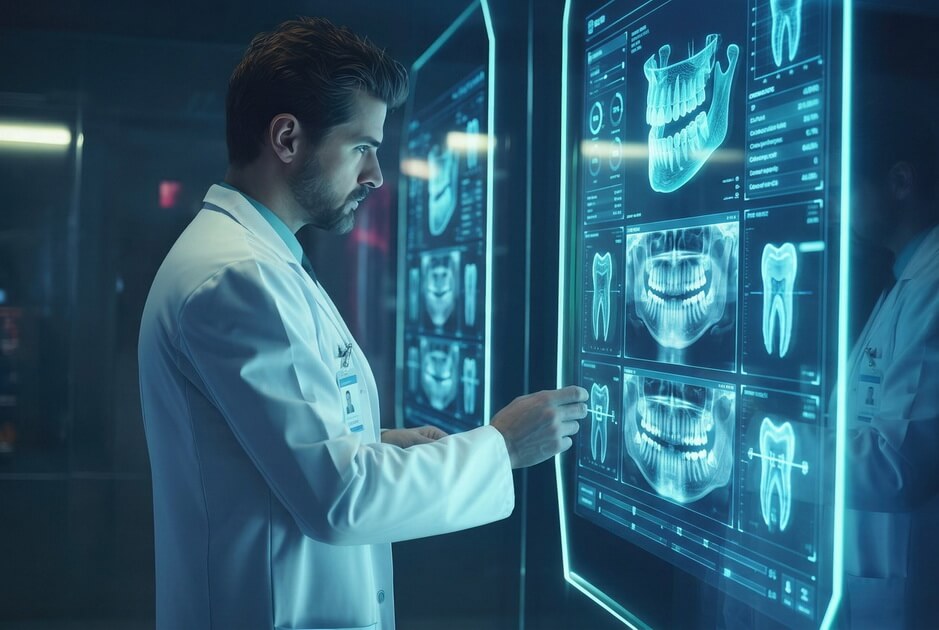
With the introduction of artificial intelligence into dental clinics, dentists now have modern tools that help them analyze X-rays, identify subtle details, and compare treatment options before beginning any procedure—paving the way for more precise care tailored to each patient’s needs. However, utilizing these technologies does not mean doing away with the dentist’s expertise; rather, it provides them with additional information to help them make the appropriate decision based on the examination, diagnosis, and nature of the case.
The Problem with the “One-Size-Fits-All” Approach in Dentistry
Many dental clinics in Egypt still rely on generalized treatment methods that do not take into account each patient’s unique condition. While this approach may seem quick and easy for the clinic, it often leaves the patient with a treatment plan that does not reflect their actual needs.
Why Do Two Patients with the Same Problem Differ?
Imagine two patients suffering from deep decay in their lower first molars. The first is a 25-year-old man with generally healthy teeth who practices good oral hygiene and has a dense jawbone. The second is a 55-year-old man who suffers from gum inflammation, takes medications that cause dry mouth, and has a habit of grinding his teeth while sleeping. The apparent problem is the same, but the appropriate treatment plan for each differs in several ways:
- The method of restoring the molar—whether by filling it or covering it with a crown.
- Whether or not root canal treatment is needed.
- The type of material best suited to withstand pressure.
- The schedule of appointments and sessions.
- The post-treatment follow-up and prevention plan.
If both patients were treated the same way, one would benefit while the other would be harmed—or, at the very least, one would not achieve the best possible outcome.
What happens when everyone is treated the same way?
Treating everyone the same way leads to mediocre results, longer treatment periods, and sometimes unnecessary procedures. Let’s clarify these three points:
- Average results: When a treatment plan is based on a general template, the result is acceptable but not the best for you. A filling might work for a while but then need to be replaced, or a restoration might look good but not align properly with your bite, causing joint or muscle strain.
- Longer treatment periods: When the case is not thoroughly assessed from the start, the patient is forced to return for additional visits to correct issues that could have been anticipated. This is particularly evident in orthodontics and dental implants, as even a minor error in the initial planning affects the overall duration of treatment.
- Unnecessary Procedures: Sometimes an extensive treatment is recommended for a case that doesn’t require it, or procedures are suggested that aren’t suitable for the patient’s health condition; in such cases, the treatment plan turns from a solution into a financial and emotional burden.
The Patient’s Right to a Personalized Plan
You have the right to know why the dentist recommended this specific procedure, what alternatives are available, what risks are expected, and how long each stage will take. A good plan explains these details to you using images, numbers, and simulations—not with a brief statement like “This is standard practice.” This is where modern technologies—particularly artificial intelligence—come into play, making this explanation possible and much clearer.
How Is Artificial Intelligence Changing the Field of Dental Care?
Artificial intelligence does not replace dentists; rather, it provides them with better tools to diagnose more quickly and plan with greater precision. This is the most important thing any patient should know before hearing about this technology.
What Is Artificial Intelligence in Dentistry?
Artificial intelligence in dentistry refers to computer systems designed to analyze complex diagnostic data and assist with clinical decision-making. It is crucial to understand that AI is not replacing dentists; rather, it empowers them with advanced diagnostic capabilities that enable faster, more precise treatment planning. These systems process radiographic images, CBCT scans, and comprehensive patient data to identify patterns and suggest optimal treatment pathways based on evidence-based outcomes. Tasks that previously required days of manual analysis and consultation can now be accomplished in minutes, allowing your dentist to dedicate more time to direct patient care and personalized treatment adjustments.
Why does this matter to patients in Egypt?
Because a patient’s time is precious; the fewer exploratory visits required and the more accurate the treatment plan is from the start, the more effort and expense the patient saves. Furthermore, clear imaging and visual simulations make the patient a partner in the decision-making process, rather than merely a recipient of it.
What Is the Actual Role of Artificial Intelligence in Dental Treatment Planning?
The term “artificial intelligence” raises high expectations—and sometimes unfounded fears—so it is helpful to define precisely what it does and does not do in dental treatment planning.
1- Artificial intelligence provides assistance; dentists make the decisions
Artificial intelligence acts as a smart assistant: It reads, measures, compares, and presents possibilities, but the final decision is based on the dentist’s experience and assessment of the entire case. For example, if the program suggests a specific location for a dental implant, the dentist is the one who evaluates its suitability in light of the condition of the gums, the patient’s bite, aesthetic considerations, and overall health.
2- The human element remains essential
There are aspects that no program can handle:
- Listening to a patient’s complaints and understanding their concerns.
- Noticing details not visible in images, such as muscle tension or tissue sensitivity during an examination.
- Taking into account the patient’s psychological state, especially in the case of children or those with a fear of the clinic.
- Making ethical decisions, such as postponing a non-essential procedure or advising the patient not to rush.
- The precise manual execution of the treatment itself.
This is why we say that technology enhances the dentist’s work—it does not replace it.
3- Image Analysis and Diagnosis
Artificial intelligence can analyze panoramic, periapical, and CT images and identify areas that may require the dentist’s attention, such as:
- Early signs of decay between teeth, which are sometimes difficult to see with the naked eye.
- Bone loss around the teeth in cases of gum disease.
- Inflammation around the roots of the teeth.
- The locations of nerves and sinuses near implant sites.
This provides the dentist with a “second set of eyes” that alerts them to details they might overlook amid a busy workload, allowing them to confirm the diagnosis themselves.
4- Treatment Simulation
One of the greatest benefits of this technology is that it shows you what the result will look like before you begin. It can simulate the movement of your teeth during orthodontic treatment, the appearance of your smile after cosmetic procedures, or the placement of an implant and its final crown. This minimizes surprises and gives you the opportunity to adjust your expectations or request changes before the procedure begins.
5- Risk Assessment
Every treatment carries potential risks, which may vary depending on your specific case. Data analysis helps assess some of these risks, such as the likelihood of gum recession, difficulty with bone healing, or effects on the sinuses. This does not mean that the technology predicts the future with absolute accuracy, but rather provides indicators that help the dentist take better precautions and explain them to you frankly.
6- Estimating Treatment Duration
One of the most common questions from patients is: “How long will this treatment plan take?” Based on measurements and simulations, the duration can be estimated with greater accuracy, though it’s important to note that each person’s biological response varies, and your adherence to instructions affects the timeline.
7- Selection of Materials and Techniques
The materials used in dentistry range from fillings, crowns, and veneers to various types of implants, wires, and retainers. Precise data on occlusion, expected bite force, and the desired aesthetic outcome help in selecting the most appropriate option for each individual case, rather than relying on a one-size-fits-all approach.
How Does Artificial Intelligence Speed Up the Planning Process?
Speed isn’t an end in itself, but it becomes a real advantage when combined with accuracy—and these are the ways AI reduces planning time without sacrificing quality.
Instant Data Processing
AI processes thousands of data points in seconds; what takes hours to do manually is accomplished in minutes.
Imagine you have a 3D scan of the jaws containing millions of data points. Analyzing this data manually with just your eyes and a pen is nearly impossible, but the software breaks it down into teeth, bone, gums, and nerves, displaying it in colors and layers that make it easy for the dentist to examine. This allows the dentist to devote their time to considering the best option, rather than gathering information.
Automated Measurements
Artificial intelligence automatically measures tooth dimensions, bone density, and the distances between them, eliminating the need for manual calculations.
This is important in cases such as:
- Dental implants: Measuring bone height and thickness to determine implant size and length.
- Orthodontics: Measuring crowding, spaces, and inclination angles.
- Restorations: Calculating the required material thickness and occlusal height.
- Root canal treatment: Estimating canal lengths and curvatures.
Manual measurement is prone to minor errors due to fatigue or variations in image angles, whereas automated measurement relies on fixed standards and is reviewed by the dentist.
Real-Time Adjustments
If conditions change, artificial intelligence immediately updates the treatment plan, and dentists can adjust the treatment right away.
Unexpected issues may arise during treatment—such as teeth moving faster or slower than planned in the orthodontic treatment plan, the discovery of additional cavities, or changes in gum position. With the traditional method, this requires reassessment and a long wait, but with digital systems, the dentist simply enters the new data, the simulation updates, and the appointments are rescheduled—so you don’t waste any time.
Artificial Intelligence Tools Used at “Wonders Dentistry” for Treatment Planning
Wonders Dentistry relies on a range of digital technologies that support the dentist at every stage, from the initial examination through follow-up. Below is an explanation of each tool and what it offers the patient.
3D Imaging and Computed Tomography (CBCT) Analysis
What This Procedure Offers?
The CBCT machine captures a 3D image of the jaws, teeth, bones, sinuses, and nerves in a single, brief scan. Unlike standard X-rays, which show only a single plane, this image allows for a view of the condition from all angles and enables precise measurement of thickness, depth, and distances.
Analysis software helps the dentist identify the course of the inferior alveolar nerve, the boundaries of the sinuses, bone density, and the locations of roots, deep cavities, and infections.
How It Helps You?
- You receive a clearer diagnosis of complex cases.
- The likelihood of surprises during surgery or implant placement is reduced.
- Your dentist explains the condition to you on a 3D screen, so you can understand it for yourself.
- Some repeat X-rays can be avoided, since a single scan provides a wealth of information.
Intraoral Scanning Using Artificial Intelligence
What Does It Do?
The intraoral scanner is a small, camera-like device that moves inside the mouth and captures detailed images of the teeth and gums, which are then compiled into a digital 3D model. Artificial intelligence software helps clean up the model, define tooth boundaries, detect discrepancies in the bite, and prepare the data for design.
How It Helps You?
- In most cases, there is no need for traditional impression materials, some of which can cause nausea and discomfort.
- Higher precision in measuring details, which improves the fit of crowns, veneers, and braces.
- Fast data transfer to the lab or design software.
- You can view a model of your teeth on the screen and track changes over time.
Digital Smile Design Using Artificial Intelligence
What It Does?
Digital smile design combines images of your face and teeth with an oral scan to produce a simulation of the proposed smile. The software analyzes facial proportions, the smile line, the width and length of your teeth, and their relationship to your lips and gums, then suggests a harmonious design that your dentist can adjust to suit your preferences and specific situation.
How It Helps You?
- You can see the expected result before starting and participate in choosing the size, color, and shape.
- It reduces misunderstandings between you and your dentist, as a picture is clearer than a description.
- It helps balance aesthetics and function, ensuring that the design is not only beautiful but also does not hinder chewing or cause excessive pressure.
- You can try out and compare multiple options before making a decision.
It should be noted that the simulation is a visual representation of the expected result, and the final result may vary slightly depending on the nature of the tissues and how they respond.
AI-Powered Orthodontic Planning
What It Does?
The program analyzes the position of the teeth and jaws using images and digital scans, simulates the movement of each tooth in stages, suggests a sequence of movements and the expected number of stages, and helps the dentist determine whether the case requires fixed or clear aligners, as well as monitor difficult movements that may require additional aids.
How It Helps You?
- You get a visual representation of the orthodontic stages and the expected outcome.
- You can estimate the treatment duration more accurately.
- The dentist can compare the actual treatment progress with the treatment plan and make course corrections early on.
- The number of exploratory sessions and repeated adjustments is reduced.
Dental Implant Planning Software
What It Does?
The software integrates CBCT data with an intraoral scan, displaying the bone, nerves, sinuses, and adjacent teeth in 3D. The dentist then places a virtual implant in the optimal position based on bone volume, occlusal direction, and the final crown shape. In some cases, it designs a surgical guide to direct drilling during the procedure.
How It Helps You?
- Precise preoperative planning minimizes surprises during surgery.
- Selection of implant length, diameter, and placement based on real data.
- A clearer assessment of whether the case requires bone grafting or sinus lift prior to implantation.
- A visual explanation of the treatment stages, so you know what will happen at each appointment.
Artificial Intelligence for Detecting Cavities
What It Does?
The software analyzes intraoral and panoramic X-rays, flags areas showing signs of decay—particularly between teeth and beneath old fillings—and, in some systems, estimates the depth of the decay and how close it is to the nerve, helping the dentist choose a conservative treatment before the condition progresses to more severe stages.
How It Helps You?
- Early detection allows for simpler and less expensive treatment.
- An additional review reduces the likelihood of missing the onset of minor decay.
- A visual explanation of your condition, so you can see the location of the problem for yourself.
- Track decay over time to see if it’s progressing or stabilizing.
How Does Artificial Intelligence Personalize Your Treatment Plan?
Personalization is at the heart of the matter; these tools are most valuable when used to create a plan tailored to you, and these are the steps typically involved.
Analysis of Your Dental History: The plan begins with gathering information: your medical history, medications you’re taking, allergies, your oral hygiene, smoking, and dietary habits, your current symptoms, and any previous treatments. Then, images, X-rays, and digital scans are added. The program analyzes this data together and presents the dentist with a comprehensive picture, allowing them to see the connections between issues rather than looking at each tooth individually. Example: A patient may show signs of wear on their front teeth and, at the same time, complain of jaw pain in the morning. Linking this information may lead the dentist to suspect nighttime teeth grinding, so the plan will include a night guard before any cosmetic restoration.
Creating a Customized Treatment Plan: The order of procedures is just as important as the procedures themselves. Treatment typically begins with urgent issues such as pain and inflammation, followed by prevention and gum treatment, then restoration, and finally cosmetic procedures. Digital systems help suggest a logical sequence that takes into account your condition, schedule, time, and budget, while keeping in mind that some procedures must precede others. If your case requires orthodontic treatment before implants or gum treatment before cosmetic procedures, this will be reflected in the proposed sequence, and your dentist will explain it to you.
Anticipating Outcomes and Risks: Digital planning provides a visualization of the expected outcome and potential issues, such as: Is there sufficient bone for immediate implantation? Is there a risk to the nerve? Can the tooth be covered with a crown, or does it need to be built up first? Your dentist will explain these possibilities frankly; while no medical treatment guarantees a 100% certain outcome, prior knowledge reduces surprises and helps you make an informed decision.
Real-Time Plan Adjustments: During treatment, circumstances sometimes change. Thanks to digital data, treatment progress can be compared to the original plan and adjusted as needed. If tooth movement in orthodontic treatment is delayed, an adjustment is made; if healing is slower than expected after implantation, the restoration is postponed; and if your health status changes, the entire plan is reviewed. In this way, the plan remains dynamic and adapts to your situation—it’s not a static document.
Benefits of AI-Powered Treatment Planning for Patients in Egypt
Patients in Egypt need solutions that take into account their time, budget, and convenience—and these are the key benefits they can experience when relying on AI-powered treatment planning at a trusted clinic.
- Greater Diagnostic Accuracy: The “digital second opinion” helps the dentist notice small details and supports early diagnosis; however, the final decision remains with the dentist following a clinical examination.
- A Plan Truly Tailored to Your Condition: Instead of a one-size-fits-all template, the plan is based on your specific data: your bones, teeth, bite, medical history, and preferences.
- Saves Time and Reduces Visits: Accuracy from the start means fewer exploratory sessions and fewer late-stage adjustments, which is especially beneficial for those who work long hours or live far from the clinic. This does not mean that all treatments will necessarily be faster, as some depend on tissue healing, which cannot be rushed.
- A Clearer Understanding of What to Expect: 3D images and simulations make explanations visual. You’ll understand why the dentist recommends a specific procedure, compare alternatives, and ask questions with confidence.
- Minimizing Surprises and Potential Complications: Advance planning helps avoid sensitive areas such as nerves and sinuses and reduces the likelihood of technical errors. While no technique can completely eliminate risks, good planning minimizes them.
- Cost Transparency: When the treatment plan is clear and its stages are well-defined, it’s easier to estimate the total cost and break it down by stage, thereby avoiding unnecessary additional procedures.
- Better Long-Term Follow-Up: Your digital data is preserved, allowing your condition to be tracked over the years and any changes to be detected early—whether in the gums, tooth decay, or tooth movement after orthodontic treatment.
- Greater Comfort for the Patient: Intraoral scanning instead of traditional impression materials, understanding the treatment plan before starting, and minimizing the number of unnecessary appointments all help reduce the anxiety that many people feel when visiting the clinic.
Tips for Getting the Most Out of Your Treatment Plan
- Be honest with your dentist about all your medications and your health condition.
- Ask for an explanation of the plan using images and simulations.
- Ask about alternatives and the pros and cons of each option.
- Ask for an approximate timeline and the cost for each stage.
- Stick to your follow-up appointments and cleaning instructions—they’re an essential part of the treatment’s success.
Why Choose Wonders Dentistry for AI-Powered Treatment Planning in Egypt?
Selecting the best dental clinic requires finding a team that combines advanced technology with genuine clinical expertise.
At Wonders Dentistry, we deliver personalized care through four essential pillars: state-of-the-art diagnostic tools including 3D imaging and digital smile design, operated by specialized dentists who personally validate every result; truly customized treatment plans tailored to your unique anatomy and presented with transparent visual simulations; collaborative decision-making where AI supports—but never replaces—your dentist’s clinical judgment; and comprehensive aftercare that includes detailed follow-up appointments and preventive guidance.
To begin your journey toward precision dentistry, simply schedule a consultation, bring any previous dental records, and come prepared to discuss your goals.
During your first visit, we will conduct a thorough examination, determine which digital tools are right for your case, and map out a clear, personalized path to optimal oral health.
How to Get Started?
Book a consultation appointment, bring any previous X-rays or reports with you, and write down your questions and concerns before your visit. During the first session, the dentist will conduct an examination, determine which digital tools are needed for your condition, and then clearly explain the next steps to you.
FAQs
How does artificial intelligence help dentists develop personalized treatment plans?
Artificial intelligence analyzes images, X-rays, digital scans, and patient data; it performs precise measurements, suggests treatment options, and simulates outcomes. The dentist then reviews these suggestions, compares them with the clinical examination, your medical history, and your preferences, and develops a dental treatment plan that’s right for you. In this way, the software saves time and ensures accuracy, while the dentist retains the final decision-making authority.
What types of dental treatments can benefit from AI-powered planning?
Digital planning is beneficial in several areas, including:
- Dental implants, including determining implant placement and length.
- Orthodontics, including both fixed and clear aligners.
- Smile design, veneers, and crowns.
- Early detection of cavities.
- Monitoring gum disease and bone loss.
- Root canal treatment and assessment of canal morphology.
- Oral surgeries, such as the extraction of wisdom teeth near nerves.
The extent of benefit varies from case to case, and the dentist determines the most appropriate tools for each patient.
What artificial intelligence technologies are used in dental clinics in Egypt?
Clinics vary in what they use, but the most common technologies are: cone-beam computed tomography (CBCT) and its analysis software, intraoral scanners, digital smile design software, orthodontic and implant planning software, and radiographic analysis systems for detecting cavities and gum disease. At “Wonders Dentistry,” these tools are available as part of an integrated treatment planning system.
Are treatment plans developed by artificial intelligence more accurate than traditional methods?
Technology helps improve accuracy because it tirelessly measures and analyzes thousands of data points, revealing details that may be invisible to the naked eye. However, the plan is not solely determined by the machine; it is based on the dentist’s review and expertise. The best approach is to combine both: the precision of technology and the dentist’s judgment. Relying on either one alone, however, reduces the quality of the outcome.
Can artificial intelligence eliminate the need for multiple visits to the dentist?
It may reduce the need for exploratory visits and late adjustments, since precise planning from the outset cuts out many steps, but it does not eliminate the visits required for the treatment itself, nor the follow-up to monitor tissue healing, nor the periodic preventive checkups, Some treatments require a biological timeframe that cannot be expedited, such as bone healing after an implant or tooth movement during orthodontic treatment.
How can I tell if a dental clinic in Egypt uses artificial intelligence in treatment planning?
There are practical indicators to help you:
- Ask to see the equipment and software used, such as a CBCT machine and an intraoral scanner.
- Ask the dentist to show you images of your case, its measurements, and a simulation of the expected outcome on the screen.
- Ask how this data is used to select the treatment and plan its stages.
- Notice whether the dentist clearly explains the alternatives and risks, or merely uses general terms.
- Don’t be fooled by advertisements alone; what matters is what you actually see during the consultation.
A clinic that genuinely uses these technologies will be proud to demonstrate and explain them to you.