
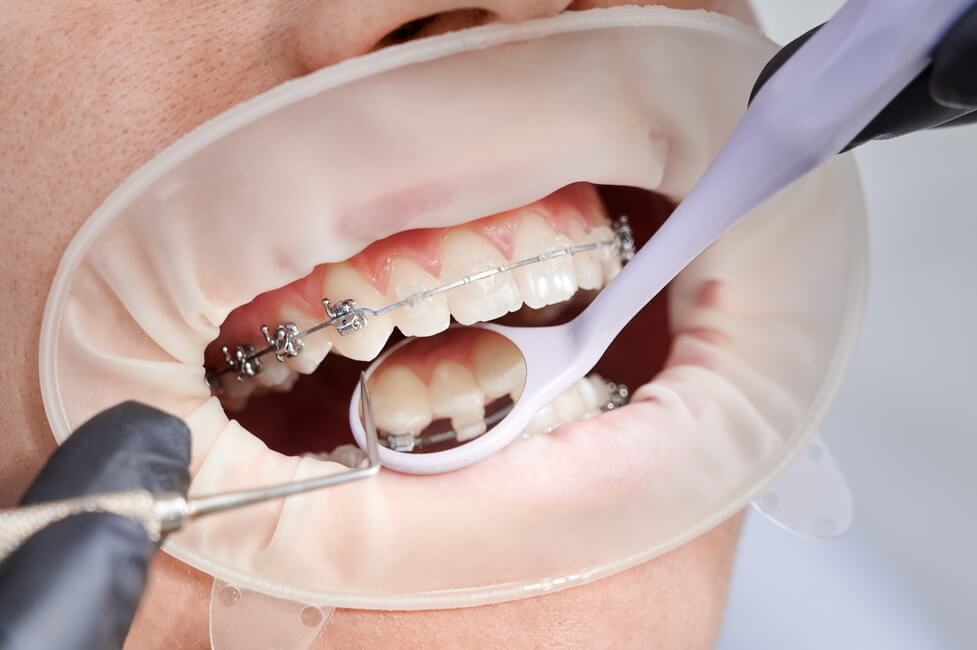
Wearing braces helps improve the shape of the teeth and align them, but it requires special care to avoid any damage such as breaking wires or brackets. This type of problem often occurs due to incorrect daily habits or neglect in cleaning and care, and avoiding breakage is not difficult, but it requires awareness of how to eat, clean, and deal with braces in daily life. It is important to know that wires and brackets are sensitive, and any excessive pressure or incorrect movement can damage them.
Why does braces breakage occur and how does it affect your treatment?
Breakage often occurs when braces are exposed to pressure or unexpected movement. The cause may be chewing hard foods or biting something solid unintentionally. These breakages are not just a cosmetic issue, but directly affect the effectiveness of braces. When a wire or bracket breaks, some teeth stop moving as planned, which leads to a delay in the final result or disruption in the alignment of the teeth.
Common causes of breaking braces
Breaking braces has multiple causes, but most of them can be easily avoided. The most common causes include eating inappropriate foods, exposure to impacts, or practicing unhealthy habits without awareness. Understanding these causes helps you maintain braces in good condition throughout the treatment period, as follows:
1- Incorrect dietary habits (hard and sticky foods)
Eating hard foods such as nuts, ice, or hard caramel can cause strong pressure on wires and brackets. Also, sticky foods such as gum or toffee stick between parts of the braces, which leads to pulling the wire or loosening one of the components. It is better to stick to soft and easy-to-chew foods to avoid this problem.
2- Shocks and accidents during daily activities
Sometimes brackets break due to a minor impact in the mouth during play or exercise. Wearing a mouthguard during physical activities significantly reduces the risk of breakage. Even a light collision can affect the position of the wire, so it is preferable to be attentive and cautious during daily activities.
3- Unhealthy habits such as nail biting or chewing pens
Unhealthy habits such as nail biting and chewing pens may cause breaking braces, so dentists often advise avoiding chewing hard objects or following unhealthy habits due to the damage they cause.
The effect of broken braces on the course of treatment
Breaking braces does not only cause temporary discomfort, but may change the entire course of treatment. In some cases, you may need an emergency visit to the orthodontist to fix the damage, which means delaying regular follow-up appointments. Therefore, proper handling of braces reduces the chances of breakage and maintains steady treatment progress.
Prolonging the treatment duration unexpectedly:
When a break occurs in one part of the braces, the movement of the affected teeth stops until it is repaired. This stop leads to a delay in the schedule set by the orthodontist, and in some cases, the treatment period may extend for several additional months due to repeated breakage or not fixing it quickly.
Increasing additional repair costs:
Every time a break occurs, you need to adjust or replace a part of the braces. These repairs may cost additional amounts, especially if repeated, as maintaining braces from the beginning saves money and reduces extra visits to the dentist.
Possibility of Regression (teeth returning to their previous position):
When regular pressure on the teeth stops due to a break in braces, the teeth may partially return to their previous position. This retreat is called “Regression,” and it is one of the most dangerous results of neglect or repeated breakage, so it is necessary to consult the orthodontist immediately when noticing any problem or loosening in any part of the braces.
Types of brackets and wires of braces and knowing their weak points
Brackets and wires of braces are the basic elements that move teeth and help correct their shape, and each type has its advantages and weak points that must be known to avoid breakage or damage during the treatment period. Understanding the types of brackets and wires helps you take care of them properly and avoid any problems that may delay treatment or cause unnecessary pain.
First: Brackets and their types
Brackets are the small pieces that are fixed on the surface of the teeth and work to hold the wire in place. The types of brackets differ in the material used and the method of attachment, and each type has strengths and weaknesses that need attention during use.
1. Traditional metal brackets
Metal brackets are considered the most commonly used type due to their high strength and ability to withstand daily pressure. They are usually made of stainless steel, making them durable and long-lasting.
One of their disadvantages is that they are more prone to corrosion if not cleaned well, and they may cause slight irritation to the gums or cheek in the early days. With regular care and good oral hygiene, these problems can be easily reduced.
2. Ceramic brackets (semi-transparent)
These brackets are used for people who prefer a more aesthetic appearance because they resemble the natural color of teeth, as they are less noticeable than metal ones.
However, they are more fragile and less able to withstand strong pressure, and can break easily if hard foods are chewed. Also, excessive friction may make them less effective in moving teeth quickly, so they require careful handling and gentle cleaning to avoid damage.
3. Self-ligating brackets
This type of bracket contains a built-in closing system to hold the wire without the need for elastic bands, as it is characterized by easy cleaning and reduced friction, making tooth movement smoother.
However, the small closing system may be damaged if handled roughly or if sharp cleaning tools are used, and this type requires precise care and avoiding any unnecessary pressure while eating or brushing.
Second: Wires (Archwires) and their types
Wires are the part that connects all brackets together and are responsible for gradually moving teeth into their correct positions. Each type of wire has specific properties in terms of strength and flexibility, and knowing them helps maintain them from bending or breaking.
1. Nickel-Titanium wires (Ni-Ti)
This type is used in the early stages of treatment because it is highly flexible and can return to its original shape after slight bending, which helps move teeth gently. However, this flexibility makes the wire sensitive to excessive heat or strong pressure, so it is preferable to avoid very hard foods or using tools that may affect its shape.
2. Stainless steel wires
These wires are stronger and stiffer than other types and are usually used in advanced stages of braces when teeth need stronger stabilization. Their strength makes them less prone to bending, but they may cause some discomfort due to their hardness, and they require good cleaning because they can easily collect food debris, leading to bacteria buildup if not cared for daily.
3. Aesthetic wires (white-coated)
This type is preferred for those who care about aesthetic appearance, as it is coated with a white layer to match the color of teeth, and its appearance is elegant and less noticeable. However, it is more prone to scratches or peeling of the white layer over time, and the coating may change color with colored foods or hot drinks, so it should be handled gently and cleaned with a soft toothbrush to avoid damage or loss of its attractive color.
Signs and symptoms of broken braces that you should pay attention to
Breaking braces may occur at any time, and often shows clear signs that can be easily noticed. Knowing these signs early helps you avoid worsening the problem or delaying treatment. Some signs can be seen visually and others are felt while eating or speaking. In all cases, paying attention to any change in braces is very important to maintain their safety and effectiveness.
Clear visual signs:
Visual signs are the first thing you can notice when braces are damaged, so it is necessary to check braces daily in front of a mirror, especially after eating or brushing.
- Broken or loose bracket: If you notice that one of the brackets has moved from its place or detached from the tooth, this is a clear sign of breakage, as the loose bracket cannot perform its function in holding the wire, which stops the movement of the affected tooth. Ignoring this may lead to delayed treatment or even damage to other parts of the braces.
- Protruding or abnormally bent wire: One of the most common signs of broken braces is the appearance of a long or bent wire at the end of the row. This wire can cause injury to the cheek or gums if not fixed quickly, so if you feel that the wire has moved out of place or notice its unusual shape, it is preferable to visit the orthodontist immediately.
- Cuts or tears in elastic bands: The small elastic bands are responsible for holding the wire inside the brackets. When they tear or break, the required pressure to move teeth weakens, and they must be replaced immediately because leaving them torn for a long time may slow treatment progress.
Sensory symptoms that can be felt:
Some signs of breakage are not visible but can be clearly felt while eating or speaking, and paying attention to these sensations helps detect the problem before it worsens.
- Sharp or sudden pain in a specific area: If you feel unusual pain in a specific area of the mouth, the cause may be movement of one of the braces parts or bending of the wire, as sudden pain usually indicates abnormal pressure on a tooth, and it is best to stop eating hard foods and contact the dentist to evaluate the condition.
- Feeling of something sharp or protruding: When a break occurs in one of the metal parts, you may feel a sharp edge inside the mouth. This edge can cause minor injuries to the tongue or cheek. Do not try to adjust the wire yourself, but use orthodontic wax temporarily until you visit the orthodontist to fix it safely.
- Clicking or popping sound from braces: Hearing a light sound from braces while chewing or speaking may indicate a loose bracket or a slipped wire. This sound is usually not normal, so it is important not to ignore it and ensure that all parts are in their correct position.
Changes in braces performance:
Braces work with continuous pressure to move teeth, and any change in this pressure may indicate breakage or a defect.
- Loss of continuous pressure on teeth: If you stop feeling the usual pressure from braces, it may mean that one of the wires or brackets has lost its function, which leads to stopping tooth movement in that area and slows treatment.
- Abnormal tooth movement: When there is a break in braces, some teeth may move irregularly or in the wrong direction because the pressure is no longer balanced on all teeth. It is important to visit the orthodontist immediately to adjust the braces and prevent any permanent damage.
- Difficulty closing the mouth or chewing: If you feel difficulty when closing your mouth or chewing, the cause may be a bent wire or a protruding bracket. This problem requires quick intervention to avoid pain or gum injury.
Emergency signs that require contacting the doctor immediately:
Some signs require immediate intervention because they may cause severe pain or damage to teeth and gums if not treated quickly.
- Bleeding from the gums around the bracket: If you notice continuous gum bleeding around one of the brackets, this may indicate an injury caused by a broken wire or loose bracket. Do not try to clean the area forcefully, but contact the orthodontist immediately.
- Swelling or inflammation in the area: The appearance of swelling or redness around braces indicates irritation or a possible infection due to friction of a broken part with tissues and must be treated immediately before it develops into a bigger problem.
- A completely loose part of braces that is about to fall: If a part of the braces becomes completely detached or you feel it may fall, do not try to reattach it yourself. Keep the broken piece in a clean container and go to the orthodontist to fix it, as delaying treatment in this case may lead to a clear disturbance in tooth alignment.
Dietary tips to avoid breaking braces
Following an appropriate diet while wearing braces is very important to maintain their safety and ensure treatment continues without problems. Some foods may cause direct damage to braces or lead to loosening wires and brackets, so it is necessary to know what to avoid, as follows:
Foods that must be completely avoided
There are types of foods that are considered the number one enemy of braces because they cause strong pressure or stick to metal parts, and it is best to avoid them completely throughout the treatment period such as nuts and hard crunchy foods. These foods require strong biting and may easily break the wire or loosen the bracket, and sticky sweets such as caramel and gum stick to wires and lead to pulling or bending them while chewing, increasing the risk of breakage.
Alternative ways to eat favorite foods
You do not have to stop eating everything you like, but you just need to modify the way you eat it to be safer. You can cut foods into small pieces that are easy to chew without pressure. For example, instead of biting into a whole apple, you can cut it into thin slices. Also, corn can be removed from the cob and eaten with a spoon. This way, you enjoy food without harming braces.
Cutting fruits and vegetables into small pieces
The simplest way to reduce the risk of breakage is to cut hard foods into small pieces. This makes chewing easier and reduces pressure on teeth and braces. Try to make pieces small enough to eat without strong biting, and this can be applied to carrots, cucumbers, apples, and even large sandwiches. Proper cutting means safer and stronger braces for a longer period.
Alternative cooking methods to improve texture
Some foods become safe after cooking or softening. For example, vegetables can be boiled or steamed to become soft and easy to chew. Also, meat can be grilled instead of eating it raw or tough to become more tender. These methods make food tastier and easier on braces without risk of breakage or sticking.
Easy and suitable recipes for braces wearers
You can prepare light and safe recipes without deprivation, such as warm soup with mashed vegetables, mashed potatoes, or soft pasta. You can also eat yogurt and soft fruits such as bananas or kiwi. These foods are nutritious, delicious, and do not cause any harm to braces. Just make your diet varied and soft to avoid any problems during the treatment period.
Daily care of braces to prevent breakage
Maintaining daily cleanliness of braces is the main step to avoid breakage or damage, as good care does not only mean cleaning teeth, but includes monitoring every part of the braces and ensuring its stability and absence of weakness as follows:
1. Proper cleaning techniques
Cleaning teeth while wearing braces requires special care because food can easily get stuck between wires and brackets. Teeth should be cleaned after every meal using a soft toothbrush and moving it gently in all directions. It is preferable to start from top to bottom to avoid bacteria buildup. Use light movements to avoid direct pressure on wires. These steps help reduce the possibility of tartar buildup or weakening of braces parts.
2. Using a special orthodontic toothbrush
An orthodontic toothbrush differs from a regular toothbrush because it is designed to reach small areas between brackets and wires. It is V-shaped, allowing cleaning from both sides without causing damage. Using it twice daily helps remove food debris that regular brushes cannot reach, and it is important to replace it every two months or when bristles wear out to maintain effectiveness.
3. Orthodontic floss (Superfloss)
Special orthodontic floss helps clean areas that are difficult to reach with a toothbrush. It has a stiff end to pass between wires and a spongy part that cleans around brackets effectively. Use it once daily before sleep to remove fine food particles. This step prevents inflammation and bad breath and keeps braces stable and clean.
4. Medical mouthwash that strengthens enamel and gums
Using mouthwash is an important part of daily care, as medical mouthwash that strengthens enamel and gums reduces bacteria and protects against tooth decay that may weaken bracket bases. It is preferable to use fluoride mouthwash once or twice daily, rinse for 30 seconds without swallowing, then avoid eating or drinking for half an hour for best results.
5. Daily inspection of braces
It is important to allocate one minute daily to check braces in front of a mirror. Ensure there are no loose brackets or bent wires. If you notice any abnormal movement or protruding part, avoid touching it and contact your dentist immediately. This simple check prevents small problems from developing into major breakages requiring costly repairs, as daily monitoring saves time and ensures smooth treatment progress.
How to detect weakness in wires and brackets early?
Early detection of any weakness in braces helps prevent complete breakage or damage to other parts of the appliance. It is important to monitor your braces daily, especially after eating hard foods or brushing. If you notice abnormal movement in a bracket, or a wire that seems loose or tilted, these are signs of initial weakness. Also, feeling a sudden sting or pain in a specific area may indicate that a wire has moved from its place. Early attention saves additional repairs and keeps treatment on track.
Tips for daily and sports activities
Practicing daily or sports activities while wearing braces is possible, but requires precautions. Being careful during play or exercise helps avoid breakage or injury. Use appropriate protective tools and avoid any behavior that may expose your face or mouth to direct impacts, as awareness of how to protect braces during movement is an essential part of treatment success, as follows:
Protection during sports:
Sports are activities that may cause pressure or unintended blows to the jaw, so it is important to protect braces. It is recommended to wear a sports mouthguard designed for braces wearers. This guard is made of flexible material that protects teeth and wires from collisions. Make sure it fits your mouth well and does not put pressure on brackets. Its use greatly reduces the risk of breakage or injury.
Custom sports mouthguard for braces wearers:
A braces mouthguard differs from a regular one because it is designed to cover wires and brackets without pressure on it. Your orthodontist can provide one tailored to your case. It is necessary during football, basketball, or any sport involving physical contact, and it is also preferable to wear it even during light activities to avoid sudden impacts.
Sports that require extra protection:
Some sports require more care than others, such as boxing, karate, or hockey, because they involve direct contact. Also, team sports like football or basketball require wearing a guard during every training and match. Swimming or running are less risky, but there is no harm in using a guard for extra protection.
Avoid harmful habits
There are simple habits that cause significant damage to braces. Stopping them protects wires and brackets from breaking or bending, such as stopping nail biting and chewing hard objects. Nail biting puts direct pressure on braces, leading to loosening brackets or moving wires. Chewing pens or opening caps with teeth causes the same damage, and these habits should be replaced with healthier ones.
Avoid opening packages with teeth
Using teeth as a tool to open packages or bags may lead to immediate breakage of braces, as wires are not designed to endure this type of force. It is better to use proper tools such as scissors or bottle openers to avoid damage to braces or teeth.
What to do when braces break?
When a break occurs in orthodontic braces, you should stay calm and not try to fix it yourself immediately, and do the following:
- Temporary first aid: In case orthodontic braces are broken, some simple measures can be taken to temporarily relieve pain, rinse your mouth with lukewarm water and salt to reduce irritation and inflammation, if there is a sharp metal piece causing injury inside the mouth, cover it with orthodontic wax or a clean piece of cotton until you visit the orthodontist, and avoid touching the area with your hand or tongue to prevent inflammation or increased damage.
- Using orthodontic wax to protect tissues: Orthodontic wax is an important tool in such situations. You can place a small amount of it on the broken part or the protruding wire, and the wax acts as a protective layer that prevents the metal from rubbing against the gums or cheek, which reduces pain and irritation, and the wax should be changed daily or whenever it becomes dirty, while maintaining oral cleanliness by brushing with toothpaste and proper rinsing.
- How to safely cut protruding wires: In some cases, a wire from the orthodontic braces may protrude and cause pain inside the mouth. If you cannot visit the orthodontist immediately, you can carefully cut the protruding part using clean and sterilized nail clippers, make sure the lighting is good while cutting, and cover the area afterward with orthodontic wax, do not try to move the wire or adjust its position, only cut the part that is causing pain.
When should you contact the dentist immediately?
You should contact the orthodontist immediately if the break is large or causing severe pain, also if you notice bleeding, or injury to the gums, or inability to close the mouth normally, in these cases it is not recommended to delay the visit because the damage may increase over time and affect the overall treatment outcome, as follows:
Emergency cases that cannot wait
Among the emergency cases that require quick intervention are the breakage of the main archwire of the orthodontic braces, or a metal piece entering the gum, or brackets slipping in a way that affects chewing, these situations require intervention by the orthodontist to avoid any infections or serious complications.
Procedures to avoid until visiting the dentist
Avoid trying to reattach the brackets yourself or using sharp tools to remove wires, do not use glue or any non-medical substance, also avoid eating hard or sticky foods as they may increase the damage, and it is best to stick to soft foods and lukewarm drinks until you visit the specialized orthodontist.
Modern techniques to reduce orthodontic problems
The field of orthodontics has witnessed significant development in recent years. Modern techniques have become focused on comfort and reducing problems that may occur during treatment, such as breakage, irritation, or pain, and these techniques rely on stronger materials and more flexible designs, which reduces the need for continuous maintenance, smart systems have also been developed to adjust pressure on the teeth in a balanced way, so that each tooth moves precisely without damage or stress to the surrounding tissues.
Types of orthodontic braces less prone to breakage:
There are multiple types of orthodontic braces, but some are more resistant to breakage than others, because modern types are made from strong materials that endure pressure and resist daily impacts resulting from eating or movement, and among the most important of these types are durable ceramic braces, self-ligating DAMON braces, and lingual braces that maintain the appearance of the smile.
1- Durable ceramic orthodontic braces
Ceramic orthodontic braces are considered an aesthetic and durable option at the same time, and are distinguished by their high ability to resist breakage thanks to the solid materials they are made from, and they also resemble the natural color of teeth, making them less noticeable during speaking or smiling, this type is suitable for adults who are looking for a natural appearance with strong performance without the need for frequent maintenance.
2- DAMON self-ligating orthodontic braces
DAMON orthodontic braces are among the latest systems that reduce problems of breakage and friction, and they rely on a self-ligating mechanism, which eliminates the need for traditional elastic bands, this design reduces friction between the wire and brackets, and helps move teeth faster and more comfortably, and this system also requires fewer visits to the dentist compared to traditional braces.
3- Lingual orthodontic braces
Lingual orthodontic braces are fixed behind the teeth, making them almost invisible, and although they are more precise in installation, they are made from strong materials that prevent breakage and withstand continuous pressure from the tongue and food, and this type is suitable for people who prefer effective orthodontic treatment without it appearing externally, and it is also characterized by ease of adaptation within the mouth after a short period of placement.
Innovative materials in orthodontic manufacturing:
Modern orthodontic manufacturing relies on advanced materials that combine strength and flexibility, these materials are designed to withstand pressure and maintain their shape for a long time, and they also help reduce friction and distribute force evenly across the teeth, and the use of these materials reduces the likelihood of breakage and makes the orthodontic process more comfortable and safe for the patient.
1- Ni-Ti shape memory wires
Nickel-titanium (Ni-Ti) wires are among the most prominent innovations in orthodontics. These wires have the property of “shape memory,” meaning they always return to their original shape no matter how much they are bent, this feature helps apply constant pressure on the teeth and move them gradually and safely, and they are also more resistant to breakage than traditional steel wires.
2- Brackets made from Nano-Composite materials
Brackets made from nano-composite materials are among the latest developments in the world of orthodontics, as they are characterized by their light weight and high strength compared to older metal types, and their smooth surface reduces friction inside the mouth, making them more comfortable during use, these materials also help improve the aesthetic appearance of braces and reduce the likelihood of inflammation or irritation in the gums.
Conclusion
Taking care of orthodontic braces and following the simple instructions provided by the orthodontist are the foundation for avoiding problems such as breakage or inflammation, as using specialized cleaning tools and regular follow-up with the dentist helps maintain orthodontic braces in excellent condition until the end of treatment. Also, choosing a modern and durable type of braces greatly reduces malfunctions, in the end, simple daily care is what ensures stable results and a straight smile without complications or delays in the treatment period.
FAQs
How can I know that my braces are broken?
You notice broken braces if a wire or bracket moves from its place, or if you feel a prick inside the mouth. Sometimes you may see a loose or protruding piece injuring the cheek or gums.
What are the most breakage-prone parts of braces?
The most breakage-prone parts are thin wires and small brackets because they تحمل high pressure during eating and cleaning, and the front parts are often affected first due to friction during speaking and chewing.