

Oral health is the ability to smile, speak, chew, swallow, touch, and express emotions and feelings without pain, discomfort, or disease. One of the problems that may affect your oral health is teeth grinding (clenching teeth strongly without being aware), as teeth grinding can cause wear in the hard enamel layer of the teeth, making them more susceptible to tooth decay, and it also causes chronic headaches due to strain in the chewing muscles in the head.
Oral health and general health have a two-way relationship. Oral diseases can cause poor general health, as harmful bacteria in your mouth can enter your body internally causing various diseases, and poor general health can lead to oral health problems such as diabetes and cancer for example.
Daily activities or untreated health conditions may lead to serious dental problems. Here comes the role of the dental guard as an effective preventive method, whether during sports or during sleep. In this guide, we will explain how to choose the appropriate type, and why investing in it is a wise decision.
What Is a Dental Guard or Mouth Guard?
Teeth grinding during wakefulness or during sleep is very common among children and adults. But when it starts causing headaches or tooth and jaw pain, it is time to talk to your dentist about this problem. The common treatment for teeth grinding during sleep is a dental guard.
People with teeth grinding often wake up feeling headaches immediately, or having jaw pain, or fractures in the teeth or wearing of part of them, and these are common signs of teeth grinding.
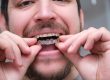
A dental guard or mouth guard is a soft or hard plastic piece similar to an orthodontic retainer that covers either the upper or lower set of teeth or both. Night guards are common treatments for teeth grinding during sleep. The guards work to protect the teeth from compression force and prevent the teeth from coming together, which prevents headaches and tooth damage.
Types of Dental Guards
1- Hard Mouth Guards:
These guards are made of acrylic and are used to treat temporomandibular joint (TMJ) disorders and severe teeth grinding cases. They also help relax the muscles. Adjustments with biting on the guard help your muscles and help them relax.
Since hard night guards are made of a solid material, they are among the most durable types and do not get damaged quickly compared to soft dental guards.
2- Soft Mouth Guards:
These guards are made of soft plastic with a thickness of 2 mm. These guards prevent the meeting of the upper and lower teeth, which relieves the pressure resulting from clenching, which protects them from wear, and they also protect you from headaches in a simple way.
These guards are manufactured by taking an impression of your teeth using impression material, then plaster is poured over it to make a model of your mouth, and after that the lab places a plastic material on the plaster with a thickness of 2 mm.
Dental Guard Classifications
Dental night guards can also be classified as follows:
Over-the-counter:
Pharmacies contain mouth guards that are dispensed without a prescription and are one-size-fits-all, pre-formed to fit any mouth.
However, using such devices in the long term leads to shifting your bite into an incorrect and unusual position because they were not made specifically for the shape of your teeth.
Custom-made Guard:
These guards provide a customized solution because they are made by taking impressions of your teeth, and therefore they are more comfortable.
These guards are used more in dentistry and are also used in contact sports to protect teeth such as wrestling, boxing, and American football.
Reasons for Wearing a Mouth Guard
1- Preventing Tooth Damage:
Since teeth grinding occurs when you are not aware, your teeth become more exposed to enamel loss. Enamel wear causes tooth sensitivity due to exposure of the sensitive dentin layer. As a result, you will feel discomfort when consuming hot or cold drinks and foods. In addition, without enamel protection, your teeth become more susceptible to decay.
Teeth grinding also causes fractures or cracks in the teeth, causing severe pain. The dentist can perform a dental filling, but you may end up needing more expensive treatment such as dental crowns, root canals, or tooth extraction when the condition worsens. But in the end, you will need a mouth guard to protect your teeth.
2- Preventing Temporomandibular Joint Disorder:
The temporomandibular joint (TMJ) connects the lower jaw and the skull and affects the muscles you use for chewing. When you clench your teeth during sleep, the TMJ works for a long time, which may cause TMJ disorder. The disorder causes difficulty in chewing, pain around the ear, and headaches. Wearing a night guard prevents the development of the disorder because it relieves any tension it may cause to the muscles.
3- Preventing Chronic Headaches:
Chronic neck pain and headaches are usually the first symptoms of teeth grinding, where dysfunction appears in the temporomandibular joint causing migraines. Tense muscles cause headaches.
However, before rushing to diagnose yourself as having teeth grinding, you can check that the headache is indeed caused by teeth grinding by visiting your dentist. They will look at the surface of the teeth; instead of being pointed as usual, they are most likely flattened during sleep due to unconscious clenching for a long time.
Another method is to look for bone and gum recession that can occur due to grinding. A custom-designed mouth guard prevents headaches because you will not need to tense the muscles.
4- Mouth Guard and Plaque:
Despite the similarity in names, you should not confuse a sports mouth guard with a mouth guard designed to prevent teeth grinding.
A sports mouth guard does more harm than good. It covers the teeth and gums because it is intended to protect them from severe impacts, so it is worn only during sports. If worn at night, it traps bacteria on the gum surface during sleep because saliva cannot reach the gums while wearing a sports mouth guard, which may cause gingivitis.
Saliva helps neutralize acids that can cause tooth decay and washes away food particles, thus preventing plaque buildup.
Some mouth protection devices come with holes to allow saliva to reach your teeth. Therefore, your dentist will provide the appropriate design depending on your dental condition.
Benefits of Using a Dental Guard
- Prevents tooth fractures and cracks resulting from impacts.
- Reduces the risk of concussion by absorbing shock force.
- Protects tooth enamel from wear caused by night grinding.
- Relieves pain and stiffness in the jaw and neck vertebrae.
- Improves sleep quality and reduces early waking due to pressure.
How to Choose the Right Dental Guard?
Thickness: Choose between 2–4 mm depending on your teeth clenching severity or according to the dentist’s recommendation.
Flexibility: It should be flexible to fit the teeth without reducing effectiveness.
Ventilation: A design that ensures airflow and prevents moisture buildup and bacterial growth.
Ease of cleaning: Preferably easy to wash without needing complex cleaners.
Dental Guard Care
Daily Cleaning Tips
- Clean it after each use with a soft toothbrush and mild soap, and avoid hot water that may deform it.
- It is recommended to use a special toothpaste or a mild antiseptic mouthwash to avoid bad odors and bacteria.
Proper Storage Methods
- Store it in a case that contains ventilation holes, just as provided by the dental clinic.
- Avoid exposing it to sunlight or high heat to extend its lifespan.
When Should It Be Replaced?
- When cracks appear or its shape changes due to pressure or heat.
- After a strong impact or due to increased tooth movement (especially during the growth stage).
Conclusion
If you suffer from teeth grinding during sleep, obtaining the appropriate night dental guard is a smart step to protect your tooth enamel and avoid future problems in the jaw and gums. Book an appointment with your dentist today to evaluate your needs and choose the most suitable guard for you. This will help ensure your safety and comfort in the long term!
FAQs
How do I know if I really need to wear a night dental guard?
Many people suffer from teeth grinding (Bruxism) during sleep without awareness. Warning signs include: waking up with a morning headache, feeling stiffness or “locking” in the jaw joint, unexplained tooth sensitivity, or noticing wear and breakage at the edges of the teeth. If you feel that your jaw has been under “heavy effort” all night, a custom guard at Wonders dentistry is the solution to protect enamel from permanent wear.
What is the difference between a custom clinic guard and an over-the-counter guard sold in pharmacies?
Ready-made guards are often thick and uncomfortable, and may cause breathing problems or increase TMJ pain because they do not fit your bite accurately. At Wonders dentistry, we design the guard based on a digital 3D scan, making it thin, comfortable, and precisely calibrated to distribute pressure forces evenly, protecting both teeth and the joint.
Does a dental guard help protect veneers or dental crowns?
Absolutely. If you have undergone a cosmetic procedure such as veneers, lumineers, or dental implants, the night guard is the “insurance policy” for your smile. The force of teeth grinding during sleep may exceed normal chewing force by 10 times. The guard works as a shock absorber, preventing ceramic fracture and protecting the bone surrounding implants from excessive pressure.
How long does it take to get used to wearing the guard during sleep?
Thanks to the specialists at Wonders dentistry using digital technologies for taking measurements, the fit is highly accurate and does not cause discomfort. Most patients need 3 to 7 nights to fully adapt. Unlike old bulky models, modern materials are used that combine outer rigidity for protection and inner flexibility for gum comfort.