

Jaw health during childhood is an important aspect of oral health in a person’s life, as the jaw plays a major role in a child’s ability to speak, chew, and maintain proper tooth alignment. You may not know that there are many factors that can affect a child’s jaw health, such as genetics, nutrition, oral habits, and dental trauma after accidents.
Paying attention to children’s oral and dental health is a vital step to ensure proper growth of their teeth and jaws. One of the most common procedures recommended for children at an early age is the use of Children’s Orthodontic Appliances. These devices help adjust tooth position, correct bite problems, and guide jaw growth in a healthy way. In this article, we will cover all aspects related to orthodontics for children, from the appropriate age to start, to types of appliances, benefits, and care during treatment.
What is the appropriate age for placing Children’s Orthodontic Appliances?
Dentists usually begin evaluating the need for orthodontic treatment around the age of seven. At this stage, permanent teeth begin to erupt, and the doctor can diagnose any misalignment or jaw growth issues. Although placing orthodontic appliances for children is not usually done at this age, early visits allow the dentist to monitor growth and create a precise treatment plan if needed.
Treatment in children follows a phased plan. The first phase is between ages 7–9 to correct jaw shape or minor misalignment. The second phase (around 10–14 years) focuses on aligning the teeth once all permanent teeth have erupted. For children under 7, preventive orthodontics such as habit appliances or palatal expanders may be used to correct early habits or skeletal issues.
When does a child need orthodontic treatment?
The need for orthodontic treatment appears when signs such as crowded teeth, protruding front teeth, difficulty chewing food, speech issues, or mouth breathing instead of nasal breathing are observed. Causes may also be genetic, or due to habits such as prolonged thumb sucking, or early loss of baby teeth. Parents are advised to monitor their child’s dental development and visit a pediatric dentist if any changes are noticed.
What is the difference between braces and jaw orthodontics?
Orthodontic appliances and dental devices are two different types of treatments used to correct dental and jaw issues. Both aim to improve bite function and oral health, but they differ in approach and the conditions they treat.
Orthodontics involves the use of post, braces, wires, and other components to correct crooked teeth, bite issues, and overall alignment. Appliances apply gentle pressure over time to gradually move teeth and jaws into proper position. Examples include metal braces and clear aligners, typically used after permanent teeth erupt.
Jaw orthodontic appliances are removable devices used to treat various jaw and bite disorders, such as forward or backward jaw positioning and temporomandibular joint (TMJ) disorders.
Types of Children’s Orthodontic Appliances
There are several types depending on the condition and level of correction required:
1- Palatal Expander:
The upper palatal expander works by gently applying pressure to the upper molars, stimulating the bone to widen side to side, creating more space in the upper jaw. It helps correct posterior crossbite (when the upper jaw is smaller than the lower jaw and sits inside it).
Your orthodontist will guide you on when and how to adjust it. After achieving expansion, the device is worn for several months to stabilize results and prevent relapse.
2- Twin Block Appliance:
It consists of two separate devices (one for the upper jaw and one for the lower jaw) that work together to advance the lower jaw forward. It is worn full-time, including during eating, but can be removed for cleaning. It is more comfortable than older devices like the monoblock.
3- Mandibular Anterior Repositioning Device:
A non-removable appliance that encourages lower jaw growth to correct severe overbite and reduce the need for future jaw surgery. It is fixed to the molars using bands.
4- Bionator:
A removable acrylic device worn full-time to correct bite problems. It is typically used for 12–14 months. It helps guide facial bone growth during active development, often eliminating the need for more complex treatments later.
5- Frankel Appliance:
Also a removable orthodontic appliance used to treat jaw deformities. It reduces improper muscular forces on the jaws in three directions, helping normalize jaw growth.
6- Lip Bumper:
Used to gain space or length in the lower jaw during childhood. It is a strong wire placed in tubes that apply pressure on molars to move them backward and create space.
7- Headgear:
Headgear is used to create additional space or increase the length of the maxillary arch, as well as to correct malocclusion by distalizing the molars. It is most commonly prescribed for children in conjunction with orthodontic treatment.
There are also other appliances that children may wear, such as those designed to prevent harmful oral habits like thumb sucking, or night guards to protect the teeth during sleep. However, these are not considered orthodontic or jaw correction devices.
8- Habit Appliances:
Used for children with harmful oral habits such as thumb sucking or tongue thrusting. It acts as a barrier to stop the habit and guide proper jaw and tooth development.
9- Space Maintainers:
Used when a child loses a baby tooth early. It prevents neighboring teeth from shifting into the empty space, preserving room for the permanent tooth.
10- Damon Braces:
A modern type of braces using a self-ligating system that reduces friction and allows smoother tooth movement, reducing treatment time and improving comfort.
11- Digital Adjustable Appliances:
Designed using 3D scanning technology for precise customization. Adjustments can be made based on jaw and tooth growth.
12- 3D Printed Appliances:
Created using 3D printing technology based on digital scans of the child’s mouth. They are lightweight, precise, and comfortable.
13- AI-guided Aligners:
One of the latest innovations, using artificial intelligence to analyze jaw growth and design precise treatment plans, often used with clear aligners.
Reasons for installing jaw orthodontic appliances for children
Children wear jaw appliances as part of their orthodontic treatment plan. The goal of jaw treatment is to correct malocclusion or misalignment of teeth and jaws to improve function and appearance.
Common reasons include:
- Protrusion and Retrusion (overbite and underbite): Children with excessive upper jaw protrusion where upper teeth are far forward from the lower jaw, or lower jaw protrusion where the lower jaw is forward, may wear appliances to correct jaw positioning and achieve proper bite alignment.
- Crossbite: Children who have crossbite, where upper teeth sit inside lower teeth when closing the jaw, use appliances to correct alignment.
- Jaw deviation: where one jaw shifts to the right and the other to the left, which negatively affects facial structure.
- Open Bite: the child has a large gap between upper and lower teeth when closing the mouth, preventing proper bite closure.
Treatment usually starts between ages 7 and 14 while the child’s teeth and jaw are still growing. Treatment duration depends on severity and appliance type.
It is important for children to follow orthodontist instructions and attend regular checkups to ensure proper treatment progress. In general, appliances help achieve a healthier and more aesthetically pleasing smile, improving self-esteem and quality of life.
Advantages of Children’s Orthodontic Appliances
They provide several benefits:
- They prevent worsening of jaw and permanent tooth deformities, reducing future treatment time and cost.
- They help eliminate harmful habits such as thumb sucking and prevent its complications.
- They help regulate chewing and speech systems for better oral health.
- Both clear and metal braces improve the child’s confidence.
- By stabilizing teeth precisely, they can reduce the need for fillings or future extractions.
Steps for installing children’s orthodontic appliances
The process begins with an evaluation visit to the orthodontist, where the child’s teeth and jaw are examined using X-rays and digital impressions to determine the most suitable orthodontic device. After that, the appliance is installed, whether fixed or removable.
The installation phase includes taking impressions or 3D scans of the teeth and manufacturing the selected device, then fitting it comfortably for the child. The wire is placed against the front teeth, and then the acrylic part is positioned on the roof of the mouth.
Regular visits every 4 to 6 weeks are required to adjust the appliance and monitor progress. Treatment usually lasts from one to three years depending on complexity and the child’s cooperation.
How long do orthodontic appliances for children take?
Most orthodontic appliances take from 12 months to 18 months to achieve the desired result.
Removal steps for removable oral appliances for children
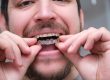
Place your finger under the back metal clasps and pull the retainer away from the back teeth.
Results of jaw orthodontic appliances for children
Jaw appliances for children give real and satisfying results, as jaw problems can only be effectively treated at a young age when the patient is still growing, which allows us to use them effectively at this stage.
Dental care during orthodontic treatment
During treatment, great attention must be given to cleaning teeth, as orthodontic appliances make it easier for food debris to accumulate between teeth and brackets. It is recommended to use a special orthodontic toothbrush, dental floss or interdental brushes, along with antibacterial mouthwash. Hard and sticky foods such as gum, nuts, and hard sweets should be avoided as they may damage the appliance. Important care tips include:
- The appliance must be worn 24 hours a day to achieve the desired benefit and should not be reduced unless instructed by the specialist.
- Exceptions include sports practice and eating hard foods.
- Always store your appliance properly when removed.
- Wrap the appliance in a damp tissue to prevent acrylic from drying and ensure it is clean before storage.
- Never store appliances near heat sources, in a hot car, or in direct sunlight.
- Keep the appliance clean by brushing it every time it is removed from the mouth.
Conclusion
Thanks to the development of modern Children’s Orthodontic Appliances—from metal to smart systems—effective early treatment is now more comfortable and less painful, with lasting results. Early intervention helps regulate tooth growth and gives the child a healthy smile that can continue into adolescence without major pain or complications. Always consult a dental specialist at the first signs of crowding or protrusion to ensure a healthy and well-guided future for your child’s mouth and jaw.
FAQs
What is the “golden age” to start orthodontic appliances for children?
The first orthodontic examination is recommended at age seven. At this stage, we can detect silent problems such as narrow jaws or bite misalignment. Early preventive orthodontics often eliminates the need for tooth extraction or complex jaw surgery later in life.
Are there clear alternatives to traditional metal braces for children?
Yes. Children can now benefit from clear orthodontic aligners designed for kids. These are specially made for mixed dentition (baby and permanent teeth together) and are removable, allowing easy cleaning and eating without metal wires.
Why might my child need an upper jaw expander?
A palatal expander is used when the upper jaw is too narrow. By gently widening the palate, it creates enough space for permanent teeth to erupt properly. It also helps improve nasal breathing, which supports better sleep and healthy development.
Why is a space maintainer important after early loss of a baby tooth?
If a baby tooth is lost early, a space maintainer prevents nearby teeth from shifting into the gap. It preserves the space for the permanent tooth, ensuring proper eruption and preventing severe crowding later.