

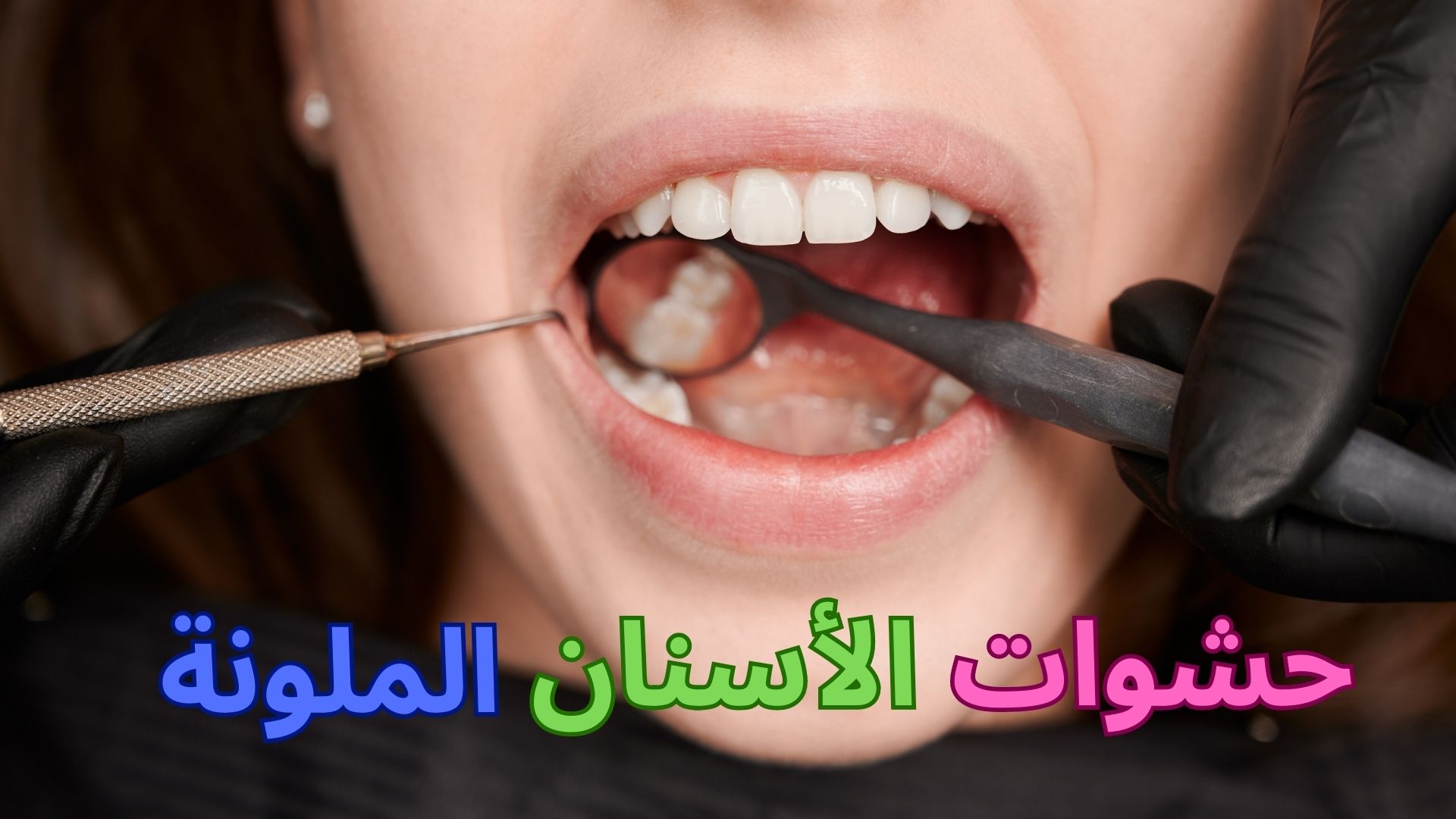
Dental health is an essential aspect of oral health. Maintaining healthy teeth involves regular brushing and flossing to remove plaque and prevent tooth decay and gum disease. It also includes following a healthy diet rich in nutrients, vitamins, and minerals, while avoiding foods high in sugar and starches that can contribute to tooth decay.
When tooth decay occurs, you will need to visit the dentist to remove the decay and place a permanent filling that matches the tooth color to compensate for the lost part. Regular visits to the dentist for check-ups and cleanings are also important to detect dental problems and prevent them before they become more serious.
Fear of the dentist is one of the most common fears among children, and this fear increases when they hear about “fillings,” especially if they are metallic or unfamiliar in color. However, today, colored dental fillings have emerged as an innovative solution to turn the experience of treating tooth decay into a positive and enjoyable moment. These fillings are not only aimed at improving the aesthetic aspect but also at reassuring the child and enhancing their cooperation with the dentist.
Types of Dental Fillings
1- Amalgam Fillings:
They are made from a mixture of metals, including silver, tin, copper, and mercury. They are strong, durable, effective, and cost-efficient, making them a common choice for posterior teeth fillings (molars and premolars).
However, some people have concerns about the use of mercury in amalgam fillings, although the American Dental Association (ADA) and other major health organizations have determined that amalgam fillings are safe for most people.
2- Composite Fillings:
They are made from a tooth-colored material and are among the most common cosmetic fillings. They are a popular choice for front teeth and other visible areas when talking and smiling, as they can be matched with the surrounding tooth color.
Composite fillings are also less harmful to the tooth than amalgam fillings, as they require less removal of healthy tooth structure.
3- Porcelain Fillings:
They are custom-made fillings created in a dental lab and bonded to the teeth using special adhesive. They are a more expensive option than other types of fillings, but they are also more durable and can last for many years. Porcelain fillings are highly resistant to staining and can match the surrounding tooth color.
4- Gold Fillings:
They are a traditional option still used today. They are strong, durable, and long-lasting, but they are also more expensive and not a good aesthetic choice compared to other types of fillings. Despite that, some people prefer using them in anterior teeth.
What are Colored Dental Fillings?
Dental fillings are a common procedure in dentistry to solve one of the dental problems, which is restoring teeth damaged by tooth decay or other issues such as minor fractures and tooth wear.
A filling is a material used to fill a cavity or hole in the tooth caused by decay or injury. The filling helps restore the tooth’s shape, function, and strength while preventing further decay or damage.
There are many types of materials that can be used for dental fillings, including amalgam, composite, porcelain, and gold. The choice of material depends on several factors, including the location and size of the cavity, the extent of decay or damage, and the patient’s personal preferences.
Colored dental fillings are a type of cosmetic fillings usually made from composite resin materials, and they are colored in a variety of bright shades to suit children’s preferences. This type of filling is specifically used in primary teeth or front teeth affected by decay, aiming to restore their shape and function in a fun and attractive way. It provides flexibility for the dentist in application and preserves primary teeth until their natural exfoliation.
Types of Colored Dental Fillings for Children
There are several types of tooth-colored filling materials that can be used for children’s teeth, including composite resin and glass ionomer.
Advantages of Colored Fillings for Children
Reducing the child’s fear of treatment:
When the child is given the freedom to choose the filling color, they feel in control of the treatment, which reduces stress and fear of medical tools.
Turning the experience into a fun game:
Instead of considering the dental visit as something scary, it can become an exciting adventure to choose a new color for their teeth, such as blue, pink, or green.
Enhancing the child’s self-confidence:
When the child sees that their smile has become colorful and unique, they feel proud and happy, which boosts their self-confidence and reduces embarrassment in front of peers.
Protecting primary teeth until natural shedding:
Colored fillings are designed to be strong enough to withstand daily pressures, thus protecting the affected tooth from further decay until it is time for it to fall out naturally.
Continuous fluoride release:
Some types of colored dental fillings contain compounds that release fluoride, which enhances the tooth’s resistance to decay and reduces the chances of new decay in the future.
Easy detection during regular check-ups:
Thanks to their clear color, the dentist can easily identify the filling location during follow-ups or radiographs, which helps in monitoring the condition of the filling and ensuring it does not need replacement.
Appearance:
Colored dental fillings are made of a tooth-colored resin material that can match the natural tooth color. This makes them a better aesthetic option than silver amalgam fillings, which can be seen when the patient talks or smiles.
Less invasive:
Colored dental fillings require less removal of healthy tooth structure than silver amalgam fillings, as they bond to the tooth through acid etching that creates small micro-retentions into which the filling extends, instead of relying on the large mechanical retention used with amalgam.
This helps preserve more of the natural tooth structure and reduces the risk of fractures or future damage.
Bond strength:
Colored dental fillings bond directly to the tooth, helping strengthen the tooth and prevent further decay.
Steps of Applying Colored Fillings
- Choosing the child’s preferred color: A range of colors is presented to the child to choose from, giving them an active role in the treatment plan.
- Anesthetizing the area (if needed): If the decay is deep, the dentist numbs the area around the tooth using local anesthesia to prevent pain during the procedure.
- Removing decay: Once the area is numbed, the dentist uses a dental handpiece or laser to remove the decayed part of the tooth and clean the cavity. The dentist may use a dental tool to examine the cavity and ensure all decay is removed; this tool may be a special dye, a laser-based detector, or a specific light device.
- Preparing the cavity: After cleaning and preparing the cavity, the dentist roughens the cavity surface to help the filling material adhere to the tooth. If the decay is near the tooth nerve, a special medication may be applied to protect it.
- Applying the bonding agent: Before placing the filling, a special adhesive is applied to ensure proper bonding to the tooth.
- Placing the filling material: The dentist then places the selected filling material into the cavity and shapes it to match the natural contours of the tooth. The material may be applied in layers, with each layer hardened using a special light.
- Curing with blue light: A special (blue) light is used to harden the filling material quickly and ensure its stability.
- Polishing the filling: After placement and hardening, the dentist polishes the filling surface to ensure it is smooth and matches the natural tooth surface.
- Checking the bite: Finally, the dentist checks the bite to ensure the filling is not too high or improperly shaped, which could cause discomfort when biting.
- Explaining care to the child: The dentist or hygienist explains how to maintain the filling using simple language the child can understand.
- Rewarding the child for bravery: Encouraging the child after treatment with a small reward helps reinforce a positive experience.
What are the signs that a dental filling is damaged?
If you have a dental filling, it is important to be aware of signs that may indicate it is damaged or needs repair. Here are some common signs:
- Pain or sensitivity: Feeling pain or sensitivity when biting or when consuming hot or cold foods or drinks may indicate the filling is damaged and needs replacement.
- Roughness or sharp edges: If you feel roughness or sharpness on the surface of the filling, it may indicate that it has chipped or cracked.
- Color change: If the filling appears a different color from the surrounding tooth or becomes stained over time, it may indicate deterioration and the need for replacement.
- Visible damage: If you can see obvious damage such as a crack or missing piece, it definitely needs repair or replacement.
- Sensitivity to pressure: Feeling sensitivity when biting or applying pressure may indicate the filling is worn and needs replacement.
If you notice any of these signs, it is important to contact your dentist immediately to schedule an appointment. Depending on the extent of damage, your dentist may recommend repairing or replacing the filling to prevent further damage or decay.
In general, it is important to visit the dentist regularly for check-ups and cleanings to ensure that dental fillings and other restorations are in good condition.
Care After Filling
Tips for children:
- Wait at least one hour before eating.
- Brush teeth gently using a soft toothbrush.
- Avoid chewing gum or hard foods during the first 24 hours.
- Wear a mouthguard: If you play sports or grind your teeth at night, wear a mouthguard to protect fillings from damage.
Tips for parents:
- Ensure the child brushes their teeth regularly twice daily.
- Schedule a check-up every 6 months with the dentist.
- Encourage the child to use dental floss and maintain oral hygiene.
- Monitor warning signs: Watch for any signs of filling damage such as cracks or sensitivity to hot or cold temperatures. If you notice any issues, contact your dentist immediately for consultation.
Final Thoughts
Colored dental fillings are not just a treatment method, but a complete positive experience that can change a child’s perception of dental care. They combine therapeutic function with attractive appearance, making them an ideal choice for children. If your child suffers from tooth decay and fears visiting the dentist, consider trying colored fillings. Restore your child’s smile with confidence… take your first step with Wonders dentistry. Book your consultation now.
FAQs
Are colored dental fillings (Compomers) safe for my child?
Yes, with full confidence. Compomer material is a hybrid mix combining the strength of composite and the therapeutic benefits of glass ionomer. It is completely free from mercury and safe from BPA. In fact, these fillings release continuous doses of fluoride, acting as a “protective shield” that strengthens the surrounding enamel and prevents recurrence of decay in primary teeth.
Why would I choose a blue or pink filling instead of a natural white one?
This is a very effective psychological tool called “interactive dentistry.” When a fearful child is allowed to “design” their tooth and choose their favorite color (such as shiny gold, pink, or ocean blue), they feel in control. This simple choice transforms fear into excitement, making the session much easier and building positive memories for future dental visits.
Do colored fillings last as long as silver or white fillings?
They are specifically designed to match the lifespan of primary teeth. Although they may be slightly less rigid than adult composite fillings, they are durable enough to last until the tooth naturally falls out. Their flexibility also helps absorb shocks, protecting the thin walls of primary teeth better than rigid metal fillings.
Can adults get colored dental fillings, or are they only for children?
Technically, this is possible, but the vast majority of adults choose nano-hybrid composite fillings that we use as “invisible restorations.” These materials mimic the translucency and natural tooth color with remarkable accuracy, making it difficult to distinguish the filling. The gold standard for permanent teeth is biomimetic restoration that hides any trace of dental intervention, but at Wonders dentistry we offer all options according to patient preference.