
Teeth are not just a means of chewing, but they are an essential part of facial appearance and our self-confidence. Over time, teeth may be exposed to decay, wear, fracture, or partial or complete loss, which affects the entire dental arch. Here comes the role of dental arch restoration as a comprehensive solution that helps restore the smile both functionally and aesthetically. These procedures are not limited to treating damaged teeth only, but also aim to restore balance between the upper and lower teeth, to correct the bite and improve the biological performance of the mouth.
The dental arch refers to the curved arrangement of the set of teeth that follows the curvature of the jaw in a U-shape, whether in the upper jaw (maxillary arch) or the lower jaw (mandibular arch). Understanding dental arch restoration is extremely important in determining tooth alignment and function inside the mouth, especially in orthodontics, because orthodontics primarily provides treatment for dental disorders including misalignment and malocclusion. It is also very important when restoring the full mouth using dental implants.
One of the modern methods of dental arch restoration in the world of dental implants is that we can restore full jaw function with teeth, including biting, smiling, and other oral functions, using the minimum number of implants the patient’s mouth may need, which is called All on X.
Therefore, in this article, we will learn in more detail about dental arch restoration, its advantages, disadvantages, and reasons for resorting to it.
What is dental arch restoration all on X? And why is it considered a comprehensive solution?
Dental arch restoration is a set of therapeutic and cosmetic procedures that aim to rebuild or repair all the teeth present in the upper or lower jaw (or both). These procedures are used when the teeth need comprehensive rehabilitation, not just treatment of one or two teeth.
Dental arch restoration is the restoration of full arch teeth using implants in a dental implant center, and dental arch restoration all on X is restoring this arch with the least number of implants, often only 4 implants. Full mouth dental implants do not come in one size for all people, meaning one size cannot fit two different individuals in bone density, age, or other factors. Each patient has a unique degree of jawbone mass and density, which requires a specific approach for placing implants in the mouth.
When we say All-in-X, this refers to the minimum number of implants that a patient’s jaw may need to replace the full arch. Although the All-on-4 method is the most common in All-in-X techniques, some individuals may benefit from 6 implants, and accordingly, this procedure is called All-on-6. Therefore, whether the patient needs 4 implants or more, we call the procedure All-in-X.
The main goal of restoration is to restore the natural function of the mouth, such as chewing and proper speech, along with improving the appearance of the teeth in an aesthetically harmonious way. Therefore, this treatment can be considered a long-term investment in oral health, as it helps reduce future problems such as tooth wear or temporomandibular joint disorders.
Why is dental arch restoration all on X an important advancement in dentistry?
- It is an advanced procedure that requires only 4 implants instead of placing one implant for each missing tooth, where implants are placed at strategic angles in the dental arch.
- You can get an excellent smile and teeth on the same day of the procedure by creating a temporary removable denture while the bone heals around the new implants.
- This innovative treatment aims to replace the entire arch using 4 implants instead of the previous need for six, seven, or eight dental implants.
- This procedure is fully guided using advanced computer software along with 3D X-rays, which we provide for you at Wonders dentistry.
Indications that you need dental arch restoration
There are clear signs indicating that you may need this comprehensive type of treatment, including:
- Loss of a large number of teeth over time due to tooth decay or gum disease.
- Excessive tooth wear due to teeth grinding or temporomandibular joint disorders.
- Frequent fractures or large fillings in most teeth.
- Malocclusion or bite problems that make teeth unbalanced between the upper and lower jaws.
- The patient’s desire to improve the smile appearance after losing overall dental harmony.
Reasons to choose dental arch restoration all on X
Efficiency and speed:
Full arch implant restoration using 4 implants significantly reduces the number of implants required to restore the entire arch, providing both speed and efficiency.
Minimal bone grafting:
All-on-X implants are strategically placed in areas of the jawbone with the highest bone density, especially at jaw angles (canine area) and posterior regions (molar area), reducing the need for extensive bone grafting procedures.
Cost-effectiveness:
Because fewer implants are used, the All-on-4 technique is more cost-effective.
Improved stability and comfort:
All-on-4 implants provide support for prosthetic teeth, offering stability and preventing issues such as slipping that can occur with removable dentures.
Ease of cleaning and maintenance:
Aesthetic appearance. Full dental arch restorations are customized to match the natural appearance of the patient’s mouth and face, providing a natural and aesthetic smile similar to previous natural teeth.
High success rates:
All-on-X dental implants have shown excellent long-term success rates.
Dental arch restoration options
Cosmetic dental fillings: One of the most common methods to treat decay and repair small fractures. Tooth-colored material is placed to replace the missing part. It can generally be used in simple cases before the problem progresses.
Dental crowns: A crown is a cap placed over the tooth to protect it and restore its original shape. It is usually used when the tooth is damaged or contains a large filling. Crowns restore strength and function and provide a natural, uniform appearance.
Fixed dental bridges: If there is a missing tooth between healthy teeth, bridges are used to replace it. A crown is fixed on the adjacent teeth, and an artificial tooth is placed in the gap. This option effectively restores continuity of the dental arch.
Dentures: Full or partial dentures are used to replace missing teeth in the jaw. Although they are less stable than implants, they remain a suitable option for some patients, especially due to lower cost.
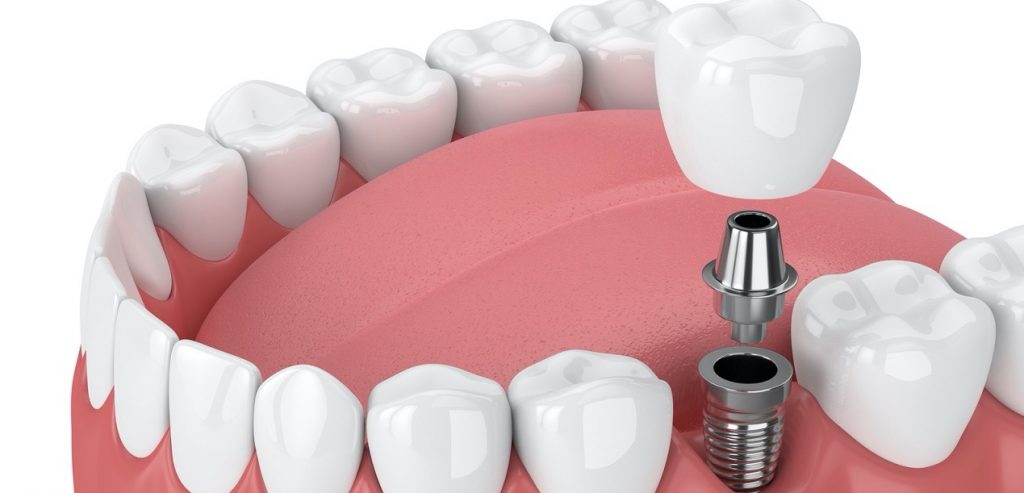
Dental implants: The most advanced and effective option, where a titanium post is placed inside the jawbone, and then a crown or bridge is placed on top. Implants preserve bone and restore stability and natural function. Over time, they become a permanent part of the mouth and resemble natural teeth in appearance and function.
Advantages of dental arch restoration all on X
- They can last much longer, making them one of the long-lasting cosmetic dentistry services.
- Cost-effective and less invasive compared to placing an implant for each tooth individually.
- The patient can leave the clinic with a full temporary set of teeth on the same day of treatment.
- Bone grafting is not necessary in most cases.
- All-on-X implants help prevent further bone loss.
Disadvantages of dental arch restoration all on X
- Compared to its alternative, which is full dentures, implants are generally a surgical procedure. Patients may believe there are risks of dental implants, as holes are made in the bone to place implants, which can cause fear and short-term pain lasting a day or two after surgery.
- It may not be suitable for some individuals with bone diseases or those who have undergone tumor removal in the oral area.
Steps of dental arch restoration in the dental clinic
- Initial examination.
- Examination using 2D and 3D imaging.
- A detailed treatment plan is created outlining required procedures such as crowns, bridges, or implants.
- A temporary removable denture is made to be used one or two days after surgery.
- Scheduling the procedure and determining suitable implant types for the patient.
- Designing the surgical plan and procedures using a computer.
- On the day of surgery, the oral surgeon and implant specialist opens the gum to expose the bone where implants will be placed.
- Drilling into the bone to receive the implant.
- Implant placement.
- Closing the gum over the implant and securing it.
- Post-operative instructions.
- A visit after 3 months to place dental restorations over the implants.
- A few days later, the final prosthesis is placed over the implants.
Why is dental arch restoration an investment in your overall health?
Dental restoration is not only aesthetic but also protects against other problems such as:
- Improving chewing and digestion.
- Preventing deterioration of gum and bone health.
- Reducing the risk of tooth decay as all teeth are treated at once.
- Improving speech and communication.
- Supporting mental health and self-confidence.
What is the best option for full dental arch restoration?
There is no one-size-fits-all solution. The choice depends on your dental condition, bone health, and age.
- If loss is partial: bridges or crowns may be the best option.
- If loss is complete: implants or dentures are most common.
If teeth are weak but present: crowns or cosmetic fillings can be used to preserve them.
How long does the treatment take?
The duration varies depending on the treatment type:
- Fillings and crowns: from one to two sessions.
- Bridges: several weeks.
- Dentures: from two weeks to one month.
- Dental implants: require a few months for osseointegration, typically 4 to 6 months, when the bone bonds with the implant and integrates into your body.
In general, a full restoration plan may take from a few weeks to several months depending on the condition of the teeth and jaw.
How do I care for my mouth after restoration?
Brush your teeth twice daily using fluoride toothpaste.
Use dental floss daily to clean between teeth.
Avoid very hard or sticky foods after placing crowns or bridges.
Visit the dentist regularly for check-ups.
In case of dental implants, care for them just like natural teeth to ensure long-term durability.
Conclusion
Dental arch restoration restores full balance to the jaw and improves both function and appearance. Thanks to advancements in dentistry, it is now possible to restore a natural and lasting smile. Restore your smile with confidence… start your first step with us at Wonders dentistry. Book your consultation now.
FAQs
What is meant by “dental arch restoration” and is it suitable for my case?
It is a comprehensive treatment to rebuild the entire upper or lower dental arch. You may need it if you suffer from severe tooth wear (due to grinding), generalized acid erosion, or loss of multiple teeth. Unlike treating a single tooth, this procedure restores the bite level and natural jaw height, solving TMJ issues and significantly improving chewing efficiency.
Can the arch be restored without extracting my remaining teeth?
Yes, absolutely. If your tooth roots are healthy, our priority is “tooth-supported restoration.” We use a combination of zirconia crowns, partial restorations (Onlays), and veneers to cover and strengthen worn teeth. This “coverage” protects them from further damage and restores their size and original shape, giving an effect similar to a “non-surgical facelift.”
What is the difference between “removable dentures” and a “fixed dental arch”?
Removable dentures rest on the gums and often rely on adhesion or uncomfortable adhesives, and may cause jawbone resorption over time. A fixed arch (like All-on-4/6) is anchored inside the bone using dental implants. It does not move, allows you to eat solid foods (like apples and meat), and stimulates the jawbone to maintain its density just like natural roots.
How long does it take to get a full set of new teeth?
Thanks to the “digital immediate loading” protocol, the time has been significantly reduced. In implant cases, you can often receive a temporary fixed and functional denture on the same day of surgery. In crown/veneer cases, we use digital scanning to design and fabricate your new smile within a few days instead of months, allowing you to try your new bite before final placement.