

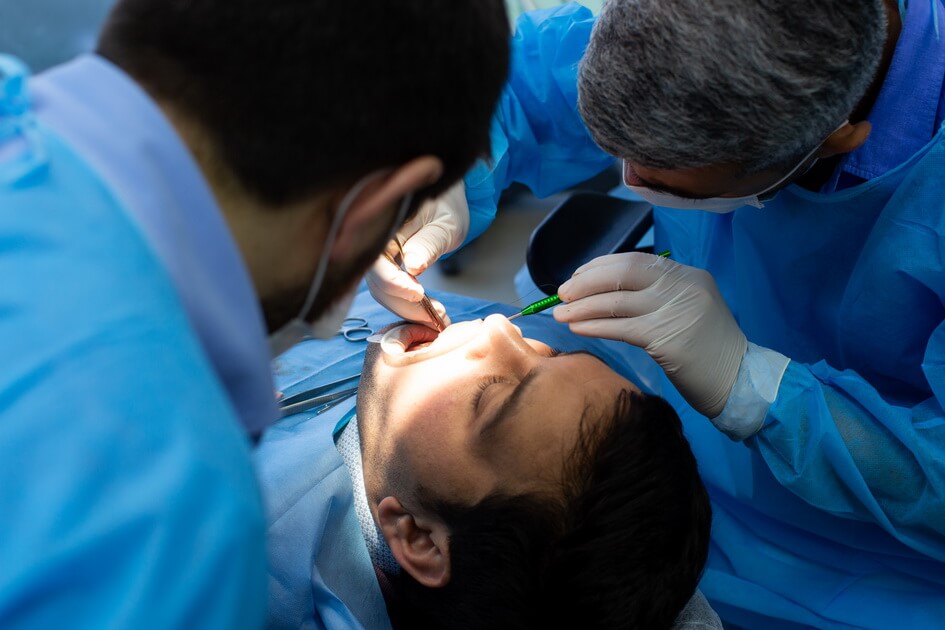
In recent years, there has been a growing trend among patients in the United Kingdom to travel abroad for dental treatment, particularly full-mouth reconstructions, dental implants, and crowns and veneers. The main motivation is clear: huge price differences between the cost of treatment in Britain and its cost in countries such as Egypt, Turkey, and Hungary. But behind this financial temptation lie real risks that British dentists themselves have begun to sound the alarm about.
What UK Dentists Are Seeing?
The figures here are not exaggerated; they come from reliable professional sources. These are not theoretical concerns, but rather recurring observations from the field by dentists who deal daily with the consequences of these dental tourism trips.
According to the British Dental Association, 95% of dentists in the UK have treated patients who underwent dental treatment abroad, and 86% of them have had to deal with complications resulting from those treatments.
One prosthodontist reported that he sees a significant number of patients each month who have undergone failed restorations abroad, often forcing him to start treatment from scratch.
The Royal College of Surgeons of England has expressed serious concern about so-called “dental tourism,” citing three key problems in particular: a lack of standardized regulation, poor infection control practices at some facilities, and the absence of legal recourse if things go wrong.
The Main Risks of Teeth Reconstruction Abroad
Before booking an appointment, patients are rarely given the full picture. As a result, many British patients are concerned about certain risks that may arise there, the most significant of which are:
- Irreversible Tooth Damage: Excessive grinding of healthy teeth to fit crowns or veneers, causing the patient to lose their natural tooth structure permanently.
- Infection & Poor Sterilization: The absence of standardized and documented infection control protocols in some facilities.
- Incorrect Diagnosis: Treatment decisions made hastily without adequate imaging tests or a comprehensive understanding of the patient’s medical history.
- Implant Failure: Dental implants that fail due to poor planning or the implant type being unsuitable for the condition of the jawbone.
- No Follow-up Care: Once the patient returns to the UK, contact with the original practitioner is completely severed.
- No Legal Recourse: It is difficult or impossible to sue or claim compensation across borders.
- Incompatible Materials: The use of materials or components that do not meet European or British standards, which may cause an allergic reaction or biological rejection.
Why Teeth Reconstruction Abroad Often Goes Wrong?
Dental restorations abroad fail due to several factors, including:
1- Rushed timelines: Proper treatment in the United Kingdom requires months of careful planning: examinations, X-rays, discussions about treatment options, and recovery periods between each stage. In medical tourism trips, however, all of this is condensed into just a few days. Even more dangerous is the fact that flying immediately after surgery—or even with insufficient time before surgery—may expose the patient to what is known as barotrauma — a sharp pain caused by a sudden change in atmospheric pressure at altitudes of up to 30,000 feet, which can negatively affect recently treated areas.
2- Aggressive tooth preparation: The term “Turkey Teeth” commonly refers to teeth that have undergone excessive and unnecessary grinding for the placement of veneers or crowns. Research studies indicate a striking difference in survival rates: while the survival rate for traditional veneers (which require extensive grinding) did not exceed 9.67% over a 9-year period, minimal-prep veneers recorded a survival rate of 100% during the same period. The difference here is not merely cosmetic; it is fundamental to long-term dental health.
3- Lack of continuity: Good dental care, especially in cases of full-mouth reconstruction, requires several consecutive sessions: initial fitting of the dentures, checking the bite and ensuring it is balanced, and then making precise adjustments based on the mouth’s response. In a treatment journey lasting a week or less, this natural sequence of treatment becomes practically impossible.
4- Inconsistent regulation: To this day, there are no unified international standards governing the practice of dentistry. Sterilization and infection control procedures vary greatly, not only between countries but even among clinics within the same country.
5- Communication barriers: Subtle aesthetic preferences—the shape of the smile, shade, and how the teeth harmonize with facial features—are often lost in translation between the patient and the dental team, resulting in artificial, “one-size-fits-all” smiles that do not take into account the uniqueness of each case.
Is There a Safe Way to Get Dental Treatment Abroad?
Not all clinics abroad are the same. The real difference lies in dental clinics that are specifically designed to serve international patients, with standards and infrastructure that are completely different from those of ordinary local clinics.
What to look for?
Here are the key points to check before choosing a dental clinic abroad:
- International Accreditations: Such as TEMOS certification and ISO standards, which indicate the clinic’s commitment to globally recognized quality and safety standards.
- Internationally trained specialists: Ensure that complex reconstructive procedures are performed by specialized professionals, not by a general dentist who is not qualified to handle these types of cases.
- State-of-the-art in-clinic technologies: such as cone-beam computed tomography (CBCT) for precise pre-implant planning, CAD/CAM technologies for the digital design and fabrication of crowns and dentures, and dental microscopes for precise surgical procedures.
- Written and transparent guarantees: including warranties of up to 10 years on implants.
- Post-treatment care: active coordination with dentists in the United Kingdom to monitor the patient’s progress after their return.
- A staff that speaks fluent English: to ensure there are no communication gaps that could affect the accuracy of treatment or the patient’s understanding of each step.
Why Wonders Dentistry in Cairo Is Different?
The Wonders Dentistry Clinic in Cairo was specifically designed to meet the needs of international patients—particularly those from the United Kingdom—by combining specialized expertise, international standards, and complete transparency at every stage of treatment.
The medical team is trained in the latest techniques for full-mouth reconstruction, from precise digital planning through to follow-up care after the patient’s return to the UK, ensuring a comprehensive treatment experience that does not end once the patient leaves Egypt.
How Wonders Dentistry Protects UK Patients from Dental Tourism Risks?
By adopting a comprehensive approach that addresses each of the vulnerabilities mentioned above: advance planning based on detailed imaging examinations prior to travel, a realistic timeline that accounts for recovery periods and flight schedules to avoid the risk of barotrauma, minimal surgical intervention in tooth preparation to preserve their natural structure, and ongoing coordination with the patient’s dentist in the UK to ensure continuity of care after their return.
FAQs
Is dental tourism safe for full-mouth reconstruction?
Safety depends entirely on the choice of clinic. Clinics with international accreditations, staffed by qualified specialists and equipped with advanced diagnostic technologies, can provide safe care, unlike general clinics that lack these standards.
How much can I save on teeth reconstruction in Egypt compared to the UK?
Price differences between Egypt and the United Kingdom are usually significant, but the actual savings should be weighed against the clinic’s quality, guarantees, and follow-up care—not just the price alone.
What are the risks of getting dental implants abroad?
The most notable risks include implant failure due to poor planning, a lack of adequate follow-up to monitor any early complications, and difficulty communicating with the treatment team if a problem arises after returning home.
Which countries are safest for dental tourism?
There is no “country” that is safe by absolute standards; rather, there are specific clinics within each country that hold recognized international accreditations such as TEMOS and ISO, regardless of their geographic location.