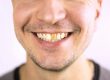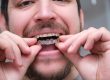


Have you noticed a gap between your upper and lower teeth when biting? This problem is called an open bite, and open bite is one of the common malocclusion issues that affect oral health as well as its aesthetic and functional roles.
Many people suffer from this condition without realizing the extent of its impact when eating, speaking, and even on the temporomandibular joint.
In this article, we will talk about everything related to open bite, from causes and symptoms to diagnosis and treatment methods, with a focus on prevention and medical advice.
What Is Open Bite?
Open bite is a condition that occurs when the upper front teeth and the lower teeth do not meet when closing the mouth, leaving a clear gap between them, and this condition is considered one of the types of bites that affect the normal occlusion of the teeth.
Types Of Open Bite
Types of open bite are two types: in the front teeth and in the back teeth, and the anterior open bite is the most common and impactful aesthetically and functionally, and both children and adults suffer from it, which makes it a persistent problem if not treated early.
Difference Between Open Bite And Normal Bite
The difference between open bite and normal bite lies in the way the teeth occlude and the effect of that on daily functions, as in a normal bite the upper and lower teeth align smoothly so that the upper front teeth slightly overlap the lower ones when closing the mouth, ensuring easy chewing, clear speech, and comfortable occlusion without straining the jaw.
In the case of an open bite, there is a clear gap between the upper and lower front teeth even when the mouth is fully closed, which makes biting and chewing difficult and affects speech in some people, especially with letters that require the teeth to come together.
This imbalance does not only cause functional problems but may also lead to fatigue in the jaw muscles due to the continuous attempt to close the gap between the teeth, which causes a feeling of discomfort and sometimes headaches, and the aesthetic appearance is also affected as the smile appears uneven, which may affect a person’s self-confidence in social interactions.
Impact Of Open Bite On General Health
Open bite has effects on several aspects of oral health and daily quality of life:
- Difficulty eating food, especially foods that require biting with the front teeth.
- Speech problems such as pronouncing some letters like (S, Z, S, Sh) unclearly.
- Increased pressure on the back teeth, leading to faster wear over time.
- Strain in the temporomandibular joint leading to headaches and jaw pain.
- Negative impact on the smile and external appearance, which reflects on the patient’s self-confidence.
These combined effects are a strong motivation to visit a specialized dentist to start an early treatment plan.
Causes Of Open Bite
Genetic Factors:
Genetics plays a major role in the appearance of open bite, as jaw structure traits and malocclusion can be passed from parents to children, leading to the development of the condition from an early age, so early examination is recommended for children who have a family history of orthodontic problems.
Bad Habits In Childhood:
They are among the most prominent causes of open bite and include:
- Thumb sucking for long periods.
- Using a pacifier after the age of 3.
- Tongue thrusting forward during swallowing or at rest.
- Breathing through the mouth instead of the nose.
All these habits affect the growth of teeth and jaw and lead to a change in the position of the upper and lower front teeth, which causes the appearance of open bite in children at an early age.
Jaw Growth Problems:
Imbalance in the growth of the upper and lower jaws can lead to open bite, as in some cases the upper or lower jaw grows in a way that disrupts proper occlusion of the teeth, and this may require surgical intervention in advanced stages.
Symptoms Of Open Bite
Difficulty closing the mouth completely: the patient feels a constant gap between the teeth even when trying to fully close the mouth, which causes embarrassment and constant concern while speaking or smiling.
Speech problems: due to the gap between the upper and lower front teeth, problems appear in pronouncing some letters clearly, which causes embarrassment especially in children and may affect academic performance and social communication.
Jaw and teeth pain: abnormal pressure on the jaw muscles and back teeth causes chronic jaw pain and may be accompanied by headaches or clicking in the temporomandibular joint, and the condition may worsen if not treated.
Diagnosis Of Open Bite
1- Clinical Examination
The dentist examines the mouth and observes the occlusion between the teeth and listens to the patient’s complaint to determine the extent of the condition’s impact on daily life. The dentist may also perform additional tests to evaluate the condition of the temporomandibular joint and the muscles surrounding the jaw.
2- X-rays And Diagnostic Imaging
X-rays are used to examine the jaw structure and determine the degree of open bite. Panoramic images, cephalometric images, and 3D imaging can also be used to provide an accurate visualization that helps plan treatment effectively.
Treatment Of Open Bite (Can It Be Treated?)
1. Orthodontic Treatment
It is considered the best option in mild and moderate cases, where clear or metal braces are used to reposition the teeth and improve occlusion, and the treatment period ranges between 12 to 24 months depending on the severity of the condition, with the need for regular follow-up to ensure treatment effectiveness.
2. Corrective Surgery
It is used in severe cases resulting from jaw growth problems, where the position of the upper or lower jaw is surgically modified, and this solution is preferred after growth stops, i.e., after the age of 18, and the procedure is performed in a specialized medical environment under the supervision of an oral and maxillofacial surgeon and orthodontist.
3. Therapeutic Exercises And Behavioral Correction
In some mild cases, especially in children, orthodontic appliances can be used to perform exercises for tongue and lip behavior to adjust mouth position and strengthen muscles to help treat open bite, and work must also be done to correct habits such as thumb sucking and mouth breathing.
Prevention Of Open Bite
Avoid bad habits in childhood: parents should monitor children and avoid habits that may lead to open bite in children such as thumb sucking, mouth breathing, and prolonged pacifier use.
Regular follow-up with the dentist: visiting the dentist regularly is an important factor in early detection of the problem, especially for children, which makes treatment easier when detected early.
Early intervention in cases of unbalanced growth: if parents notice that the upper or lower jaw is growing abnormally, they should go to a specialized orthodontic clinic as soon as possible because early diagnosis spares the child from surgical solutions later.
Tips For Dealing With Open Bite
- The importance of early diagnosis and treatment: the earlier open bite is treated, the greater the chances of success using non-surgical solutions, as early orthodontic treatment can achieve effective results without the need for future surgical intervention.
- Choosing the right dentist and clinic: it is important to choose a specialized dental clinic and a skilled medical team that combines modern diagnostic and treatment technologies such as 3D X-rays, clear aligners, and 3D digital scanning, which are services provided by Wonders dentistry for dental implants, orthodontics, and cosmetic dentistry.
In the end, open bite is a common condition that can affect the teeth and plays an important role in general health, and whether you suffer from difficulty eating, speech problems, or jaw pain, you should consult a dentist as soon as possible, and the good news is that this condition can be effectively treated using orthodontics or surgery depending on the severity of the case.
FAQs
What is an open bite and how does it differ from deep bite in terms of occlusal mechanism?
Open bite is a malocclusion condition characterized by the failure of upper and lower anterior teeth to meet when the mouth is closed normally, leaving a clear vertical gap between them ranging from 2 to 10 mm. Deep bite, on the other hand, is the completely opposite phenomenon, where upper anterior teeth excessively cover lower teeth beyond the normal 2–3 mm. Functionally, open bite completely impedes incisal function, making the patient unable to cut food with front teeth and forcing them to use molars. Deep bite causes excessive wear on lower anterior teeth and may lead to palatal ulceration. Diagnosis is made via cephalometric radiograph showing jaw angles: in open bite, the SN-GoGn angle exceeds 37 degrees, while in deep bite it is less than 29 degrees.
Can open bite be treated without surgery and what are the limits where orthodontics alone is sufficient?
Yes, open bite can be treated without surgery in cases where the deformity is mild-to-moderate skeletal open bite. Limits where orthodontics alone is sufficient include: vertical gap not exceeding 4–5 mm between incisors. No obvious deviation in upper or lower jaw position on cephalometric radiographs. Sufficient bone support around tooth roots. In these cases, orthodontists use techniques such as: square archwires with intrusion mechanics to push anterior teeth inward. functional appliances such as high-pull headgear for adolescents to restrict maxillary vertical growth. clear aligners with special attachments applying precise pressure on teeth. However, if the gap exceeds 6 mm or results from maxillary protrusion or mandibular retrognathism, orthognathic surgery becomes necessary to achieve sustainable functional and aesthetic results.
How does tongue thrusting worsen open bite and can it be corrected?
Tongue thrusting is one of the most important causative and maintaining factors for open bite. It occurs when the tongue presses forcefully against anterior teeth during swallowing or at rest, counteracting orthodontic forces and preventing gap closure. An estimated 60–80% of open bite patients suffer from this habit. The mechanism: during normal swallowing, the tongue should rise upward and touch the hard palate. In tongue thrusting, it pushes forward against anterior teeth, keeping them separated. It can be corrected through: myofunctional therapy with an orofacial myologist to retrain tongue and lip muscles. fixed habit appliances such as blue grass appliance or tongue crib fixed to the palate preventing the tongue from reaching anterior teeth. orthodontics to close the gap, but it must be accompanied by tongue thrust treatment or open bite will recur at 70% after brace removal.
What is orthognathic surgery for treating open bite and how is it digitally planned?
Orthognathic surgery is the definitive solution for severe open bite resulting from jaw growth discrepancy. It involves cutting the upper jaw (Le Fort I osteotomy) and/or lower jaw (bilateral sagittal split osteotomy – BSSO) and repositioning them to close the vertical gap. Digital planning involves: CBCT imaging to visualize bone, nerves, and blood vessels. intraoral scanning to create a digital tooth model. Merging data in software such as Dolphin Imaging or ProPlan CMF to virtually simulate surgical movement and determine required rotation or advancement. Manufacturing a 3D-printed surgical guide ensuring planned movement is executed precisely. After surgery, orthodontics continues for 6–12 months for fine adjustments. Surgery success in closing open bite reaches 90–95%, but requires a multidisciplinary team including orthodontist and maxillofacial surgeon.
Does open bite affect speech and which sounds are most impacted?
Yes, open bite directly affects speech articulation because anterior teeth play a crucial role in producing fricative sounds. Most affected sounds include: labiodental sounds: such as f and v requiring lower lip contact with upper anterior teeth. linguodental sounds: such as th requiring tongue tip placement between upper and lower anterior teeth. sibilant sounds: such as s, z, and sh requiring air passage through a narrow gap between tongue and anterior teeth. In open bite, the gap is too large causing excessive air escape and producing a distorted sound resembling a lisp. Children with open bite may face learning and social communication difficulties, while adults may suffer from loss of confidence speaking in public. Treating open bite whether with orthodontics or surgery improves speech clarity by 80–90% within 3–6 months of gap closure.