
Dental veneers (dental laminates) are considered one of the most prominent cosmetic solutions in the field of dentistry and are used to improve the appearance of teeth in terms of shape, color, and length. Veneers have become a common choice for many people who are looking for a bright and harmonious smile, and with the increasing demand for this type of treatment, questions have arisen about its effect on oral health, especially regarding gum discoloration after placement.
What Are Dental Veneers?
Dental veneers are a very thin layer usually made of porcelain or composite resin and are placed on the front surface of natural teeth with the aim of improving their appearance. These shells are used to cover defects such as tooth discoloration, gaps between teeth, or slight enamel wear.
Types Of Dental Veneers
Porcelain veneers: characterized by their natural appearance and high resistance to staining, and they are the most commonly used type.
Composite veneers (composite resin): considered less expensive and easier to apply, but they are less resistant than porcelain.
Lumineers veneers: Lumineers are a very thin type that does not require removing a large layer of tooth enamel.
Why Do People Choose Dental Veneers?
People choose to place dental veneers mostly for cosmetic reasons, including:
- Improving the natural color of the teeth and removing dark stains.
- Hiding shape defects in the teeth such as wear or cracks.
- Closing gaps between teeth.
- Getting a Hollywood smile.
Gum Discoloration In General
The causes of gum discoloration are multiple and are classified into three main groups:
Natural causes:
The presence of melanin in the body, which gives the gums a naturally darker color in some people, especially those with darker skin tones.
Pathological causes:
- Gingivitis resulting from the accumulation of food debris and not cleaning the teeth properly.
- Immune system diseases.
- Malnutrition.
- Circulatory problems.
External causes:
- Smoking.
- Excessive use of some types of mouthwash.
- Taking medications for certain health conditions that affect gum color.
The Relationship Between Dental Veneers And Gum Discoloration
How Can Dental Veneers Affect Gum Color?
Gum discoloration may occur after placing dental veneers for several reasons, which we explain as follows:
- Gum irritation due to veneer margins: when placing dental veneers, the margins may not be smooth or perfectly adapted to the gum shape, which causes irritation and inflammation leading to redness in the surrounding area.
- Allergic reactions to veneer materials: in some rare cases, some people may suffer from sensitivity to the materials used in veneer placement, which leads to a change in gum color.
- The effect of veneer color on the perception of gum color: veneers give the teeth a new, whiter appearance, which makes any slight pigmentation or darkening in the gums more noticeable.
Common Problems With Veneers And Gums:
Gingivitis around veneers: occurs due to the accumulation of bacteria and food debris if the teeth are not cleaned well or if the dental veneers are placed incorrectly.
Pigmentation of gum margins: the edges of the gums may become pigmented with a darker color as a result of interaction with veneer materials or adhesive materials.
Gum recession after veneer placement: in some rare cases, with lack of attention to oral hygiene leading to tooth decay and accumulation of tartar layers and with aging, the gums begin to recede, which leads to exposing the edges of the dental veneers in a way that is aesthetically unpleasant.
Tips For Gum Care With Dental Veneers
Daily care:
Brushing teeth twice daily using a soft toothbrush.
Using dental floss to remove food debris between the teeth.
Using an antibacterial mouthwash regularly to maintain oral health and eliminate bad breath.
Regular dental visits:
Visiting the dentist regularly to check dental veneers and gum health.
Professional teeth cleaning at the clinic every 6 months.
Solutions For Gum Problems With Dental Veneers At Wonders dentistry
1- Evaluating gum condition before veneer placement: at Wonders dentistry, the specialist dentist evaluates gum health before placing dental veneers to ensure that the environment is suitable and that there are no inflammations or diseases that may affect the final result.
2- Modern techniques for veneer placement: advanced tools and techniques are used to place dental veneers with high precision, which reduces the likelihood of gum irritation or future problems.
3- Treatments for gum pigmentation: the center provides effective and safe treatments for gum pigmentation such as:
- Removing pigmentation layers using laser.
- Treating gingivitis resulting from plaque accumulation.
In the end, gum discoloration after dental veneers is a concern for some, but it rarely occurs and is rarely permanent if it happens, and it can be avoided with proper care.
The key lies in prevention first by choosing an experienced dentist who uses high-quality materials and places veneers with great precision to avoid gum irritation. Daily care of teeth and gums such as using a soft toothbrush and antibacterial mouthwash also plays a crucial role in maintaining oral health.
If any color changes occur, early diagnosis and prompt treatment, whether by cleaning the gums or adjusting the veneers, solves the problem easily.
At Wonders dentistry, we ensure that you get a bright smile without complications, as we combine the latest technologies and the expertise of doctors to achieve safe and long-lasting results.
FAQs
What causes gum color change after veneer placement and how can normal irritation be distinguished from chronic inflammation?
Gum color change after porcelain veneer placement occurs for several reasons ranging from temporary irritation to immune response. Normal inflammatory response appears within 48–72 hours after placement as mild redness and slight swelling at veneer edges, resulting from mechanical pressure during bonding and resolves spontaneously within a week with proper care. Chronic inflammation, however, appears after two weeks or more and includes: persistent dark redness, bleeding during cleaning, foul odor, and hyperpigmentation at veneer edges. They can be distinguished via bleeding index (BI): normal irritation shows no bleeding, while chronic inflammation shows bleeding upon gentle edge touching. The dentist can also use disclosing solution to reveal bacterial accumulation under leaking veneer margins.
Can veneer materials cause allergic reactions that change gum color and what are safe alternative materials?
Yes, despite rarity, veneer materials can cause allergic reactions leading to gum color change. Suspected materials include: Bis-GMA and TEGDMA in composite resins used for veneer bonding, which may cause contact gingivitis in sensitive-skinned patients. Nickel in some metal instruments used during preparation. Resin cements containing components that may stimulate immune response. Symptoms include: sudden redness, swelling, itching, and brown or gray pigmentation at gum edges. Safe alternative materials include: all-ceramic veneers such as IPS e.max containing no metals. bioactive cements such as Biodentine or MTA stimulating tissue renewal rather than irritating it. BPA-free materials for patients with hormonal sensitivity. Before placement, a patch test can be performed on skin to detect sensitivity to used materials.
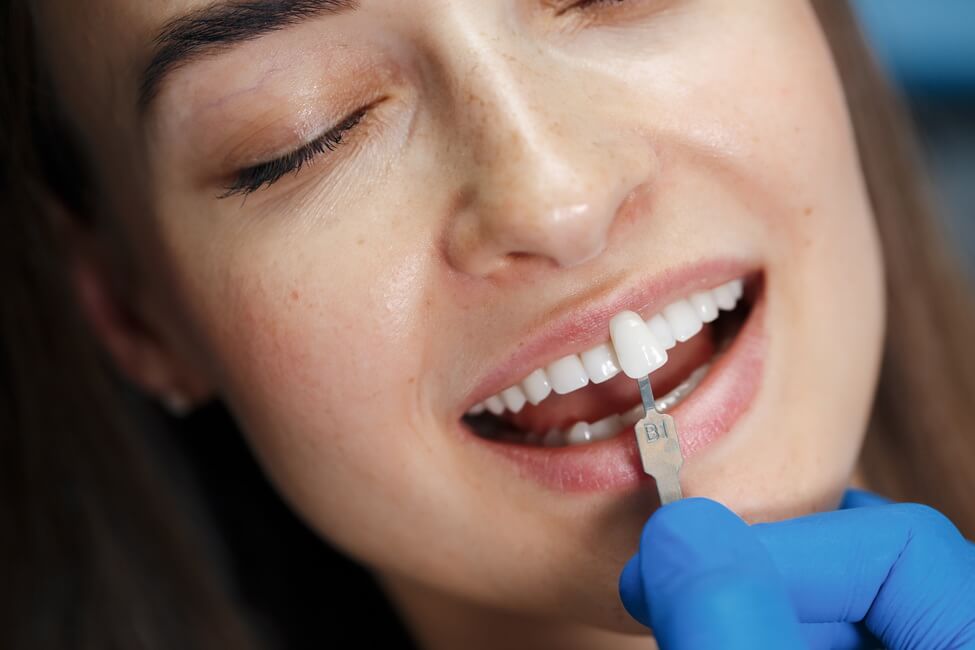
How does overly white veneer color affect gum color perception and should gums be bleached too?
Overly white veneers affect gum color perception through chromatic contrast effect. When teeth are extremely white (shade B1 or Hollywood White), natural pink gums appear relatively dark, creating an illusion that gum color has changed. This is not a true change in gum pigmentation but rather visual perception. However, some patients request gum bleaching / depigmentation for greater harmony. Gum bleaching is performed via: laser depigmentation: argon or diode laser is used to vaporize superficial melanin layer in 1–2 sessions. chemical peeling: using 20–30% trichloroacetic acid (TCA). gingivectomy with grafting: removing pigmented layer and grafting lighter tissue. But caution is needed: gum bleaching is unnecessary if gums are healthy, and may cause temporary sensitivity or reverse pigmentation if not performed by a specialist.
Does gum recession after veneer placement mean treatment failure and what are repair methods?
No, gingival recession after veneer placement does not necessarily mean treatment failure, but indicates a problem requiring treatment. Causes include: over-preparation reaching dentin or weakening gingival bony support. subgingival margins causing plaque accumulation and chronic gingival irritation. bruxism exerting excessive pressure on teeth causing supporting bone resorption. chronic periodontitis resulting from poor hygiene. Repair methods include: margin repositioning: if margins are too deep, the dentist can adjust them to gum level or above. gingival graft: transplanting tissue from the palate to cover exposed roots and restore gum line. pink ceramic gingiva: in severe recession cases, the new veneer can be designed incorporating artificial pink ceramic gingiva to hide recession. periodontal disease treatment: deep cleaning and tartar removal before any aesthetic procedure.
Can gum color change after veneer placement be prevented and what are preventive protocols?
Yes, preventing gum color change is entirely achievable through strict preventive protocols:
- Before placement: comprehensive gum evaluation via gingival index (GI) and bleeding index (BI) to ensure inflammation-free gums. CBCT imaging to measure alveolar bone thickness and determine safe margin depth. choosing appropriate veneer shade — should not be excessively white to the point of making gums appear dark.
- During placement: using digital surgical guide to ensure veneer margins do not exceed gum line by more than 0.5 mm. high-polish margins using fine diamond discs to reduce plaque accumulation. using bioactive cements stimulating tissue renewal.
- After placement: gentle tooth cleaning with soft brush and non-abrasive paste. daily dental floss or interdental brush use. alcohol-free mouthwash containing 0.12% chlorhexidine twice daily for one week after placement. dentist visits every 3 months in the first year for thorough examination.