
The gums are part of a larger structure called the supporting and surrounding tissues of the teeth (including the gums, periodontal ligaments, and surrounding bone). The gums are the soft tissues that cover and protect the root of the tooth, while the periodontal tissues are the supporting structures that anchor the teeth to the jawbone.
Maintaining healthy gums is essential for oral and dental health, as poor oral habits can lead to a variety of gum disorders that may result in tooth loss.
The main cause of gum disease is the accumulation of bacterial deposits (plaque), which, along with other factors, forms a biofilm composed of these bacteria and their byproducts. Plaque buildup leads to inflammation, and if left untreated, gingivitis can progress to periodontitis, a more severe form of gum disease that destroys gum tissue and causes bone loss around the tooth, eventually leading to tooth loss even if the teeth are otherwise healthy.
There are many causes of gum inflammation such as poor oral hygiene, smoking, stress, some genetic conditions, and certain medical conditions like diabetes.
Gum recession is also a common problem that affects the appearance of the smile and oral health. It can lead to exposed tooth roots and increased tooth sensitivity, as well as promote bacterial accumulation around the roots, increasing the risk of periodontal disease. Here comes the role of gum grafting as an advanced surgical solution, aimed at replacing lost connective tissue and restoring the natural support and texture of the gums, correcting recession and ensuring protection of tooth roots while improving the overall appearance of the smile.
What is gum grafting?
It is a surgical procedure performed to treat cases of gum recession. It is a condition where the gum tissue surrounding the tooth pulls away, exposing the root, leading to tooth sensitivity and root decay.
Gum grafting is a surgical procedure in which a small piece of gum tissue (or more connective tissue) is taken and transplanted to an area of gum recession. The procedure is performed to cover the exposed root surface, close gaps between teeth, and strengthen the gums to reduce sensitivity caused by exposed roots. This also involves careful collaboration between the dentist and the periodontist to choose the best technique to secure the graft and ensure its success.
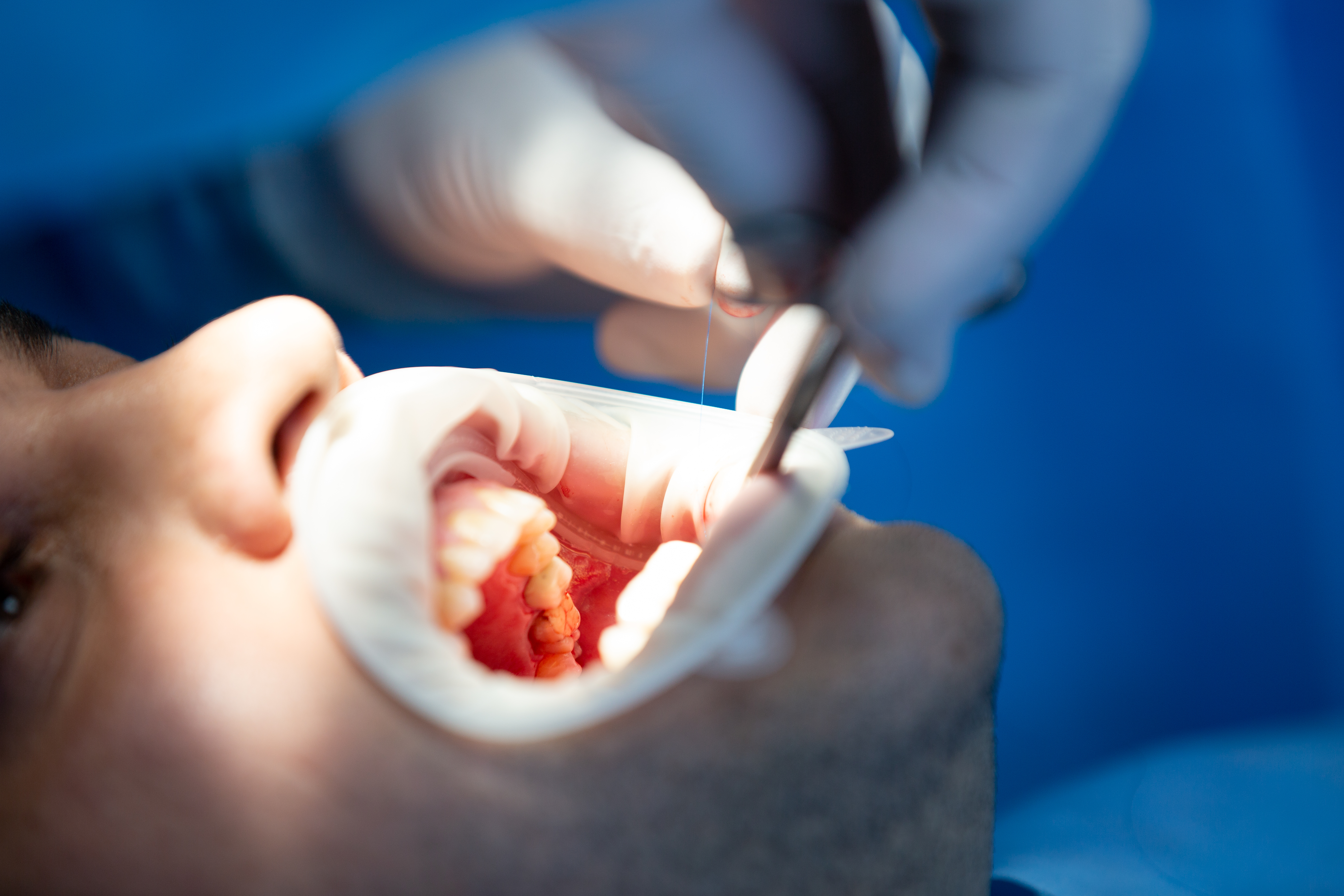
During a gum grafting procedure, the periodontist takes a small piece of gum tissue from another area where there is excess gum tissue in the patient’s mouth. This tissue, called the graft, is then placed over the exposed root surface and secured in place with stitches or surgical sutures.
Gum grafting is usually performed under local anesthesia and may require a recovery or healing period, during which the patient may experience some discomfort and swelling. However, the procedure is generally safe and effective in restoring gum health and preventing further gum recession.
In addition to restoring gum tissue, gum grafting can also improve the appearance of the gums and create a more aesthetic smile. It is important to know that maintaining oral hygiene, such as regular brushing and flossing, along with routine dental checkups for scaling and cleaning, is crucial to prevent gum recession and maintain overall gum health.
Reasons for gum grafting
- Gum recession: Gum recession or retreat is the primary reason for gum grafting, thereby treating tooth sensitivity and other potential issues.
- Aesthetic reasons: Gum grafting is used for cosmetic reasons to improve the appearance of the gums. For example, if a patient has a gummy smile, where the gums show excessively when smiling or laughing, gum grafting can be used to adjust the amount of gum tissue visible when smiling.
- Gum diseases: When gum tissue is lost due to gum disease, gum grafting can be used to restore the tissue and prevent further damage to the teeth and supporting structures while improving the patient’s oral care.
- Preparation for dental implants, as the graft helps rebuild strong periodontal support before surgery.
- Closing gaps caused by gum recession to prevent bacterial accumulation and reduce the risk of periodontal disease.
Types of gum grafts
1- Autograft:
This type is the most common and is relied upon for its high success rate and low associated complications, where a portion of connective tissue is taken from the roof of the mouth and transplanted into the area affected by gum recession.
This technique is used in cases that require covering exposed roots and is often used in advanced cases that may lead to tooth loss if not treated. Key advantages of grafting:
- Compatibility of the transplanted tissue with the body.
- Fast healing and high success rates.
- Reduced likelihood of graft rejection or infection.
2- Allograft/Xenograft:
This type of graft is used in special cases, often when an autograft cannot be obtained due to limited tissue or the patient’s preference to avoid additional oral surgery.
The graft is made from biocompatible biological materials that help stimulate the growth of natural tissue at the site of recession and cover the exposed root surface to reduce tooth sensitivity.
Although these grafts are less common than autografts, they are a good option in some cases, especially in quick procedures or for limited cosmetic purposes.
Modern techniques:
Periodontal surgeries have recently advanced with the introduction of biological techniques that have increased success rates and helped reduce healing time and complications.
Stem cells: Stem cells taken from the patient’s blood or oral tissues are used to stimulate the growth of connective tissue and gums again. This technique is considered a revolution in periodontology as it helps regenerate tissues naturally and reduces reliance on traditional grafts.
Platelet-rich plasma (PRP): PRP technology is based on extracting platelet-rich plasma from the patient’s own blood, then injecting it into the surgical area to stimulate rapid healing and enhance new tissue production. This technique is used alongside other types of grafts, improving final results and reducing the risk of infection.
Benefits of gum grafting
- Restoration of healthy gums.
- Aesthetic results.
- Improvement of overall oral condition and hygiene.
- Preservation of teeth from loss.
- Improvement of overall patient health, as gum diseases are linked to many other systemic conditions such as heart disease and diabetes.
What are gum grafting procedures?
They can be performed using one of the main techniques: connective tissue graft, free gingival graft, pedicle graft, and finally gum grafting using donor tissue.
Connective tissue graft:
Connective tissue graft is the most commonly used technique for gum grafting. During this procedure, a small piece of tissue is taken from areas in the mouth such as the roof of the palate, then the cut tissue is sutured into the recipient area, which is the area of receded gum tissue. It is secured in place to ensure adequate blood supply and proper healing.
Free gingival graft:
We recommend the free gingival graft for patients who have thin layers of gum tissue. As with the connective tissue graft, tissue is taken from the roof of your mouth with only the top layer of the harvested tissue removed.
Pedicle graft:
A small piece of gum tissue adjacent to the graft recipient site is stretched and then sutured into the recipient site so that it covers the exposed root surface.
Donor tissue gum graft:
If the periodontist needs to treat many parts of the mouth at the same time, tissue can be taken from another matching donor. There is also a type that uses animal tissue; however, many patients do not prefer it due to psychological concerns related to the procedure.
Preparation for surgery
Before the procedure, the doctor usually requests:
- Panoramic X-rays to assess bone level and roots and ensure sufficient support.
- Blood tests to ensure the patient’s health and surgical readiness.
- Fasting for a specific period depending on the type of anesthesia.
- Stopping certain medications such as anticoagulants under medical supervision to reduce bleeding.
Gum graft surgery techniques
Traditional technique: The gum is incised and graft pieces are secured with fine sutures, then covered and left to heal.
Microsurgery: Precise instruments are used to minimize damage to surrounding tissues, making it the ideal option for sensitive gum areas.
Laser surgery: Uses laser energy to cut gum tissue, reducing bleeding and speeding up recovery.
Steps for gum care after gum grafting surgery
- Follow post-surgery instructions: Your dentist will provide instructions for caring for your gums after surgery, including how to care for both the recipient site and the donor site.
- Use ice packs: Applying ice packs to the outside of the mouth can help reduce swelling and discomfort.
- Avoid hard or crunchy foods: After surgery, avoid eating hard or crunchy foods that may irritate the surgical site or the sutured gum tissue, and stick to soft, easy-to-chew foods for the first few days after surgery.
- Maintain cleanliness of the surgical site: It is important to keep the surgical site clean to prevent infection and promote healing. Your dentist may recommend an antimicrobial mouthwash and provide additional cleaning instructions.
- Brush and floss gently: Brush your teeth and floss gently, taking care to avoid the surgical site (use a soft-bristled toothbrush and avoid aggressive brushing or flossing).
- Take medication: Your dentist may prescribe pain relievers or antibiotics to prevent infection. Take these medications to control pain and prevent complications.
- Attend follow-up appointments: Your dentist will schedule follow-up visits to monitor healing and ensure optimal results. Make sure to attend these appointments and follow any additional instructions provided.
By following these tips and properly caring for your gums after gum graft surgery, you can promote healing, prevent complications, and achieve optimal results.
Possible complications
Like any surgical procedure, gum grafts may involve some complications:
- Early: include mild bleeding or swelling at the graft site, and are usually temporary.
- Late: such as graft rejection or bacterial infection, which are usually treated with antibiotics or removal of part of the graft tissue if there is a clear risk.
How long does gum graft surgery take?
The procedure itself is generally quick to perform and takes between 30 to 90 minutes depending on the number of areas needing treatment and the technique used.
When do final results appear?
Sensitivity usually subsides after two weeks, and the gum shape gradually stabilizes within 4 to 6 weeks. The final result, where the gum appearance and natural tooth shape are fully clear, appears within 3 to 4 months after surgery.
Conclusion
Gum grafting is a specialized procedure to correct gum recession and protect tooth roots, combining innovation with advanced surgical techniques. Whether you are a dental professional or a patient seeking a solution for gum recession and tooth sensitivity, gum grafting provides an effective solution that restores tissue support and enhances long-term oral health. Always ensure you choose a dentist with expertise in this field and follow their instructions carefully to guarantee the success of the procedure and excellent results.
FAQs
Is gum grafting still painful as people say?
Thanks to modern microsurgical techniques, discomfort has been significantly reduced. At Wonders dentistry, we rely on “tunneling techniques” that use microscopic openings without the need for large surgical incisions or many sutures. With advanced local anesthesia, the procedure is gentle, and most patients return to their normal routine within a few days.
Is it always necessary to take tissue from the roof of the mouth?
This is no longer the only option. While autogenous tissue remains an excellent choice, we now offer advanced alternatives such as “Alloderm” or ready-made biological matrices. These materials act as a scaffold that stimulates your natural gum cells to grow over them, completely eliminating the need for an additional wound in the roof of the mouth.
What is the “Pinhole” technique and is it suitable for my case?
The Pinhole technique is a revolution in treating gum recession without scalpels or sutures. A very small hole is made in the gum, and through it, very fine instruments are used to loosen the tissue and reposition it to cover exposed tooth roots. It is ideal for those who suffer from recession in several teeth and want immediate aesthetic results without a long recovery period.
How does PRF technology help in the success of gum grafting?
We combine gum grafting with platelet-rich fibrin (PRF) technology, which consists of protein concentrates extracted from the patient’s own blood. This material is placed over the graft to release growth factors that accelerate tissue healing and integration. This technique significantly reduces swelling and ensures stability and healthy, rapid growth of the new gum tissue.