
When a patient experiences long-term tooth loss, the jawbone gradually begins to recede, and this may lead to an inability to successfully perform dental implants. A deficiency in bone density or volume limits treatment options and reduces the chances of successful implant integration, which may cause early failure of the procedure. For this reason, jaw bone grafting technology has emerged as a fundamental solution to compensate for the deficiency and allow dental implants to be placed with stability and strength similar to natural teeth.
The problem of jawbone resorption is considered one of the most disturbing health issues affecting oral and gum health, due to the resulting damages and risks, the most prominent of which is tooth loss. As a result, jaw bone grafting procedures have emerged as an effective solution through the use of the latest cosmetic dentistry and surgical techniques, reducing risks and complications.
Supportive bones of the body
Can you imagine your body without bones? I think not. The body without bones has no shape or structure, as bones form the basic framework of the body like building pillars. Bones contain elements and minerals such as calcium, which is essential for strengthening the body and maintaining its structure and shape. Bones consist of two main layers as follows:
- First layer (outer hard layer adjacent to the skin layer): It is a hard layer that withstands pressure and does not erode quickly unlike the inner layer.
- Second layer (inner layer – sponge-like): In some bones such as the jawbone, it is an area filled with cavities and is less solid than the outer layer. This layer may erode over time due to long-term tooth loss.
- Third layer (bone marrow): This is the inner layer that provides nourishment to the bones and helps in bone healing in case of inflammation or injury.
What is jaw bone grafting?
After understanding what jawbones are made of, we now come to the main topic of our article: jaw bone grafting. What does this procedure mean and why is it needed? Let us explore these details.
As mentioned earlier, over time the jawbone may deteriorate, becoming very thin. In such cases, replacing missing teeth in that area—such as dental implants—becomes difficult or even impossible due to insufficient bone to support the implant.
Here, the dentist may resort to placing bone grafts in the area to increase bone density and volume, making the jaw suitable for successful dental implant surgery.
Jaw bone grafting is a surgical procedure aimed at compensating for the lost quantity and quality of bone in areas of tooth loss or resorption by introducing enhanced bone graft materials. The type of graft is selected according to the patient’s condition—whether autogenous grafts taken from the patient’s own body, synthetic grafts, or biologically derived grafts. The final goal is to rebuild the bone structure so it can safely and long-term support dental implants.
Cases that require jaw bone grafting
Jaw bone grafting is recommended for individuals who suffer from:
- Reduced jawbone width or height after losing several teeth, especially in the upper front jaw area.
- Previous failure of dental implants due to low bone density.
- Advanced periodontal disease leading to bone resorption.
- Bone loss after tooth extraction without immediate replacement.
- Jawbone resorption due to long-term tooth loss, especially in the upper anterior region.
- Jaw fractures and accidents requiring urgent surgical intervention by a multidisciplinary team.
- Bone loss around teeth due to advanced gum disease affecting one or multiple areas.
- Sinus lift cases in upper posterior implant regions due to sinus expansion and reduced bone height.
These cases often require bone reconstruction before or during implant placement to ensure high success rates and long-term stability.
Types of bone grafts in jaw bone grafting
Yes, there are different types of bone graft materials used in jaw bone grafting, available as sheets or powders:
Type 1: Animal-derived grafts, Collected from animals such as cows.
Type 2: Allografts, Bone taken from a deceased donor and processed in tissue banks.
Type 3: Autografts, Bone taken from the patient’s own body, such as the hip, ribs, or chin, and transplanted to the required area.
Type 4: Synthetic grafts, Artificial materials treated with advanced techniques to avoid issues such as resorption, infection, and contamination. These are widely used in jaw bone grafting procedures.
Causes of jawbone resorption
Bone loss can occur due to several interconnected factors, including:
- Prolonged tooth loss: Failure to replace missing teeth early leads to bone resorption in the empty site.
- Chronic periodontal infections: Bacteria cause destruction of the tissues and bone surrounding tooth roots.
- Trauma and accidents: Facial and jaw injuries may lead to bone fractures or loss.
- Aging: With age, bone density naturally begins to decline.
- Osteoporosis: Systemic bone diseases reduce the ability to support implants.
- Smoking: Reduces blood flow and significantly affects bone and gum healing, increasing the risk of implant failure.
Latest Techniques for Jawbone Grafting
Several advanced techniques are currently used to enhance surgical success, including:
1. Autografts
Autografts are among the most common and successful methods in bone grafting, where a small bone piece is taken from another area in the patient’s body (such as the back of the jaw, hip bone, or chin) and transplanted into the area suffering from bone loss or resorption.
Advantages: Highest acceptance rate by the body, fast biological integration, and no immune reaction.
Disadvantages: Requires an additional surgical site and may cause discomfort in the donor area.
2. Alloplastic Grafts (Synthetic grafts)
These are synthetic materials such as hydroxyapatite or calcium phosphate used as an alternative to autografts.
Advantages: Ready to use, no second surgery required, biologically compatible, and available in large quantities.
Disadvantages: Slower integration with natural bone and may be less effective in severe bone loss cases.
3. Platelet-Rich Plasma (PRP)
PRP is extracted from the patient’s blood to enhance tissue healing and stimulate bone cell growth. It is mixed with bone graft materials before placement.
Advantages: Accelerates healing, reduces inflammation, decreases risk of graft rejection, and is rich in growth factors.
4. Stem Cell Therapy
An advanced future technique where stimulated stem cells (from bone marrow or fat tissue) are used to regenerate bone naturally.
Advantages: Promotes natural bone formation, enhances graft effectiveness, and reduces the need for additional surgeries.
Limitations: Still under research in many countries and requires advanced facilities and specialized dental centers.
5. 3D Printed Bone Grafts
A bone graft is digitally designed and produced using 3D printing technology to match the exact shape and dimensions of the missing bone, with possible integration of bone-growth stimulants.
Advantages: High precision, reduced surgical time, improved healing, and better aesthetic outcomes.
6. Resorbable Collagen Membranes
These membranes are used to protect the bone graft after placement and prevent gum tissue from growing into it.
Advantages: Improve graft success, naturally dissolve in the body, and reduce failure rates.
7. Guided Bone Regeneration (GBR)
This technique uses a biological barrier to separate bone from surrounding tissues, allowing new bone to grow without interference from gums or soft tissue.
8. Nanotechnology in Bone Grafts
Nanoparticles are used in graft manufacturing to enhance bonding with bone cells and stimulate faster growth.
Advantages: Faster integration, strong antibacterial resistance, and improved long-term durability.
Surgical Procedure Steps
Before any medical procedure, careful planning is essential to ensure the best results. The dentist requires patient data such as medical history. Some conditions may contraindicate the procedure, such as osteoporosis and blood disorders.
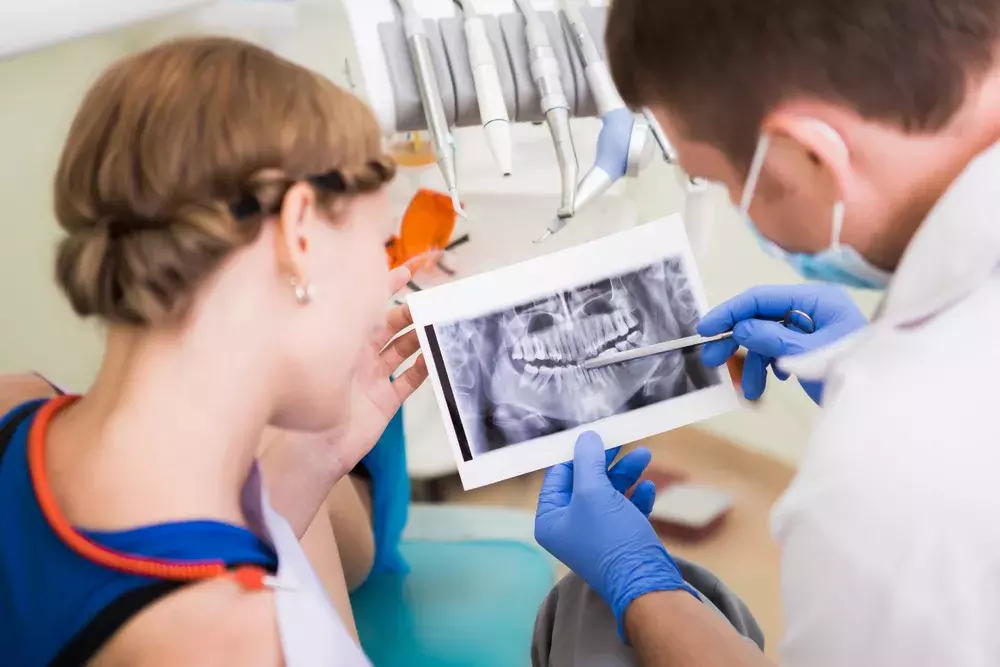
If the patient does not suffer from these conditions, the dentist performs a CT scan of the jawbone to plan the procedure precisely, determining the required bone quantity, graft type, and the extent of bone loss.
Bone density is also evaluated—especially in future dental implant cases—to determine the waiting period required after grafting before placing implants.
An appointment is scheduled for the procedure, which may take several hours due to its precision.
On the day of surgery, the dentist prepares the tools and mixes the bone graft with medical solutions to make it ready for use.
The graft material is prepared specifically for each patient and is not used for anyone else before or after.
Local anesthesia is administered, then the dentist creates a small incision in the gum at the target area (and sometimes the donor site if needed).
The bone graft is then placed in the area, and the site is closed with sutures to prevent contamination or displacement of the graft. A follow-up visit is required to remove stitches after complete healing.
Advantages of Jawbone Grafting
Provides sufficient support for dental implants, even in cases of bone deficiency.
- Increases the volume and quantity of bone in areas with low bone availability, especially in terms of width.
- Enhances the stability of dental implants in the jaw due to increased bone support around the implant site.
- Treats jawbone resorption problems in the anterior regions of the jaw, helping restore the natural shape of the jaw, gums, and surrounding tissues to their pre-extraction condition.
- Enables dental implant placement in areas close to the sinus by increasing the jawbone adjacent to the sinus without damaging it, making implantation in this region possible.
Risks of Jawbone Grafting
Are there real risks associated with jawbone grafting? It is better not to call them “risks,” but rather possible side effects that may occur after the procedure, including:
- Swelling and pain that may increase for a few days after the grafting procedure. There is no need for concern, as this is expected in most cases and usually resolves within a few days.
- Heavy bleeding in the grafted area, which may indicate the early onset of infection in that site.
- Contamination of the graft site with bacteria or food debris, which may ultimately lead to failure of the jawbone grafting procedure. If any of these symptoms appear, you should immediately contact your treating dentist to examine the graft area and minimize the mentioned risks.
- Inflammation and swelling in the nasal area may occur after sinus lift procedures, along with increased pressure on the upper jaw and associated pain.
Tips for Ensuring the Success of Jawbone Grafting
Here we present important details—what you must do to ensure the success of jawbone grafting. You should follow these instructions and recommendations with great precision:
- It is essential not to touch the graft site with sharp tools or your hands to avoid contaminating the area, which in some cases may lead to graft loss and the need to repeat the jawbone grafting procedure.
- Do not use a toothbrush during the early stages of wound healing to prevent disturbing or losing the grafted bone. Instead, rely on medicated mouthwash, and use a toothbrush very carefully when permitted.
- Avoid consuming hot beverages and smoking.
- Maintain regular follow-ups with your treating dentist to detect any early signs of infection and to plan the timing of future dental implant placement.
- In case of swelling during the first days after the graft (which is highly expected due to surgery), you should take antibiotics, anti-swelling medication, and pain relievers according to your dentist’s instructions.
- If you undergo a sinus lift procedure, you must avoid forceful coughing or activities that increase nasal pressure (such as swimming). Also, avoid nasal blockage by using sprays or antihistamines only as prescribed by your doctor.
After complete healing of the jawbone graft site—which may take between 3 to 6 months—the jaw becomes ready for dental implant placement easily and smoothly according to your personalized treatment plan provided by your dentist.
In some cases, jawbone grafting is performed on the same day as dental implant placement. However, these are special cases such as immediate implant procedures, where tooth extraction, implant placement, and bone grafting are done in a single session.
Post-Surgical Care After Jawbone Grafting
Basic care: Eat soft foods, avoid pressure on the surgical area, and maintain oral hygiene using soft brushes and antiseptic rinses as instructed.
Important precautions: Avoid smoking and alcohol for at least 4–6 months, and do not clean the area aggressively.
Regular follow-up: Visit your dentist every 4–6 weeks to monitor healing and plan implant placement.
Conclusion
If you suffer from jawbone loss and are considering dental implants, jawbone grafting is a necessary and essential step for success. With advanced modern techniques and proper post-surgical care, you can achieve long-lasting, stable teeth with a natural appearance that boosts your confidence. We strongly recommend visiting a specialist at Wonders Dentistry for a comprehensive evaluation and a personalized treatment plan. Don’t wait until the condition worsens—complete oral health starts with a well-planned step today.
FAQs
Why did my dentist tell me my jawbone is “resorbed” and not suitable for implants?
After tooth loss, the jawbone naturally shrinks because it no longer receives chewing stimulation. Dental implants require sufficient bone volume and density for stability. Bone grafting rebuilds this missing foundation so implants can remain stable long-term.
Will bone be taken from another part of my body (like the hip)?
In modern dentistry, this is very rare. At Wonders Dentistry, we mainly use bone graft materials (safe, sterile materials from animal or synthetic sources). These act as a scaffold that your body gradually replaces with its own natural bone.
What is a sinus lift and how is it different from regular grafting?
A sinus lift is a specialized bone grafting procedure for the upper back jaw. The sinus cavity is gently lifted, and bone material is placed beneath it to create a solid foundation for implants without penetrating the sinus space.
Does bone grafting increase pain after surgery?
In most cases, bone grafting is surprisingly less uncomfortable than tooth extraction. It is performed under local anesthesia, and modern techniques like PRF (Platelet-Rich Fibrin) significantly reduce swelling, pain, and healing time.