

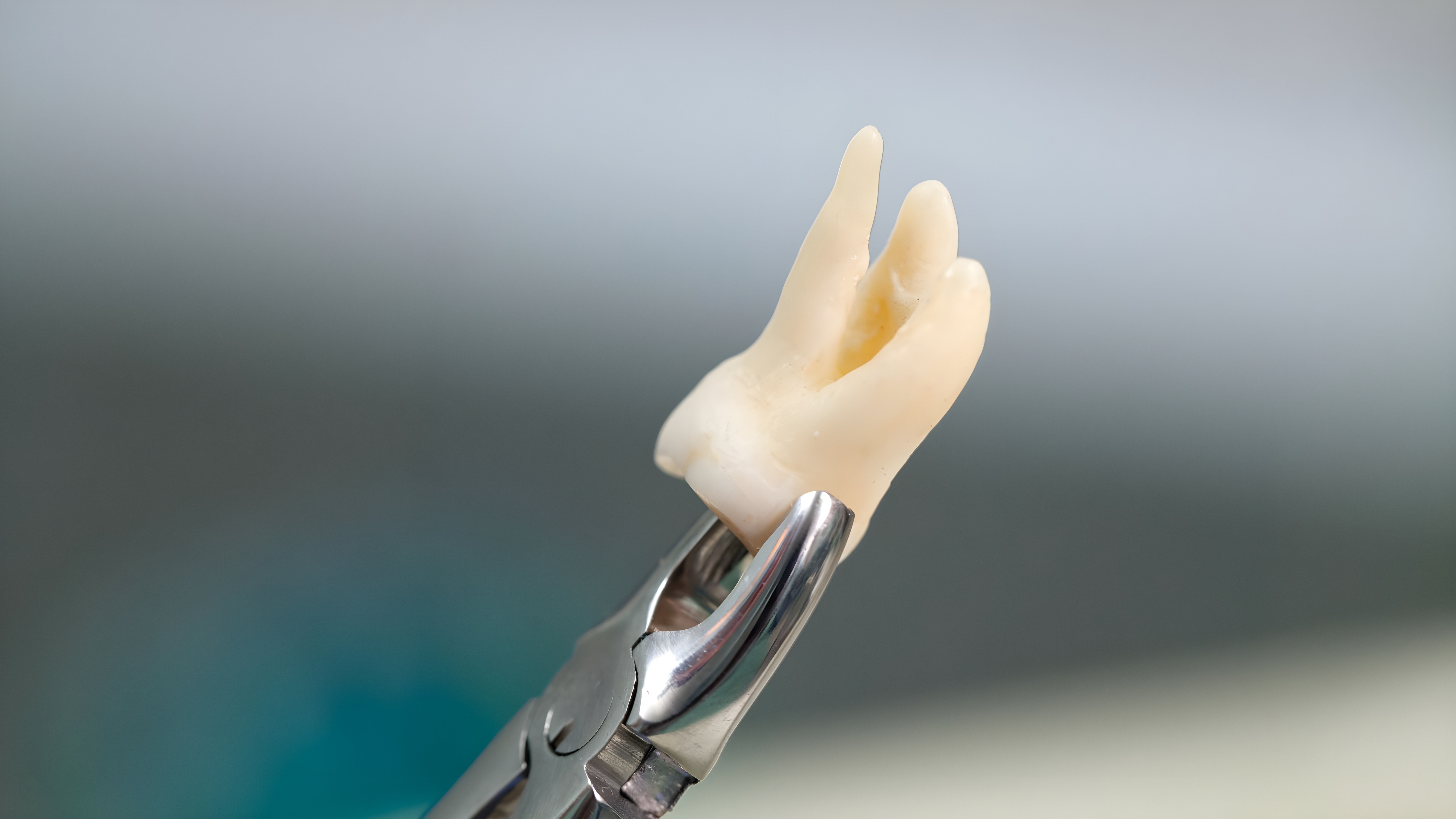
Many oral cases require the removal of a single tooth due to problems that cannot be repaired such as deep decay or infections that cannot be treated, and getting rid of it becomes necessary to protect the rest of the mouth and the adjacent teeth.
Tooth extraction is a procedure that a dentist may be forced to perform as a last resort in cases where preserving the tooth is impossible, and we will talk in more depth about these cases in which the extraction decision is the best decision. The treating dentist takes all necessary procedures before an important decision such as tooth extraction, especially permanent teeth that have no replacement afterward.
In the case of tooth extraction and the need to replace the missing tooth site, there are many and various solutions starting from removable dental prosthetics, fixed dental prosthetics, and dental implants.
When do you need tooth extraction?
We come to the most important points of today’s article, which are the cases in which extraction is the appropriate solution, and among these cases are the following:
- When there is severe tooth decay that has reached the roots of the tooth and it is no longer possible to treat it with a filling or root canal, extraction becomes the practical option.
- In cases of repeated or chronic nerve inflammation, where constant pain dominates tooth movements, the dentist is forced to extract it to stop the spread.
- Severe gum diseases that destroy the bone support of the teeth make keeping the tooth more harmful than tooth extraction.
- Sometimes the orthodontist resorts to extracting some teeth when there is severe crowding inside the jaw to provide space for orthodontic treatment.
- Deep or multiple fractures below the gum line that cannot be repaired with a crown or filling require tooth extraction to maintain oral health.
- The appearance of previous or recurring dental abscesses around the roots forces the dentist to extract the chronically infected tooth.
- Impacted or broken wisdom teeth under the gum that cause pain and sensitivity and cannot be treated without surgery.
Types of tooth extraction
Simple extraction: performed with traditional tools after local anesthesia only, for a tooth visible inside the mouth.
Surgical extraction: includes cutting the gum or removing part of the bone surrounding the tooth, and it is usually used for impacted wisdom teeth cases.
Laser extraction: a new technique that uses heat to reduce bleeding and decrease pain and swelling.
Ultrasound extraction: performed with fine vibrating tools to calm the basic types of bone and facilitate root removal without major surgery.
Benefits of tooth extraction
There is no doubt that the tooth extraction procedure has many benefits, including:
- Eliminating problems of damaged teeth and gum infections around them.
- Treating tooth crowding and providing the appropriate space to restore the correct smile through teeth alignment procedures.
- The possibility of extracting teeth and then performing dental implant procedures on the same day.
- Eliminating problems of impacted wisdom teeth under the bone that cause severe pain and damage to adjacent teeth.
Harm of tooth extraction
Among the harms of tooth extraction are the following:
- Loss of front teeth leads to changes in the smile and makes your facial features look older than your real age.
- Bone resorption when leaving areas without teeth for long periods without replacement.
- Occurrence of a defect in the occlusion of the teeth with each other due to the loss of some teeth.
- Difficulty in eating and speaking.
Preparation before tooth extraction
Before the procedure, the dentist performs X-ray imaging to determine the locations of the roots and the condition of the bone, and may request blood tests for people with chronic diseases. Fasting is recommended if general anesthesia is used, and the patient reviews the medical history of medications and any allergies.
On the day of the procedure, comfortable clothes should be worn and hot water or caffeine should be avoided, and the dentist’s instructions regarding taking painkillers before extraction should be followed if necessary.
How is the tooth extraction procedure performed and what are its steps?
Before the treating dentist decides on the need for tooth extraction, some examinations are performed such as X-rays and examination of the teeth to determine the possibility of repairing the damage affecting them or not, as well as the medical history such as blood clotting diseases, diabetes, high blood pressure, and allergies to dental anesthesia, which greatly affect the extraction process and increase the chances of bleeding and infections afterward. Therefore, important information such as this should not be overlooked with the doctor.
The tooth extraction visit begins by giving some drops of medical anesthesia for local sedation, then waiting a little until sensation is lost. The specialist dentist uses high-precision tools to perform the extraction procedure, and you will only feel some pressure at the beginning of the extraction process.
In cases of impacted wisdom tooth extraction, a small incision in the gum may be needed with removal of some bone to facilitate extraction, with some stitches to close the incision site and help healing.
At the end of the visit, the doctor will advise applying pressure on sterile cotton and will also give some instructions that must be followed with great precision. Feeling some pain and swelling after the visit is very common, and the doctor prescribes some anti-swelling medications and antibiotics to treat infections and help quickly relieve this discomfort.
Instructions to follow after tooth extraction procedure
These instructions are very important and greatly help in faster recovery after extraction, and they include the following:
- Not removing the sterile cotton for at least one hour so that the extraction area does not become inflamed or contaminated and cause pain and make recovery difficult.
- Not touching the extraction area with fingers so that the area does not get contaminated and healing becomes difficult.
- Not excessive spitting and not using medical mouthwash on the day of extraction so that the initial healing stage, which is the clot in the extraction area, is not affected, as it also helps stop blood flow quickly in this area.
- Using medical mouthwash after one day from the extraction procedure, and among the preferred types is warm saline solution.
- Avoid smoking and eating hot and hard foods.
In case of feeling severe pain for more than a few days, you should immediately go to the treating dentist so the wound area can be cleaned and some medical materials can be added to reduce inflammation and support complete healing.
Possible complications
- Continuous bleeding that may require visiting the dentist if it exceeds 24 hours.
- Dry socket: occurs when the blood clot inside the wound is lost, and appears as severe pain starting on the third day and described as chronic throbbing pain.
- Temporary nerve damage where some patients feel tingling or loss of sensation in the lip, and it is usually temporary and disappears within weeks.
- Infection: rare if the patient follows hygiene instructions and takes medication as prescribed by the doctor.
Alternatives after extraction
Dental implants: performed after 3–6 months to ensure bone healing, and they provide an appearance and function similar to natural teeth.
Fixed dental bridges: fixed on adjacent teeth using crowns, and are considered a relatively immediate option.
Removable dentures: an economical and easy-to-maintain option, but usually requires continuous adjustment and moves while speaking.
Conclusion
If you feel that a single tooth is causing you constant pain, swelling, or a cleaning problem such as constant food buildup, you should visit the dentist as soon as possible. Tooth extraction at the right time can prevent the spread of infection to blood vessels or adjacent bones. With prompt medical follow-up and proper care instructions, you can avoid complications such as dry socket or nerve damage. After extraction, safe and effective replacement solutions are available, whether implants, bridges, or dentures, which maintain your oral health and enhance your quality of life.
FAQs
Is tooth extraction supposed to be painful?
Not at all. With the development of local anesthesia and sedation techniques, the procedure itself has become completely painless. You will only feel “pressure” or “movement,” but sharp pain has become a thing of the past. At Wonders dentistry, we use atraumatic extraction techniques that focus on gently loosening the tooth ligaments instead of using force, which significantly reduces swelling and pain after the procedure.
What is the difference between “simple extraction” and “surgical extraction”?
Simple extraction is performed for teeth fully visible above the gum with straight roots, and they are removed quickly using lifting tools and forceps. Surgical extraction is required for teeth broken at gum level, impacted (such as wisdom teeth), or with curved roots. This procedure requires a small surgical incision and sometimes splitting the tooth into parts to remove it safely without damaging the jaw bone.
Can I place a dental implant immediately after extraction?
In many cases, yes. This is called “immediate implant placement.” If there is no active acute infection and the bone is sufficient, we can extract the tooth and place the titanium implant in the same socket during the same session. This procedure preserves the natural gum shape and reduces the total treatment time by several months.
How can I avoid “dry socket” after extraction?
Dry socket occurs if the blood clot that forms in the extraction site dissolves or falls out early, exposing the bone and causing severe pain. To prevent this, avoid smoking, drinking through a straw, or vigorous rinsing during the first 24–48 hours. The blood clot is the body’s “natural dressing,” and preserving it is the most important step for fast and comfortable healing.