
Daily care of orthodontic braces is not limited to improving the aesthetic appearance only, but it also plays a crucial role in preventing tooth decay, gingivitis, and plaque accumulation. It is recommended to clean the teeth after every meal using a suitable toothbrush and toothpaste, in addition to using dental floss and mouthwash.
Consequences of Neglecting Cleaning Orthodontic Braces
Not following a daily cleaning routine can lead to the accumulation of plaque and bacteria around the brackets and wires, which increases the risk of tooth decay and the appearance of white spots on the teeth. It may also lead to gingival inflammation and bad breath, negatively affecting oral health and orthodontic treatment results.
Tools for Cleaning Orthodontic Braces
Orthodontic Toothbrush:
An orthodontic toothbrush is specially designed to clean teeth with brackets and wires in place. It features a small head and soft bristles that help reach difficult areas around the braces. It is recommended to use it after every meal to ensure removal of food debris and plaque.
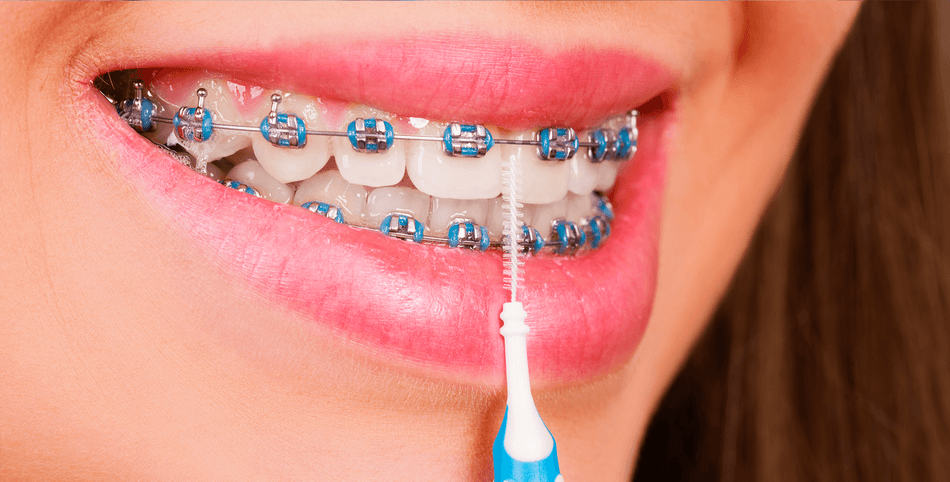
Interdental Brush:
The interdental brush, or between-teeth brush, is used to clean spaces between teeth and under the wires. It should be gently inserted between the teeth and moved with light motions to remove debris without harming the gums or the braces.
Orthodontic Dental Floss:
Using dental floss with braces requires special floss or a floss threader. The floss is inserted between the teeth and under the wires to clean areas that a toothbrush cannot reach. It is recommended to use it once daily, preferably before sleeping.
Appropriate Mouthwash:
An antibacterial mouthwash is used after brushing and flossing to help eliminate remaining bacteria. It is recommended to use a mouthwash containing fluoride to enhance dental and gum health. Rinse for 30 seconds and avoid eating or drinking for 30 minutes afterward.
Modern Tools:
Electric toothbrush: Provides effective cleaning around brackets and wires, especially those designed specifically for braces. Water flosser used to remove debris and plaque from hard-to-reach areas and is an excellent option for people who find it difficult to use traditional floss.
Step-by-Step Daily Guide to Cleaning Braces
- Remove Removable Parts: If you have removable components such as removable appliances or retainers, they should be removed before starting the cleaning process. These parts should be cleaned separately using a soft toothbrush and toothpaste or a dedicated cleaning solution.
- Brushing Wires and Brackets: Use the orthodontic toothbrush to clean the wires and brackets. Move the brush gently at a 45-degree angle along the gum line, then clean around the brackets and wires using small circular motions. Make sure to clean all surfaces, including the inner and outer sides of the teeth.
- Using Interdental Floss: Use orthodontic dental floss to clean between the teeth and under the wires. Insert the floss gently between the teeth, then move it up and down along the sides of each tooth. Repeat the process for all teeth.
- Mouthwash and Disinfection: After brushing and flossing, use an antibacterial mouthwash and rinse for 30 seconds. This helps eliminate remaining bacteria and freshen breath. Avoid eating or drinking for 30 minutes after use.
- Weekly Deep Cleaning: Once a week, perform deep cleaning using a water flosser or an electric toothbrush with a braces-specific head. This helps remove plaque and debris from areas that are difficult to reach with a traditional toothbrush.
Dentists’ Tips for Cleaning Orthodontic Braces
Best Times for Cleaning
It is recommended to clean your teeth after every meal and before bedtime. This helps prevent plaque and bacteria buildup and maintains oral health during orthodontic treatment.
How to Handle Food
Avoid hard or sticky foods that may stick to braces or cause breakage of wires and brackets. Cut fruits and vegetables into small pieces before eating. After meals, clean your teeth immediately to remove debris.
Quick Solutions Outside the Home
Keep a small toothbrush and dental floss in your bag to use after eating outside. If that is not possible, rinse your mouth well with water to remove debris until you can perform a full cleaning later.
Avoid Whitening Products
Avoid using whitening toothpastes or mouthwashes during orthodontic treatment, as they may cause uneven tooth color after braces removal. Choose products containing fluoride and suitable for use with braces.
Common Orthodontic Problems and Their Solutions
Food stuck in braces: Use an interdental brush or water flosser to remove trapped food between teeth and under wires. Immediate cleaning after eating prevents buildup.
Gum irritation: May occur due to friction with wires or brackets. Use orthodontic wax to cover irritating parts and rinse with warm saline solution to reduce inflammation.
Broken part of braces: If you notice any breakage, contact your dentist immediately. Avoid trying to fix it yourself to prevent further damage.
White spots: White spots may appear due to plaque buildup and poor cleaning. Following a daily cleaning routine and using fluoride products helps prevent them.
Tips for Cleaning Fixed Orthodontic Braces
- Finally, when cleaning your teeth, make sure to use lukewarm water and completely avoid hot water. It is also worth noting that a water flosser can be used as an alternative to traditional floss.
- It is important to avoid hard-textured foods that may damage the braces, as well as sugary foods including all types of chocolate and sweets.
- Rinsing the mouth with water for about 30 seconds is recommended to help remove food debris stuck between the teeth and on the brackets.
Correct Way to Brush Teeth with Fixed Braces
- Use a soft toothbrush.
- Hold the toothbrush at a 45-degree angle to your gums and start cleaning the brackets and teeth, spending about 10 seconds per tooth using circular motions.
- To clean brackets and wires, press the toothbrush slightly so the bristles enter the space between brackets and wires, then move it gently to clean the entire area behind them.
- It is recommended to use fluoride toothpaste regularly.
- Patients should use a toothbrush to clean between the teeth and the space between wires and teeth, as most bacteria accumulate in these areas and cause tooth decay and damage.
- Use the interdental brush by moving it vertically and gently between the teeth and wires.
- After every meal, teeth should be cleaned with fluoride toothpaste, so brushing three times a day is necessary.
Cleaning Removable Orthodontic Braces
- Remove the removable appliance and wash it thoroughly, ensuring all debris is removed.
- Soak the appliance in a solution made of appropriate mouthwash mixed with water, or alternatively use a paste made from baking soda and water.
- Scrub the appliance well using a soft toothbrush to reach grooves and remove bacterial growth, using lukewarm water.
- Rinse the clear aligner again to ensure all cleaning materials are removed.
- Daily cleaning of removable braces is essential, and if not cleaned, they should be soaked in distilled water.
Tips When Cleaning Removable Braces
- Avoid using a microwave or dishwasher, as high temperatures can damage the appliance.
- Avoid using harsh chemicals during cleaning.
- Do not soak the appliance for long periods when using cleaning tablets to prevent material degradation.
Risks of Not Cleaning Clear Aligners
Although there are many benefits to choosing clear aligners, if they are not properly maintained, a person may feel more embarrassed about their mouth compared to using traditional metal braces.
Neglecting proper cleaning can lead to discoloration, making teeth appear yellow, and may cause bad breath that can be very embarrassing.
Additionally, it exposes the teeth continuously to accumulated bacteria that may cause various oral health problems.
If bacteria begin to accumulate on the aligners, they may appear stained, ruining the appearance of the clear braces. Proper care provides a better treatment experience and protects oral health from future problems.
Conclusion
Caring for orthodontic braces requires commitment and a daily routine to maintain oral and dental health. By using the right tools and following proper cleaning steps, excellent treatment results can be achieved while avoiding health issues. Regularly consulting your orthodontist and following their advice ensures a successful treatment experience and a healthy, beautiful smile.
FAQs
What is the correct way to clean traditional metal braces?
The ideal method involves using a specialized orthodontic toothbrush (with V-shaped bristles) after every meal, along with an interdental brush to reach tight areas behind the wire. A water flosser is highly recommended daily, as it is the most effective tool for removing food debris and bacterial plaque from areas a regular toothbrush cannot reach.
How can I prevent white spots on teeth after braces removal?
White spots are early signs of decay caused by bacterial acid accumulation around brackets. To prevent them, use fluoride toothpaste to strengthen enamel. Professional cleaning sessions every 3–6 months are also recommended to remove calculus that cannot be removed at home.
Is cleaning clear aligners (Invisalign) different from regular braces?
Yes, it is much easier but still essential. Clean aligners using a soft toothbrush and non-abrasive soap or special cleaning solutions. Avoid hot water as it may distort the aligner. Most importantly, brush your natural teeth before wearing the aligner again to prevent trapping bacteria.
Can I use a regular electric toothbrush with braces?
Absolutely. In fact, an electric toothbrush with a braces-specific head is more effective at dislodging and removing bacteria compared to a manual toothbrush. Just be careful not to hit the brackets directly, and maintain the correct brushing angle for optimal cleaning.