
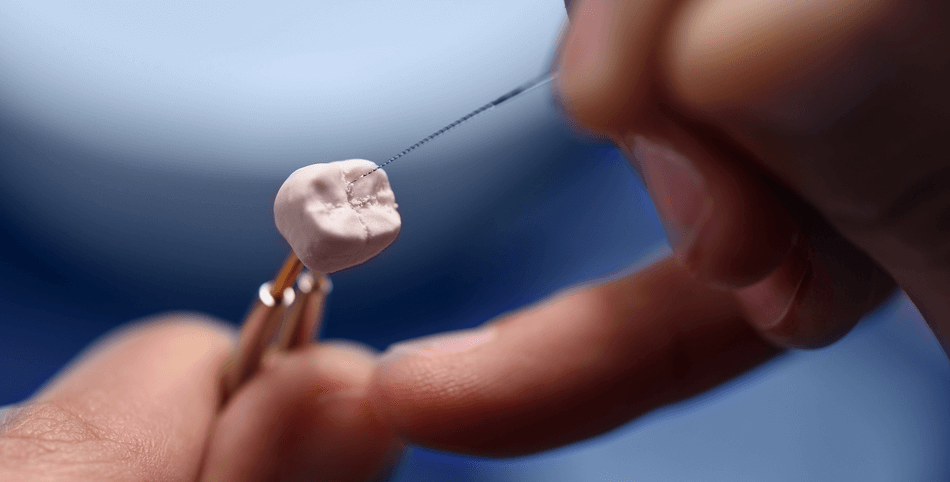
Many people dream of an attractive Hollywood smile, and with the advancement of cosmetic dentistry, tooth shaving—or “contouring”—has become an essential part of achieving that vision. Tooth shaving is a precise procedure aimed at reshaping teeth and improving their appearance, whether in terms of shape or harmony between teeth. This procedure is considered one of the common cosmetic steps in modern dental clinics.
What is Tooth Shaving?
Tooth shaving is a process of contouring teeth using a dental handpiece for various reasons, the most common being preparing them to receive a dental restoration in the future.
It is a painless procedure that involves removing a layer of enamel in some medical procedures, and shaving may extend to removing parts of the dentin layers as well, such as in porcelain dental restorations.
Reasons for Tooth Shaving
There are some cases that require tooth shaving, and it is a light and simple procedure that can solve various cosmetic issues. Situations require a patient to undergo tooth shaving include:
- Adjusting the shape of irregular teeth, whether in size or minor misalignment.
- Smoothing rough edges that may cause cuts to the tongue or lips.
- Improving symmetry between teeth to achieve a harmonious smile.
- Preparing teeth for porcelain veneers such as veneers or lumineers.
- Removing painful protrusions caused by discoloration or superficial cracks.
- Treating unbalanced bite cases that lead to specific enamel wear.
- Preparing teeth for restorations such as fillings, crowns, or bridges.
- Patients who suffer from irregular tooth shape.
- Patients who suffer from inconsistent tooth sizes.
- Tooth color issues that cannot be treated with whitening.
- Presence of fractures, cracks, or sharp parts in teeth.
Types of Tooth Shaving
- Light cosmetic shaving: Removes only a small amount of enamel to redistribute light and color and improve shape.
- Preparatory shaving: Used to prepare the front surface of teeth before placing porcelain veneers (such as veneers).
- Therapeutic shaving: Used for medical adjustments such as removing a damaged layer or correcting wear in exposed enamel areas.
Steps of the Tooth Contouring Procedure
One of the advantages of this procedure is that it does not require many medical tools or complex steps, and with the advancement of dentistry, it has become easier and more comfortable. Let us discuss the method followed by the dentist or fixed prosthodontist at Wonders dentistry clinics when preparing the tooth (tooth shaving):
- The doctor begins with accurate diagnosis using dental X-rays and a predicted digital design using CAD/CAM.
- The dentist prepares the tooth from all directions and angles in a specific way that differs depending on the type of restoration, as veneer preparation is completely different from porcelain crown preparation.
- The dentist selects the optimal method of preparation depending on the tooth location, position, degree of misalignment, and the thickness of enamel to be removed.
- The amount of enamel to be removed is determined to ensure oral and dental health.
- When needed, local anesthesia is administered to avoid any discomfort.
- During preparation, the dentist measures the amount shaved to avoid removing excess tooth structure.
- The dentist uses a precise dental instrument to remove the required portion of enamel and dentin in a calculated manner.
- After shaving, your dentist will take impressions either digitally using an intraoral scanner or using impression material.
- The dentist then places a temporary restoration to protect the tooth from sensitivity or fracture if the final restoration requires more time in the lab. If the clinic has an in house lab, the restoration may be completed on the same day and bonded immediately using dental cement.
- The dentist ensures there are no high spots during biting or issues while chewing.
- Final polishing is performed to restore the natural shine of the teeth.
- After completion, a fluoride layer is applied to strengthen enamel and reduce sensitivity.
- Post-procedure instructions are given, including using desensitizing toothpaste and fluoride mouthwash, along with scheduling follow-up visits.
Advantages of Tooth Shaving
Immediate results are the most important feature of tooth shaving if the dental clinic has an in-house lab. This procedure is also painless because preparation does not reach the pulp chamber. Another advantage is that restorations placed on shaved teeth last for a long time.
1- Low cost: Tooth shaving is one of the methods that helps improve appearance at a reasonable cost depending on the lifespan of the restoration.
2- Painless procedure: If shaving is limited to enamel, no anesthesia is needed. If dentin is involved, anesthesia may be required, but in both cases, you will not feel pain.
3- Improves dental health: If your tooth requires a restoration, the placed restoration is compatible with oral health and has a smooth surface that does not retain food or plaque, improving oral and dental health.
4- A reasonable alternative to orthodontics: In some cases, tooth shaving can be an alternative to braces, as it makes teeth appear relatively straighter and removes minor overlaps.
Disadvantages of Tooth Shaving
Tooth shaving is a procedure that provides immediate and direct improvement in dental appearance, with high precision in achieving harmony in color and size of the anterior surface, and it is often non-surgical when performed correctly. However, it may lead to:
1- Tooth sensitivity: If dentin is exposed during shaving—which is common, especially in porcelain preparation—cold, hot drinks and sweets may cause sensitivity.
2- Minor changes only: Tooth shaving addresses only small imperfections and does not significantly transform the smile or whiten teeth like other cosmetic treatments such as veneers.
3- Risk of damage and fracture: Excessive enamel removal may make teeth more prone to fracture.
4- Tooth decay: Removing too much enamel can increase the risk of tooth decay if the tooth is not protected with a fixed restoration.
Care After Tooth Shaving
- It is necessary to use desensitizing toothpaste and avoid very cold or hot foods and drinks for 48 hours.
- It is recommended to rinse with fluoride mouthwash and avoid dark beverages such as coffee and tea initially.
- If nighttime grinding is present, using a night guard is preferred.
- If sensitivity persists for more than two weeks, visit the dentist to evaluate the need for additional treatment such as fillings or crowns.
Final Thoughts
When opting for tooth shaving to improve your smile, make sure to choose an experienced cosmetic dentist and carefully follow post-procedure instructions. Tooth shaving is an effective solution for improving harmony and elegance, but it must be done conservatively while preserving the enamel layer. If you want more details about the technique or steps, do not hesitate to book a consultation.
FAQs
Is cosmetic tooth shaving (enameloplasty) safe for enamel?
Yes, provided it is performed under specialist supervision. Enameloplasty involves removing microscopic amounts of enamel (usually less than 0.5 mm) to smooth uneven edges or minor fractures. Since enamel contains no nerves, the procedure is completely painless and safe when done within limits.
Can tooth shaving replace orthodontic treatment?
Only in very minor cases. If there is slight overlap or a slightly longer tooth, cosmetic contouring may create the appearance of straighter teeth. However, in severe crowding or bite issues, shaving cannot replace orthodontics. At Wonders dentistry, it is often used as a finishing touch after orthodontic treatment.
Will my teeth become permanently sensitive after shaving for veneers?
With modern minimal-prep techniques, chronic sensitivity is no longer common. Today, ultra-thin veneers require minimal enamel removal, protecting dentin and preventing long-term sensitivity. Any mild sensitivity is temporary and disappears after final bonding.
What is the difference between tooth shaving and interproximal reduction (IPR)?
ooth shaving refers to preparing the tooth surface for crowns or veneers. Interproximal reduction (IPR) is performed during orthodontics to create tiny spaces between crowded teeth to allow proper alignment. Both require high precision to preserve sufficient enamel.