
Gum health is considered a fundamental element in maintaining oral and dental health, as it contributes to protecting the roots of the teeth and preventing tooth loss, and it also plays an important role in preventing oral diseases. With the widespread occurrence of gum recession problems, grafting of gum has become a common surgical procedure used to restore lost gum tissue and improve the appearance of the mouth.
In this article, we will learn about the concept of grafting of gum, the reasons for needing it, and its different types, in addition to the steps of performing the grafting of gum procedure, its benefits, and the potential risks associated with it.
We will also discuss some daily care tips that help maintain gum health using a toothbrush and tooth brushing, while mentioning the role of the dentist in monitoring critical cases.
Introduction About Gum Health And Its Role In Disease Prevention
Gums play a pivotal role in protecting teeth, as they form the first line of defense against tooth decay and damage to tooth roots.
Healthy gums are considered a key factor in preventing tooth loss and maintaining a naturally beautiful smile. In addition, brushing teeth helps prevent gum inflammation and tooth sensitivity problems. Therefore, maintaining gum health is a must for anyone seeking a healthy mouth and a bright smile.
What Is Grafting of Gum?
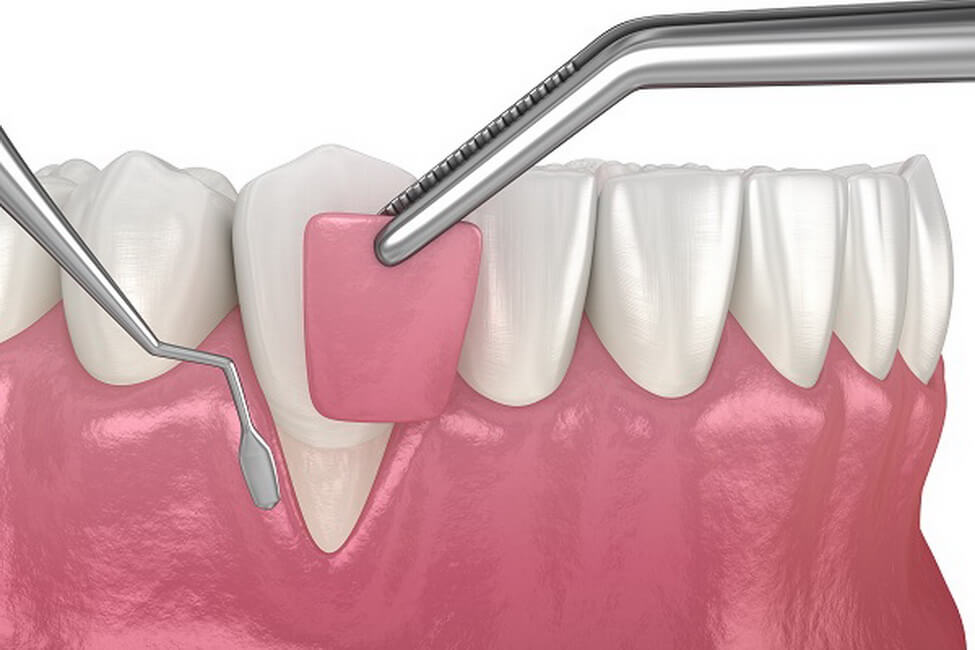
Grafting of gum is a surgical procedure used to restore or increase the amount of gum in cases that suffer from gum recession. This procedure is considered part of the surgical treatments performed by the dentist to strengthen the gingival barrier and protect teeth from loss.
The grafting of gum procedure is usually performed when there are causes of gum recession resulting from factors such as chronic gingivitis, or as a result of poor brushing habits, or even due to the effects of orthodontics in some cases.
Reasons For Needing Grafting of Gum
- Tartar and plaque accumulation and tooth decay: Gum recession can occur as a result of plaque buildup and decay, leading to the loss of gum tissue surrounding the teeth.
- Tooth loss: When teeth are lost, the gum recedes over time, leaving unwanted gaps in the adjacent teeth.
- Problems in tooth roots: Damage to tooth roots due to infection or excessive sensitivity can lead to gum recession.
- Mechanical and chemical causes: Mechanical factors such as teeth grinding or strong chewing habits, in addition to continuous exposure to chemicals in some foods or drinks, may contribute to gum damage.
- Inadequate care: Not brushing teeth regularly or using an unsuitable toothbrush can lead to bacterial buildup and deterioration of gum condition.
Types Of Grafting of Gum
The types of grafting of gum vary depending on the patient’s condition and available treatment techniques, and include:
- Free Gingival Graft: This type of graft is used when there is a need to increase the amount of gum on the tooth surface, where a piece of gum tissue is taken from another area in the mouth.
- Connective Tissue Graft: This type of graft is considered the ideal choice for covering exposed tooth roots and restoring the gum naturally, and it is commonly used in cases of moderate gum recession.
- Grafting of Gum Using Synthetic Materials: In some cases, synthetic materials or growth factors can be used to stimulate gum regeneration without the need to extract tissue from the patient’s mouth.
- Use of Grafting of Gum in Orthodontic Cases: Grafting of gum may be recommended in some cases that require surgical intervention to improve orthodontic results, especially if the gum has been subjected to pressure or recession due to orthodontic appliances.
Steps Of Grafting of Gum Procedure
The grafting of gum procedure involves several main stages that must be followed carefully to achieve satisfactory and safe results:
- Evaluation and planning: The dentist begins with a comprehensive examination of the mouth using modern imaging techniques to determine the extent of gum recession and its causes. The dentist also evaluates the patient’s health condition and develops a detailed treatment plan that includes all required steps.
- Performing the procedure: After local anesthesia, the dentist performs the grafting of gum procedure by removing the affected part and then transplanting tissue taken from another area in the mouth (usually from the roof of the mouth or the gum surrounding other teeth). This step is part of precise surgical treatments that require high expertise.
- Fixation of the graft: The transplanted tissue is secured using absorbable surgical sutures to ensure even healing of the wound.
- Follow-up and post-procedure care: The patient is advised not to rinse the mouth forcefully during the first days after the procedure, and antibiotics must be used to prevent infection. It is also recommended to brush teeth gently according to medical instructions.
Benefits Of Grafting of Gum
Grafting of gum achieves many health and aesthetic benefits, including:
- Restoring gum health: Grafting of gum helps restore the lost gum tissue, which helps protect tooth roots and reduce the risk of tooth loss.
- Improving mouth appearance: The graft provides a more cohesive and aesthetically pleasing appearance to the gums, contributing to a natural and harmonious smile.
- Reducing sensitivity: Grafting of gum helps reduce tooth sensitivity resulting from gum recession and exposed tooth roots.
- Supporting other surgical treatments: Grafting of gum can be an essential step before performing orthodontic procedures or placing dental fillings to ensure a healthy oral environment.
- Preventing inflammation: By restoring gum density, the graft reduces the chances of bacterial accumulation and gum inflammation.
Potential Risks And Complications
Despite the many benefits of grafting of gum, the procedure is not without risks. Some complications may occur in certain cases, including:
- Infection: Wound contamination may occur if proper brushing instructions are not followed or if antibiotics are not taken as prescribed.
- Bleeding or swelling: Mild bleeding or swelling may occur at the surgical site during the first days after the procedure.
- Graft failure: In some rare cases, the transplanted tissue may not integrate properly with the surrounding gum, leading to failure to achieve the desired result.
- Effect of teeth grinding: Teeth grinding or unhealthy mechanical habits may affect the success of the grafting of gum procedure.
How To Maintain Gum Health After The Procedure
After undergoing grafting of gum, the patient must follow a strict care routine to maintain the achieved results. Here are some important tips:
- Gentle brushing: It is recommended to use a soft toothbrush to avoid excessive pressure on the graft site. Teeth should be brushed gently without using a hard brush.
- Regular brushing: Committing to brushing teeth twice daily and using dental floss helps remove food debris and reduce bacterial buildup.
- Regular follow-up with the dentist: The dentist should be visited regularly to monitor gum condition and ensure proper healing of the procedure.
- Avoid hard and hot foods: It is preferable to avoid foods that may irritate the wound or affect the healing process.
- Use antibiotics as prescribed: Adhering to taking antibiotics can prevent infection and ensure the success of the procedure.
- Care for orthodontics if present: If the patient uses orthodontics, care instructions must be followed to maintain gum health.
Role Of The Dentist In Grafting of Gum Procedure
The role of the dentist is essential in the success of grafting of gum, as the dentist evaluates the condition accurately and selects the appropriate type of graft based on the causes of gum recession and the patient’s overall condition.
The dentist relies on experience and skills in performing precise surgical treatments and also provides patients with necessary instructions on how to brush teeth and use proper oral cleaning after the procedure.
The dentist’s role also extends to monitoring the patient after the procedure to ensure achieving the desired results and preventing complications.
In the end, grafting of gum is considered a vital surgical procedure to restore gum health and maintain teeth. It not only helps protect tooth roots from loss and decay but also contributes to improving the appearance of the mouth and the patient’s smile.
By understanding the causes of gum recession and the available types of grafting of gum, the patient can make an informed decision in consultation with a specialized dentist.
The patient must adhere to care instructions and daily hygiene after the procedure to ensure long-lasting results and prevent any potential complications.
Continuous care through brushing teeth and proper oral cleaning is one of the most important steps that must be followed after the procedure, and regular follow-up with the dentist helps in early detection of any issues.
FAQs
What is gum grafting and how does it differ from laser gum recession treatment?
Gum grafting (gingival graft) is a surgical procedure aimed at restoring or increasing lost gum tissue resulting from gingival recession. Tissue is taken from a donor site in the mouth — usually the hard palate or gum surrounding other teeth — then transplanted to the affected area to cover exposed tooth roots and strengthen the gingival barrier. Laser gum recession treatment, on the other hand, is a non-surgical technique using low-level laser therapy (LLLT) to stimulate gingival cell renewal and reduce inflammation, but it does not add new tissue. The key difference: gum grafting actually restores lost tissue quantity and is the only solution for moderate to severe cases, while laser improves existing tissue quality only and is limited to mild cases. Additionally, grafting provides permanent root protection whereas laser requires repeated sessions.
Can gum grafting be performed on a single tooth or must it cover the entire jaw?
Yes, gum grafting can be performed on a single tooth or multiple teeth depending on the patient’s condition. Localized graft is used when recession is confined to one tooth or two adjacent teeth, such as recession caused by hard-bristled toothbrush abrasion or previous orthodontic treatment. Full-arch graft is performed when recession is widespread throughout the upper or lower jaw, common in advanced chronic periodontitis cases. Doctors prefer dividing the procedure into multiple sessions — typically one session per quadrant — to avoid excessive pain and facilitate healing. Each session lasts 60 to 90 minutes under local anesthesia, and patients can resume normal life after 48 hours while avoiding chewing on the treated side.
What are the types of gum grafting and how does the doctor choose the right type for my case?
Types of gum grafting vary by tissue source and technique used:
- Free Gingival Graft (FGG): A superficial piece is taken from the hard palate including epithelium and connective tissue. Used when the goal is increasing gingival thickness more than root coverage, ideal for patients with thin gingival biotype prone to recurrent recession.
- Subepithelial Connective Tissue Graft (SCTG): Only connective tissue is taken from beneath the palate surface, reducing pain and accelerating healing. Considered the optimal choice for covering exposed tooth roots and restoring natural gingival margin, most commonly used in aesthetic cases.
- Guided Tissue Regeneration (GTR): Used with resorbable membrane or growth factors such as platelet-rich plasma (PRP) to stimulate gum cell renewal without donor tissue. Used when sufficient donor tissue is unavailable.
The dentist chooses the type based on: recession depth, remaining gingival thickness, alveolar bone condition, and aesthetic or functional goals.
Does gum grafting prevent gum recession from returning and what is its success rate?
Gum grafting significantly reduces recession recurrence risk, but does not guarantee 100% prevention. Long-term success rates range between 80% and 90% after 5 years, depending on several factors:
- Post-operative care quality: Gentle tooth cleaning with a soft brush and daily flossing prevents plaque accumulation at graft edges.
- Avoiding causative factors: Quitting smoking, using a soft instead of medium or hard brush, and avoiding heavy chewing on the treated side for 4–6 weeks.
- Chronic gum inflammation: If the underlying cause — such as periodontal disease — is not treated, recession may recur even after grafting.
- Bruxism: Excessive pressure on teeth stresses the gum and weakens graft stability. Wearing a night guard is recommended.
Studies show subepithelial connective tissue graft (SCTG) achieves more stable results than free gingival graft, with 85–90% of grafts remaining intact after 10 years compared to 70–75% for free gingival graft.
Can gum grafting be performed before veneer placement or dental implants and what is the benefit?
Yes, gum grafting can be a crucial preparatory step before other aesthetic procedures:
- Before veneer placement: If the gum line is unbalanced — such as a gummy smile or recession in certain teeth — grafting restores aesthetic balance and ensures veneer edges align with the natural gum line. It also adds gingival thickness protecting veneer edges from leakage and marginal decay.
- Before dental implants: When a tooth has been missing for an extended period, both gum and bone recede. Pink ceramic gingiva or tissue grafting restores gum volume around the implant, providing a natural appearance and hiding gaps between the restoration and gum tissue.
- Before orthodontic treatment: If gum tissue is extremely thin, orthodontic forces may cause additional recession. Grafting is performed first to strengthen the gum, then orthodontics begins after 3–6 months of healing.
- The essential benefit: gum grafting improves not only aesthetics but also extends the lifespan of cosmetic restorations and reduces their complications.